RomeCabs Transfers and Tours in Italy (Rome Cabs)
Informative travel tips and blog by ROME CABS: provider of Civitavecchia Transfers, Day Tours, and Shore Excursions in Rome and throughout Italy
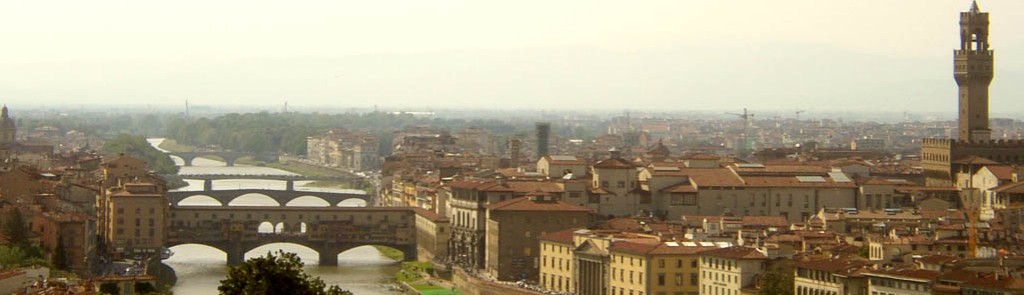
Civitavecchia Shared Transfers: The way YOU want them!
.
Buon giorno and thank you very much for visiting Stefano’s RomeCabs Travel blog.
Over the many years we have been in the transfer and tour business in Italy, we have provided private transfers between Civitavecchia Cruise Port and Rome (and Rome’s Airports) to tens of thousands of happy cruisers. Our clients have relied on us to provide them with dependable, timely, and flexible service they expect when reserving private transfer services.
However, once in a while our clients have expressed interest in sharing their Civitavecchia Transfers, but they don’t want to deal with the usual problems of general public shuttle services they’ve experienced before, such as:
~ No fixed pick up time of your choice
~ Not prior knowledge of the total number of people in the van
~ No idea how many stops the driver will make when picking up and dropping off the other ~ passengers making it impossible to predict the length of the journey
~ Anxiety of not knowing if the driver will wait for you if you are experiencing unforeseen delays
~ Not knowing if you will have waste time waiting for other passengers to arrive
~ Being packed with complete strangers inside a vehicle can be discomforting for some
~ Inflexibility if needing to adjust scheduled pickup times to your choosing.
With so many unknowns, many people are not willing to sacrifice convenience, flexibility, predictability, reliability, and efficiency to save some money.
What would a PERFECT Shared Transfer be like for you?
Civitavecchia Shared Transfers: The way YOU want them!
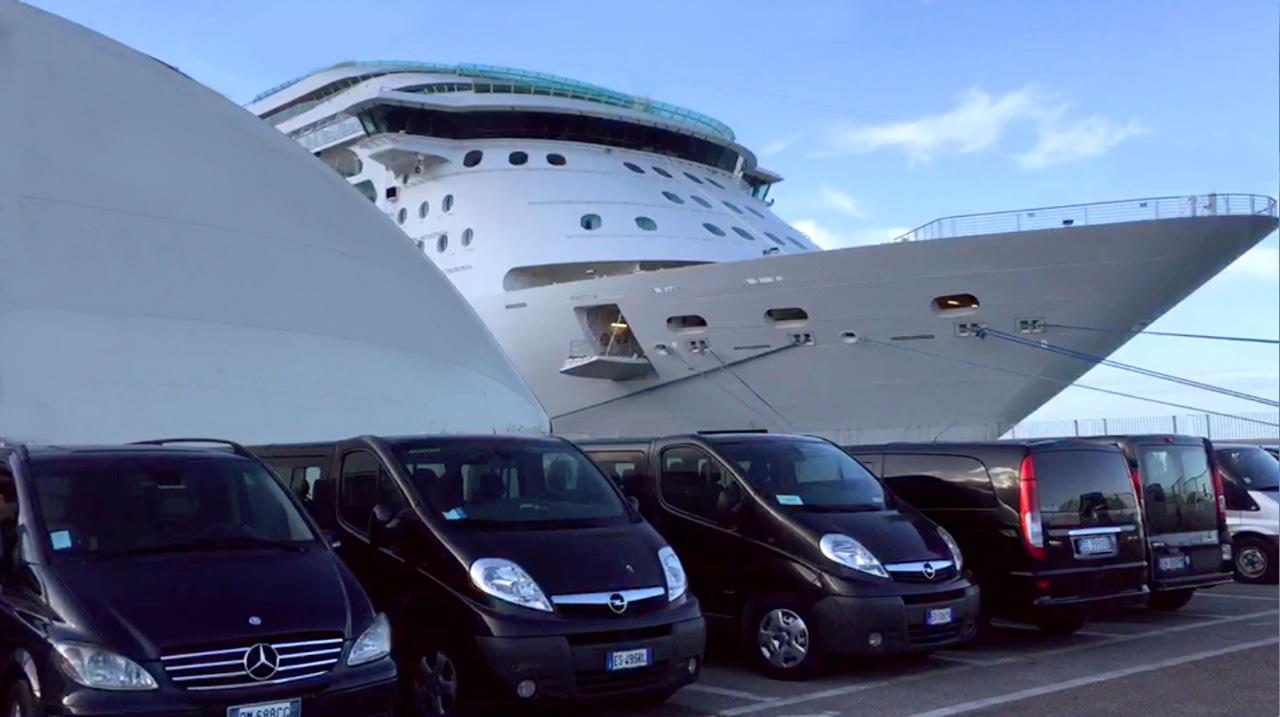
Stefano’s RomeCabs will Pick up up and Drop you off on the Pier next to your ship
.
Did you ever think: Wouldn’t it be great if I could book a shared transfer and:
.
* I can select the time to be picked up at?
* I can choose how many other people I want to share my van with?
* I can decide how many different pick ups or drop offs I’m comfortable with?
* I know in advance about how long the journey will be so I can book accordingly?
* I am in charge of making changes to my shared transfer?
The great news is that this is not only possible, but thousands of our clients have organized their own private shared Civitavecchia Transfers for an enjoyable, customizable, money saving, efficient, predictable and reliable experience with fellow cruise mates they got to know in advance.
HOW?
They created their own private shared transfers where they were in complete control of their reservation, chose the pick up time of the first party, decided who would join their transfer, the total number of passengers for comfort and luggage space inside the vehicle and number of different hotel stops to minimize extensive time in transit.
This made their transfer predictable, affordable, and flexible.
.
It’s easy: Join Cruise Critic.
Many cruisers have joined Cruise Critic for helpful cruising information and advice from fellow cruisers. But you can also use this fabulous site to create your own private shared transfers (and even shore excursions if you wish!)
Place an Ad on Cruise Critic Roll Call
Invited other ship mates to share their transfers if they also require similar services.
Here is the link to Cruise Critic Roll Call: https://www.cruisecritic.com/rollcalls/
The best shared transfers are:
* Rome Accommodation to Civitavecchia Cruise Port
* Civitavecchia Cruise Port to Rome Accommodation
* Civitavecchia Cruise Port to Fiumicino Airport
We DO NOT recommend organizing shared transfers starting from the airport as there can be so many unpredictable and unexpected issues such as various airline delays, some members of the group may miss their flights, some may lose their luggage, and any of these situations occurring would make such a transfer very difficult to share.
We also recommend up to 6 passengers for space and comfort.
Vehicles can accommodate up to 8 passengers, and up to 8 suitcases and up to 8 carry ons. By maxing out the passengers, you limit the luggage flexibility in case members in your group bring extra luggage, and sacrifice personal space inside the vehicle.
For hotel pick ups and/or drop offs, it’s important for all members in the group to stay at hotels in the same city (such as Fiumicino) or historic center (such as in Rome) to avoid extra driving time and increased costs associated with multiple pickups at greater distances apart.
If not sure, contact us and we will be happy to provide additional information on hotel stays for shared transfers.
After obtaining a final price quote for your group and required number of hotel stops, book your transfer(s) online via our website and include the other members’ Lead Name and E-Mail Address so everyone in your party can be reached with important transfer information along with their respective Hotel Name and Address in your reservation.
THAT’S IT!!! SO EASY, and your private shared Civitavecchia Port Transfer will be convenient, comfortable, and cost effective – with YOU in control!
Wish to also book a SHARED TOUR from Civitavecchia, Livorno, or Naples?
Find out how:
.
TOUR SHARING:
http://www.romecabs.com/tours/tour-sharing-3/
.
Share your Shore Excursions in Italy with friends and SAVE!
.
Our readers have also enjoyed the following articles
.
* 6 Most Common MISTAKES when booking Civitavecchia Port Transfers
* Should I book my transfers and tours in advance? 6 Reasons why you should
* CIVITAVECCHIA TRANSFERS MADE EASY, EFFICIENT, ENJOYABLE
Thank you very much and let us know how we can be of further assistance. Visit our website for our transfer and tour offerings, and send us an email with your requests.
We look forward to seeing you soon in Italy!
Kind Regards,
Stefano’s RomeCabs Team
“Civitavecchia Shared Transfers: The way YOU want them!”

Stefano’s RomeCabs
.

.
.
Should I book my transfers and tours in advance? 6 Reasons why you should
Buon giorno and welcome to Stefano’s RomeCabs, Rome’s leading company for private transfers and tours in Rome and beyond.
Many clients and potential clients ask us the following question, and we’re taking the opportunity to present to you here 6 reasons why you should.
.
Should I book my transfers and tours in advance? 6 Reasons why you should
.
1 AVAILABILITY IS LIMITED DURING PEAK TRAVEL PERIOD
While in many wide spacious countries like US, Canada and Australia travelers expect to rent a car upon arriving and drive the car to their hotel, in Italy’s main cities like Rome it’s not possible. Rome for example (especially the historic center) has traffic restrictions that prohibit rented cars from entering, hotels lack parking lots, and parking itself is expensive and hard to come by.
As such, travelers must rely on either the trains, taxis, buses, or car service to take them between to and from the airport or the cruise port in Civitavecchia.
.
For the sake of convenience, ease, and comfort many travelers book car service for their transfers.
.
During the peak travel months between spring through fall millions of visitors come to Rome on land trips or cruisers, placing a huge demand on transfer providers. It’s not uncommon for certain highly periods or days to get booked weeks or months in advance (especially when large cruise ships, or multiple cruise ships dock in Civitavecchia at once).
One of the biggest mistakes travelers make is book 1 arrival transfer in advance to see if they like the company, and if they do they’ll book their subsequent transfers last minute as needed – only to find out that the company has gotten fully booked.
The same applies for tours… many travelers wait until they arrive at their destination city and then decide if they want to book a tour. Unfortunately they also find out many of their choice companies have gotten fully booked.
By reserving your transfers and tours in advance, you secure availability which is never otherwise guaranteed.
.
Civitavecchia Port Transfers with Stefano’s RomeCabs
.
2 MOST REPUTABLE COMPANIES GET BOOKED UP FIRST
Just like the best restaurants and hotels get booked up if you don’t have advance reservations, so can transfer and tour companies.
Reputable companies that compete on quality and reliability are the among the first to be sought and booked, making availability with them limited.
Companies that compete on cheap prices usually farm out transfers and tours to whoever they can in order to book as many services possible, however reliability and quality of service can be touch and go.
.
3 YOU ARE BETTER INFORMED, PREPARED WHEN BOOKING IN ADVANCE
When reserving your transfers and tours in advance you have more time to carefully prepare and be well informed. Transfer and Tour providers offer detailed information about their services that is pertinent to the services you book and you might be at a disadvantage if not reading the information beforehand.
.
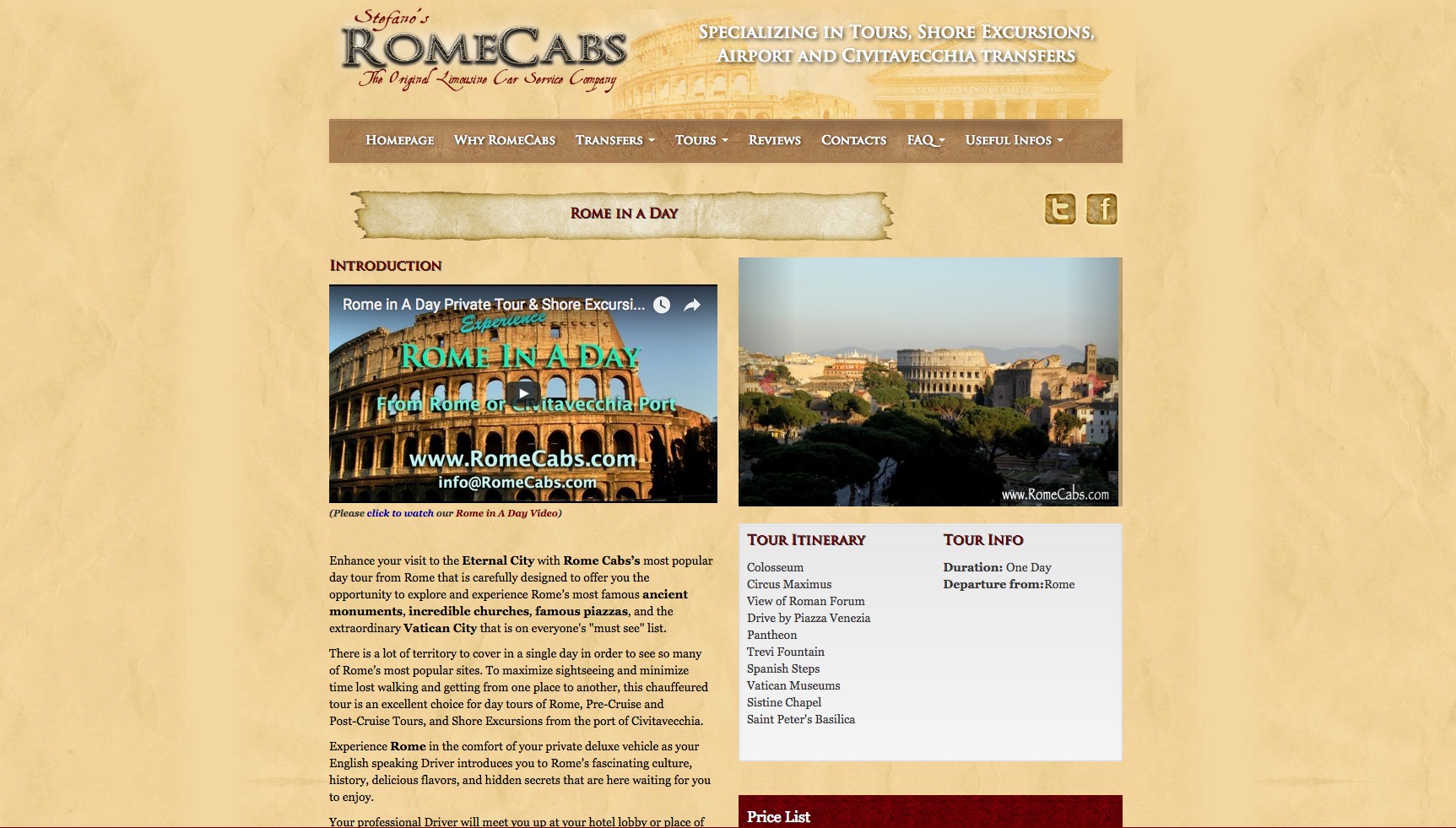
Rome in A Day Tour with Stefano’s RomeCabs
.
Transfer companies may operate differently according to local city, airport, or port regulations.
While many airports allow the public (and drivers) to access the baggage claims area so clients are met right by their luggage carousel, many other airports (like Fiumicino Airport that serves Rome) regard baggage area a security restricted area and travelers have to meet their drivers elsewhere. If booking a transfer in a hurry assuming pick up at the airport is the same everywhere, you will miss out on very important information and find yourself unable to locate your driver.
Tour companies offer different types of tours and itineraries that can take some time to read through and select the best for you.
Also, not all companies worldwide operate the same way. A tour you book in Greece may not be provided the same way in Italy, local laws regulate the way tour operators, drivers and guides can conduct business. Monuments and Museums may require advance ticket reservations to avoid long wait times or missing out on visiting specific sites all together. Some companies include tickets in their tours, others do not.
Being well prepared and informed in advance prevents disappointments during your travel.
.
4 YOUR TRIP IS TAKEN CARE OF IN ADVANCE, NO WORRIES DURING YOUR TRIP
Don’t be one of the many travelers who desperately try to book a transfer the night before only to find their top choices are fully booked, or it’s after office hours and too late to place a reservation. Being left at the mercy of whoever is available and wonder if they will show up to pick you up is not very reassuring.
It’s a very stressful way to spend your last vacation night.
You should be spending your last few days of your vacation having fun and celebrating, not worrying about how you’re going to get back to the airport or cruise port.
.
5 MANY TOURS REQUIRE ADVANCE TICKET RESERVATIONS THAT SELL OUT
Booking an organized tour takes out the pre-trip research, studying and planning an otherwise DIY trip. Tour companies have already created and organized different tour itineraries to suit various interests. All you have to do is read the tour and service details on their website so you are well informed about what you are booking, and place your reservation.
Depending on the tours that you book, some (or many) may include highly popular monuments and museums that require advance ticket reservations in order to avoid long wait times in lines that can be hours long.
.
.
By waiting until last minute to book tour with popular sites to visit, the tours of your choice can get booked up and tickets themselves can sell out.
If you book group tours your admission tickets may already be included in your tour price as companies that specialize in group tours usually obtain certain pricey contracts to buy tickets in bulk. Because there are a specific number of persons in a group tour the tickets and spots are finite.
If you book private tours you may be required to reserve your tickets in advance as private tours are flexible and itineraries (or tour dates) can be adjusted to suit clients’ needs.
One of the many benefits of a private tour is if it includes a certain monument or museum in its itinerary you don’t want to visit, you can substitute it with something else of interest – group or shared tours don’t offer those luxuries and you will be charged for tickets for sites you may not want to visit. By not including admission tickets in the tour fee clients have the option to visit or skip those sites. It’s also less expensive to book one’s own tickets online (such as for the Colosseum and Vatican Museums in Rome, and Uffizi or Accademia Galleries in Florence) than for the companies to provide them at an upcharge.
It’s important to note that once booked these tickets are Non refundable, so be sure you will keep the tour because the tickets cannot be refunded or exchanged.
.
6. YOU CAN BETTER PLAN YOUR TRIP BUDGET AND COSTS IN ADVANCE
When planning for your international vacation, you can better budget your trip in advance and organize your expenses so you are covered for all your travel needs and wants.
When your transfers and tours are booked in advance, you know what they will cost and can calculate your expenses local currency so you are well prepared. By waiting until last minute, it’s much more difficult to properly track your expenses or be properly prepared to cover them as needed.
.
.
For example… many cruisers docking in Civitavecchia wait until the very last minute to book a port transfer. On busy port days that place a huge demand on transfer services, availability may not be possible. As a result, their choices are limited to very pricey hotel chauffeur services, local Civitavecchia taxis that often charge double what a standard transfer company charges, or take ship provided transfer services at even greater fees. This can place a huge unexpected dent on their travel budgets.
.
By booking all your transfers and tours in advance you better budget your travel expenses for a more predictable travel with little or no unpleasant surprises.
.
We hope you enjoyed reading “Should I book my transfers and tours in advance? 6 Reasons why you should!” If you found it helpful, please share with others who might benefit from this information.
Thank you very much for reading our travel blog. If we can assist you with Airport Transfers in Rome, Civitavecchia Port Transfers, Day Tours from Rome or Florence, or Shore Excursions from Italy’s main cruise ports please browse our website for transfer and tour information, or send us an email (contact information is included in our website).
.
Stefano’s RomeCabs
..
.
Thank you for choosing Stefano’s RomeCabs for your Transfers and Tours in Rome and beyond.
Stefano’s RomeCabs Team
.
.

CIVITAVECCHIA PORT to ROME: Easiest and Quickest way to get there
Buon giorno and welcome to Stefano’s RomeCabs, Rome’s leading company for transfers and tours from Rome and Civitavecchia.
While there are numerous ways to get from Civitavecchia to Rome (train, taxi, shuttle, or private transfer), this travel article addresses one very common question among cruisers: What is the easiest and quickest way to get between Civitavecchia and Rome?
.
Civitavecchia Port to Rome: Easiest and Quickest way to get there
.
The easiest, quickest, most reliable, hassle free, and worry free way to travel between Civitavecchia and Rome is to book a private transfer.
Booking a private transfer takes the time consuming work of trying to sort out the different transportation methods, figure out how to get to your destination with heavy luggage, worrying about arriving on time or losing precious time.
.
Once you reserve your Civitavecchia Transfer online and your reservation is confirmed, you are all set.
There is nothing further you have to do in regards to your Civitavecchia Transfer. You can then continue with your other travel plans.
.
RomeCabs Civitavecchia Transfers
.
.
READ: Tips on Booking your Airport and Civitavecchia Transfers with RomeCabs
.
On a private transfer with RomeCabs, your driver will have all your transfer information ahead of time.
There is no need for you to explain where you need to go. Your driver will already know where to go based on your reservation that you submitted to us.
.
You don’t have to worry about carrying your luggage on a private transfer.
your RomeCabs driver will assist you with loading and unloading your luggage in our deluxe vehicles. You don’t have to lift a finger!
One of the most challenging things about travel is getting around with heavy luggage. And when you are on a 2 week cruise, it’s natural to bring additional luggage since once you’re on your ship you don’t have to pack, unpack, and transport your luggage to multiple locations… your “hotel room” travels with you.
..
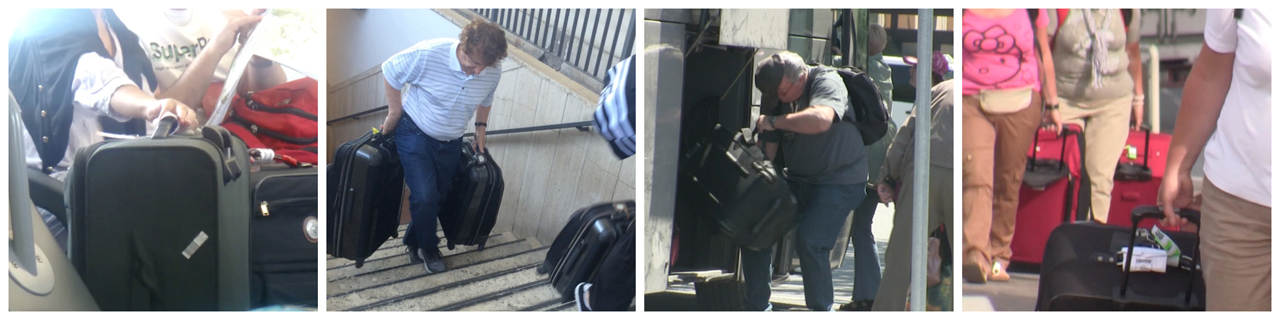
Civitavecchia TRAIN STATION – Traveling by Train with luggage
.
READ: MAKE THE MOST OF YOUR PRE-CRUISE CIVITAVECCHIA TRANSFER
.
.
We provide door to door service on our private Civitavecchia Transfers for optimal convenience.
This means predictable pick up times (of your choosing), no wait times for shared shuttles to pick up other passengers, and quick delivery to your destination without any undue stops in between.
This makes for a predictable pickup and arrival times so you can best plan and organize your schedule.
.
RomeCabs Civitavecchia Transfers
.
.
.
READ: 10 Important Things to Remember when booking Rome Airport and Civitavecchia Transfers
Do your travel plans change? You can easily change your reservation without any problems.
On a private transfer with us, you are in charge of your transfer. Just let us know in advance and your reservation will be updated to reflect your new request. This type of personal customizable service offers our clients the freedom and flexibility their trip demands.
.
.
Our prices are always published and agreed upon in advance. NO hidden costs.
Our Civitavecchia Transfer price lists are prominently published on our website so you know in advance what the cost is of the service you wish to book.
Our transfer rates are all inclusive, there are no additional costs such as taxes, tolls, parking, or luggage fees. This way you can best plan your travel expenses in advance and budget accordingly. You also have the option to prepay so you have no worries during your travels.
While there are many transportation options available to cruisers that vary in ease, efficiency, reliability, time, and costs, if you are looking for the most convenient, efficient, reliable, predictable, and quickest way to travel between Civitavecchia and Rome, we are at your service.
.
For information on our Civitavecchia Transfers, as well as Shore Excursions from Civitavecchia and other main ports of Italy, please visit our website below.
.
Stefano’s RomeCabs
.
.
Thank you very much for choosing Stefano’s RomeCabs for your Civitavecchia Transfer needs. We look forward to welcome you to Italy!
The RomeCabs Team
RomeCabs.com
.
6 Most Common MISTAKES when booking Civitavecchia Port Transfers
.
Buon giorno and welcome to Stefano’s RomeCabs, Rome’s leading company for private Civitavecchia Transfers and Shore Excursions from the ports of Italy.
Reserving your Airport and Civitavecchia Transfers on our official RomeCabs website is easy, efficient and secure. Our booking form will request from you all the necessary information we need to provide you with accurate service.
It is also very important to pay attention to certain details regarding your transportation needs in order to avoid these most common mistakes cruisers have made when booking transfers to and/or from Civitavecchia
.
RomeCabs Civitavecchia Transfers
.
6 MOST COMMON MISTAKES WHEN BOOKING CIVITAVECCHIA PORT TRANSFERS
(and how to avoid them)
.
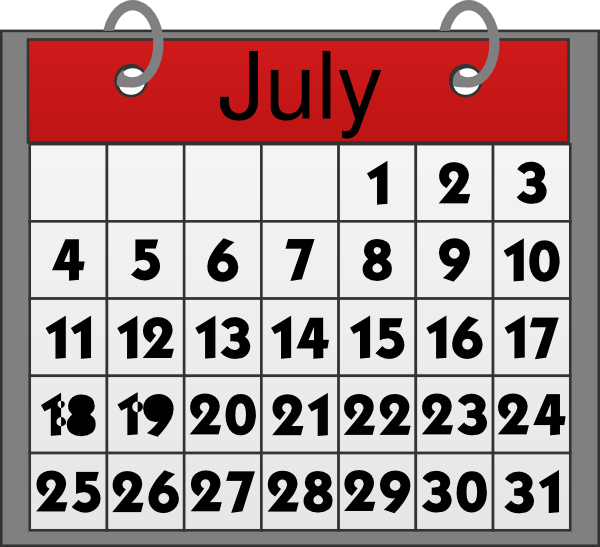
1 Booking the Incorrect date (verify date of service)
.
.
Booking a transfer from the airport with the incorrect date is a common airport transfer mistake as some travelers book their arrival at Rome’s airport with the date of their departure from their place of origin without checking their airline tickets.
For example, flights departing from Canada, United States, or South America, arrive in Italy the day after, not on the same date. This is very important for transfers from the Airport to your cruise ship in Civitavecchia.
Also important is to double check the date your ship will dock in Civitavecchia. When docking in multiple ports, the dates can sometimes become confusing resulting on booking a transfer to or from Civitavecchia on the wrong date.
.
2 Provide Incorrect ship name
.
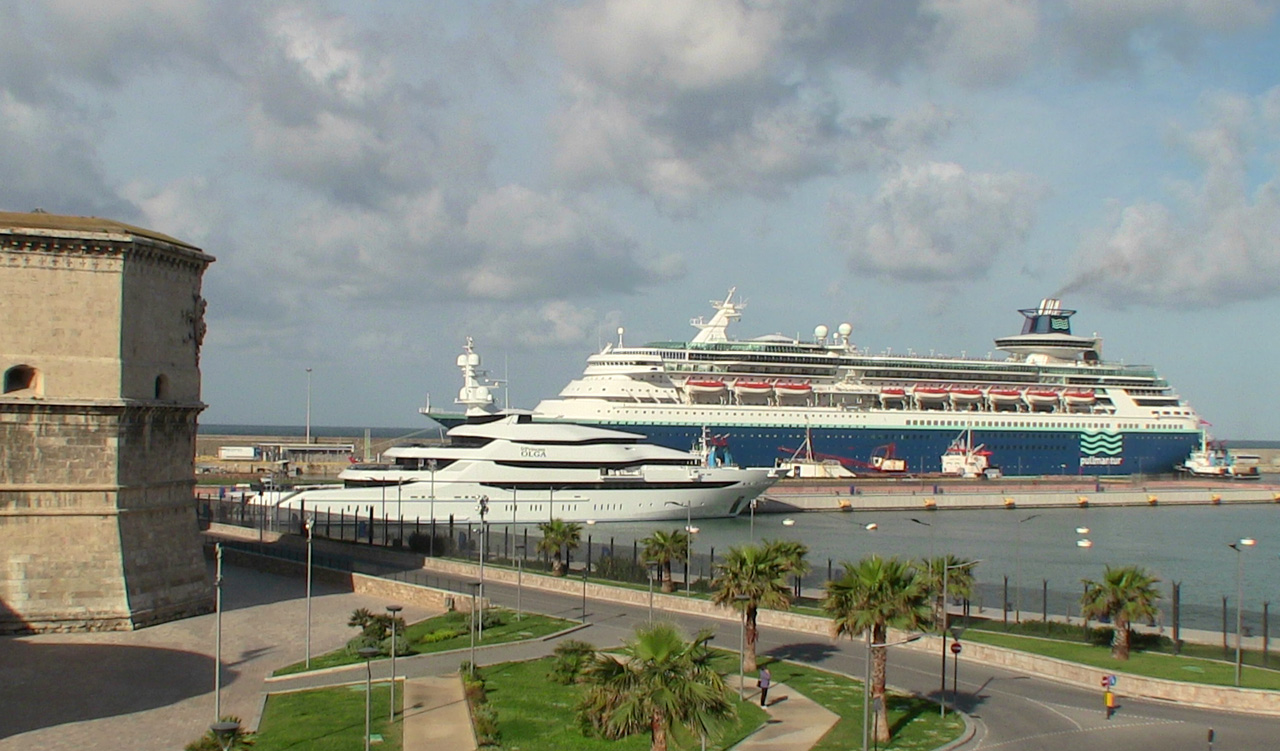
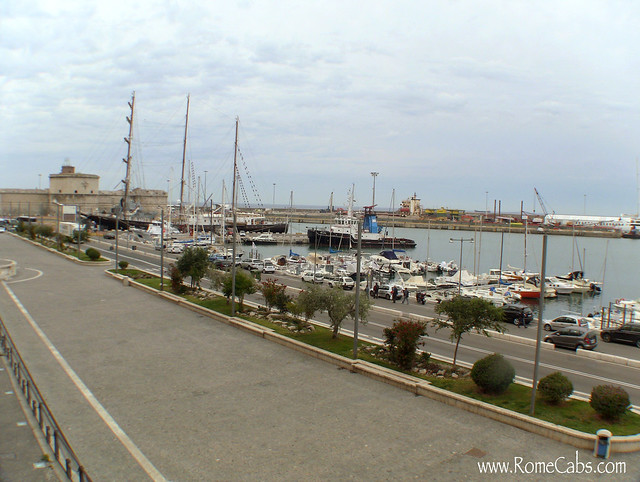
Port of Civitaveccha
.
With so many ship names sounding very similar (think “Emerald Princess” , “Royal Princess”…) it sometimes easy to place a reservation with the incorrect ship name, or placing a reservation with only the cruise line name such as “Princess Cruise” instead of the actual ship name.
With cruise lines somethings docking more than 1 of their ships at a time, it’s important to book the correct ship name and not only the cruise line you are sailing with.
While such error can be corrected on transfers TO your ship in Civitavecchia by simply communicating this to your driver, the problem is for transfers FROM Civitavecchia. Without the correct ship name, your driver will not know which pier to meet you at. Often there are multiple ships docking together at a time at different piers far apart.
.
3 Not reporting the correct total number of luggage
.

.
Depending on the duration of the cruise, some cruisers may require additional luggage.
When booking private transportation, it’s important to make sure that if you are bringing extra luggage with you to inform the company when placing your reservation.
Why?
You may need a vehicle upgrade to accommodate the extra luggage, or if you are a large group or family with a lot of luggage you may require more than one vehicle if total amount of luggage exceeds the luggage capacity of the vehicle.
Not informing the company of excess luggage that would require a large vehicle, or a 2nd vehicle if traveling in a large group may cause you delays while a suitable vehicle (or additional vehicle) is made available, you may incur costs you were not prepared for in advance.
Rule of thumb: if you are party of 1 to 3, or a party of 6 – 8 bringing more than 1 suitcase and 1 carry on per person inform the car service company in advance so your party and your luggage can be safely accommodated together inside the vehicle.
.
4 Booking your Post Cruise Departure Flight too early in the morning
.

.
Booking your Post Cruise departure flight too early in the morning without taking into consideration disembarkation time, potential docking delays, or morning traffic can place you at risk of missing your flight.
From Civitavecchia to Fiumicino Airport, allow at least 1 hour and 15 minutes for travel time. More than that if you are traveling to Ciampino Airport.
When booking your departure flight on the same day your ship docks in Civitavecchia, give yourself plenty of leeway time to cover unforeseen delays such as ship docking late, disembarkation delays, and traffic.
Safe flight departure times are 11:00 AM and later.
.
.
ALSO READ:
MAKE THE MOST OF YOUR PRE-CRUISE CIVITAVECCHIA TRANSFER
THE BEST AND WORST TIME TO BOOK YOUR CIVITAVECCHIA TRANSFERS
HOW THE TRAIN RUINED THE CRUISE FOR THOUSANDS OF CIVITAVECCHIA CRUISERS
.
.
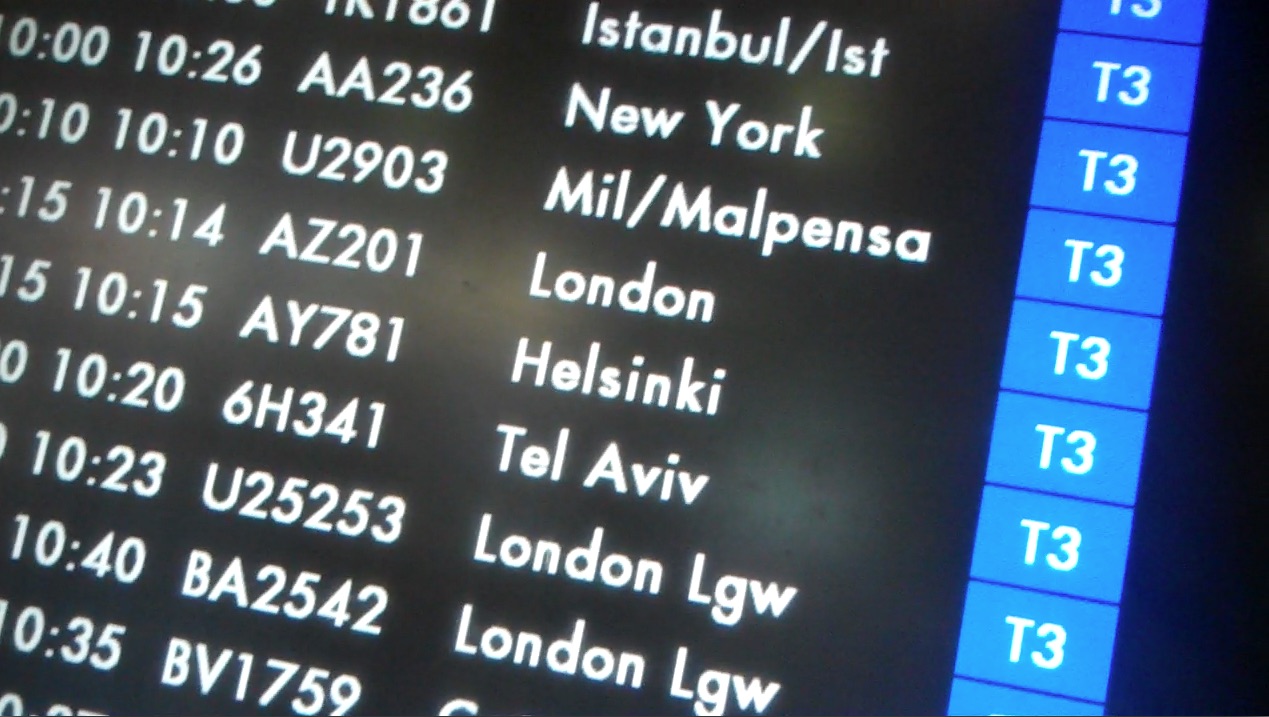
5 Booking your Pre Cruise Arrival Flight too late on the same day your ship sails
.
.
Booking your arrival flight on the same day your cruise departs comes with certain risks: missed connections, lost luggage, flight delays… all of which can impact the start of your cruise.
However, booking your flight arrival flight too close to your ship departure time is highly risky and many cruisers have missed their ship as a result. You are one missed connection, one flight delay, one lost piece of luggage from missing our ship.
If your luggage is delayed our missing you may have to choose between waiting for your missing luggage , or missing your ship. This is not the best way to begin your cruise holiday.
If you can, plan to arrive in Italy at least the day before your cruise departs. This will cover any unforeseen travel delays and potentially lost luggage that you can still recuperate before you embark on your cruise.
By arriving a day early you can either make the most of your short time in Rome enjoying the Eternal City, or you can go directly to a hotel in Civitavecchia and be close to the cruise port.
.
6 Not bringing a copy of your transfer reservation
.
Not bringing a copy of confirmation email with important information such as where to meet your driver, emergency contact, or details of your reservation.
.
.
HOW TO MEET YOUR DRIVER AT FCO AIRPORT
.
..
.
.
Your transfer reservation and confirmation email includes important details about your transfer – some of which you may need during your travels such as the company emergency contact number, your complete final destination details (in case you need to recall your hotel name and address), where to meet your driver, the price of the service you booked, and other helpful information. It’s best to have it handy and not need it, than to need it and not have it with you.
We hope these tips will help with your cruise and travel plans.
For more information on our Civitavecchia Transfers, Shore Excursions from the Cruise Port, Day Tours from Rome, or Airport Transfers, please visit our website below:
.
Stefano’s RomeCabs
…
.
Thank you very much for reading our travel blog. If you have any travel tips to share, please let us know in the comment box. If you know of others who may benefit from this information please share.
For more information about our company, our Civitavecchia Transfers, and Shore Excursions in Italy, please visit our website below. We’d be happy to assist you with your transfers and tours in Italy!
The RomeCabs Team
Stefano’s RomeCabs
.
7 Awesome Reasons to visit Rome in the Fall
Buon giorno and welcome to Stefano’s RomeCabs Tours and Transfers Travel Blog. Rome is one of the most fascinating cities to visit any time of the year, but the fall months offer unique benefits and charms that make it an ideal time to explore this ancient city. From fewer crowds to seasonal delights, here are seven compelling reasons why you should plan a visit to Rome during the autumn months.
In this post we present you with :
.
7 Awesome Reasons to visit Rome in the Fall
.
1. Fewer Crowds After the Busy Summer Season
.
Summer in Rome is synonymous with throngs of tourists descending upon the city’s most iconic landmarks. Whether it’s the majestic Colosseum, the awe-inspiring Vatican Museums, or the romantic Trevi Fountain, these sites are packed with visitors during the peak summer months. The bustling crowds can make it challenging to fully appreciate the beauty and history of these locations, not to mention the long, winding lines that can stretch for hours under the scorching Roman sun.
.
Escape the Crowds in Rome at Major Attractions (especially October – November):
One of the most significant advantages of visiting Rome in the fall (especially October through November) is the ease of access to its world-renowned attractions. The reduced number of tourists means shorter lines at ticket booths and security checkpoints, giving you more time to immerse yourself in the wonders of ancient Rome.
.
Enhanced Cultural Experiences:
With fewer tourists vying for space, you’ll find that museums, galleries, and historic sites are more conducive to a deep and personal connection with Rome’s rich cultural heritage. Imagine standing in front of Caravaggio’s masterpieces or the ancient sculptures in the Capitoline Museums, with the luxury of time to truly appreciate the artistry and history.
.
Quieter Streets and Squares in Rome in the fall:
Rome’s piazzas, the heart and soul of the city, become particularly enchanting in the fall. Places like Piazza Navona, with its stunning Baroque fountains, or Piazza di Spagna, home to the famous Spanish Steps, are less crowded, allowing for leisurely exploration. The reduced foot traffic makes it easier to find a cozy spot at a café to sip on an espresso or enjoy a gelato while soaking in the atmosphere. You can also wander through lesser-known neighborhoods, like Trastevere, where the narrow, cobblestone streets and charming squares offer a glimpse into the everyday life of Romans, without the throngs of tourists.
In essence, visiting Rome in the fall provides a unique opportunity to experience the city’s grandeur without the overwhelming summer crowds. Whether you’re exploring ancient ruins, admiring Renaissance art, or simply enjoying the ambiance of a quiet piazza, the calmer atmosphere of the autumn season allows you to connect more deeply with the timeless beauty and history of Rome.
.

.
.
.
2. Better Airline and Hotel Rates in Rome in the Fall
.
The fall season in Rome, often referred to as the “shoulder season,” marks a transitional period between the bustling summer months and the quieter winter season. This period – particularly October through November – is characterized by a noticeable drop in tourist numbers, which brings a significant advantage for savvy travelers: lower prices on flights and accommodations. If you’re looking to experience Rome without breaking the bank, autumn offers a perfect blend of value and enjoyment.
.
Better Airfare Rates to Rome in the Fall
As the peak summer travel season winds down, airlines begin to adjust their fares to reflect the decreased demand. This often results in more favorable prices on flights to Rome, making it an ideal time for budget-conscious travelers. Whether you’re flying from within Europe or embarking on a long-haul journey from North America, Asia, or beyond, the fall season can offer savings. These lower airfare prices can also open up the possibility of upgrading your travel experience—perhaps flying premium economy or business class at a more affordable rate, allowing you to arrive in Rome well-rested and ready to explore.
.

.
.
Hotel Deals and Availability in Rome in the Fall:
The hospitality industry in Rome responds similarly to the seasonal ebb and flow of tourists. During the fall, hotels sometimes lower their rates to attract visitors during these quieter months. This can translate into additional savings on accommodations, whether you’re staying in a luxurious five-star hotel overlooking the Tiber River, a historic boutique property in the heart of the city, or a charming guesthouse nestled in a quaint Roman neighborhood.
Additionally, with lower occupancy rates, you might find that hotels may have better room availability, and more personalized service, enhancing your overall stay.
.
Hotel Savings can be used to enhance your visit in Rome
The savings on flights and accommodations mean that you can allocate more of your budget to enriching experiences in and around Rome. Imagine indulging in a multi-course meal at a Michelin-starred restaurant, exploring Rome’s vibrant culinary scene, or enjoying a wine tasting tour in one of the city’s historic enotecas.
Perhaps you’ll want to shop for high-quality leather goods, artisanal crafts, or unique souvenirs in Rome’s boutiques and markets. Alternatively, the savings could allow you to extend your stay and explore more of Italy—consider taking day trips from Rome to nearby regions like Tuscany, Umbria, or the Amalfi Coast, each offering its own unique charm and beauty.
.

.
.
.
Increased Flexibility for Hotels, Transfers and Tours in rome
The shoulder season also brings more flexibility in travel plans. With fewer tourists in the city, you’re more likely to find last-minute availability for flights, hotels, walking tours, Rome Tours by car, and transfers from Rome. This flexibility can be particularly advantageous for spontaneous travelers who prefer to book closer to their departure date or for those who wish to extend their stay without the worry of limited availability.
.
3. Cooler Temperatures for More Enjoyable Sightseeing
.
While summer in Rome is on many people’s bucket-list, the fall months are significantly better to visit Rome. One of the most inviting aspects of visiting Rome in the fall is the transition to cooler, more comfortable weather. As the intense heat of July and August in Rome fades, the city embraces the mild and refreshing temperatures of September, October, and November. This shift not only enhances the overall experience of exploring Rome but also adds a layer of charm to your journey through the Eternal City.
.
What is the Weather like in September in Rome:
September is a good month to visit Rome. It marks the beginning of this pleasant transition, with daytime temperatures typically ranging from 72°F to 85°F (22°C to 29°C). The warmth is still present but no longer overwhelming, making it an ideal time to visit Rome’s iconic sites. Imagine wandering through the ancient ruins of the Roman Forum or standing in awe before the Colosseum without the need to constantly seek shade or a cool drink. The weather is just right for enjoying Rome’s open-air attractions without the exhaustion that often accompanies summer heat.
.
What is it like in October in Rome:
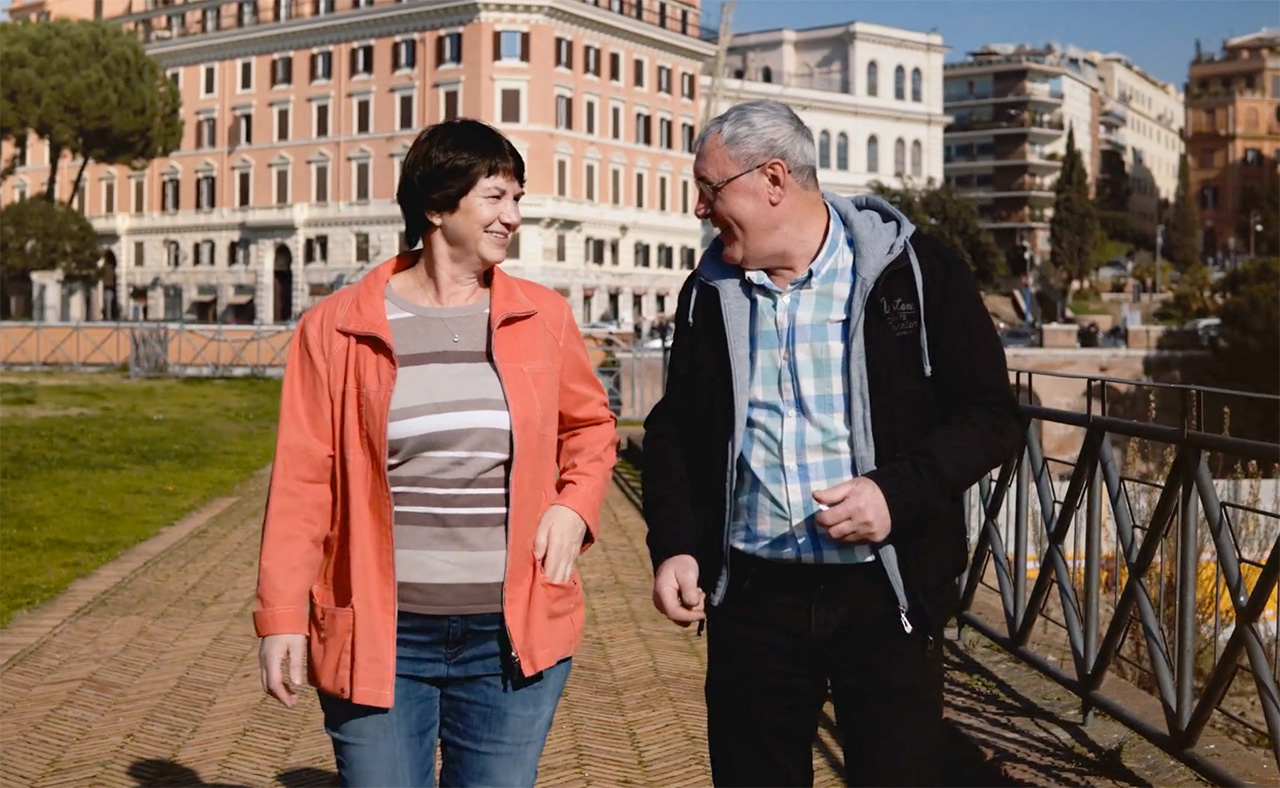
As October arrives, the city cools slightly, with temperatures hovering in the upper 60s to low 70s (19°C to 23°C). This period is often considered one of the best times to visit Rome, as the crisp, refreshing air enhances your experience of the city’s many offerings. Whether you’re strolling through the Vatican Museums, taking a leisurely walk along the Tiber River, or exploring the charming streets of Trastevere, the cooler climate allows you to fully immerse yourself in the city’s rich history and culture. The fall foliage adds a picturesque touch, especially in Rome’s numerous parks and gardens, providing a beautiful backdrop to your explorations.
.
.
.
.
What is the Weather like in November in Rome:
By November, the weather cools further, with daytime highs in the mid-50s to low 60s (13°C to 17°C). While mornings and evenings may require a light jacket, the days remain pleasant for sightseeing. The cooler climate brings a sense of tranquility to the city, as the tourist crowds thin out and Rome’s pace slows down. This is the perfect time to explore Rome at a more relaxed pace, taking in the sights and sounds without the hustle and bustle of peak tourist season.
The cooler temperatures not only make exploration more comfortable but also more energizing. You can cover more ground, from ancient ruins to vibrant neighborhoods, without the fatigue that comes with summer’s sweltering heat. Walking through the cobblestone streets of Rome becomes a delight, allowing you to discover hidden gems, charming cafes, and historic landmarks with ease. The cooler weather also enhances the experience of Rome’s outdoor spaces, from the expansive Villa Borghese gardens to the panoramic views from Janiculum Hill.
.
Discover hidden gems of Rome in the Fall
Dining al fresco in Rome is another pleasure that’s made even more enjoyable in the fall. With the heat of summer behind, you can savor a leisurely meal in one of Rome’s many piazzas or sip a glass of wine at a sidewalk café, all while enjoying the crisp autumn air. Picture yourself in Piazza Navona, indulging in traditional Roman dishes as the city’s vibrant life unfolds around you, or taking in the sunset from a rooftop terrace with a stunning view of St. Peter’s Basilica. The cooler evenings are perfect for such moments, adding a touch of romance and relaxation to your stay.
Fall also brings a variety of seasonal activities that are best enjoyed in the cooler weather. From Rome’s hidden gardens to local food that highlights autumnal flavors like chestnuts and truffles, the opportunities for unique experiences are abundant. These activities, paired with Rome’s mild fall climate, create memories that are as enjoyable as they are unforgettable.
In essence, the cooler temperatures of fall transform sightseeing in Rome into a more comfortable, energizing, and thoroughly enjoyable experience. Whether you’re visiting Rome for the first time or returning to explore more, the city in autumn offers a perfect blend of pleasant weather, cultural richness, and unforgettable moments.
.
.

.
4. Enchanting Evenings in Rome in the Fall
.
One of the most captivating aspects of Rome is the way the city comes alive after dark. As day turns to night, the Eternal City reveals a different side of itself, one that is bathed in the soft, golden glow of illuminated monuments and fountains. The fall season offers a perfect balance, where the evenings remain warm enough to savor Rome’s nightlife while enjoying the crisp, refreshing air that autumn brings.
.
Evening Charm in Rome in the Fall
Rome’s historic center takes on an almost mystical quality at night. The streets, which are often bustling with activity during the day, become quieter, allowing for a more intimate exploration of the city’s iconic landmarks. A leisurely evening passeggiata, or stroll, is a time-honored Roman tradition that is best experienced in the fall.
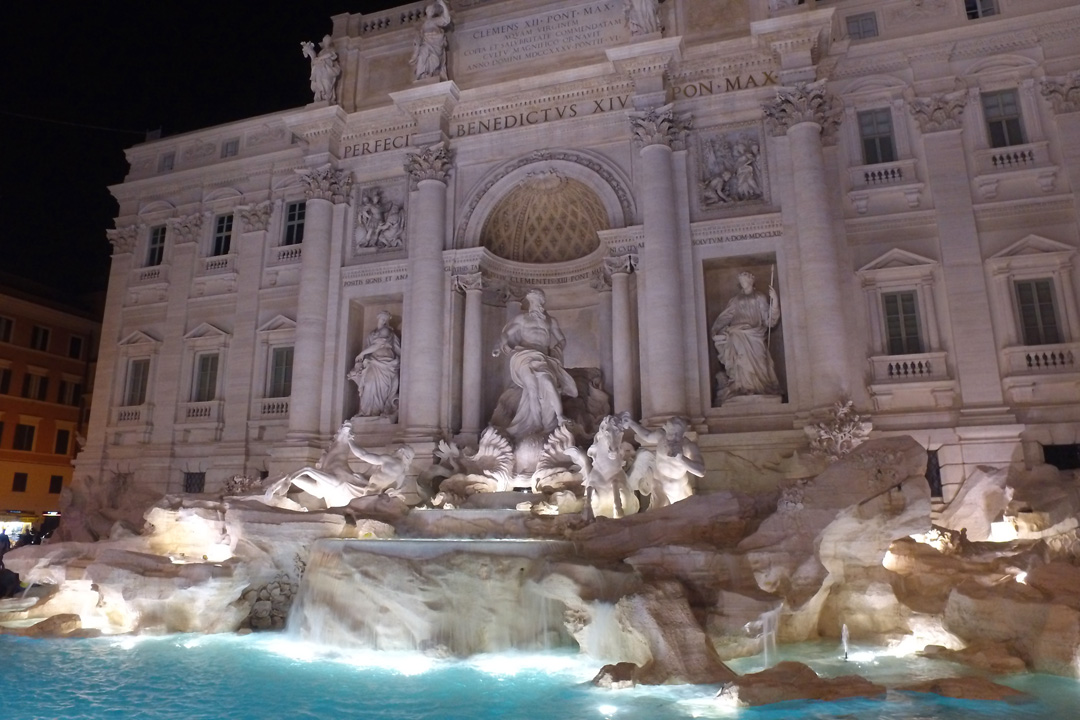
As you wander through the ancient streets, you’ll encounter the Pantheon, its grand columns dramatically lit against the night sky, and the Trevi Fountain, where the sound of cascading water is even more mesmerizing under the evening stars. The Spanish Steps, too, offer a picturesque spot to sit and watch the world go by, all while enjoying the cooler temperatures that make Rome in the fall so inviting.
.
.
Dine Under the Stars
Fall evenings in Rome are ideal for dining al fresco, and the city’s outdoor restaurants and trattorias remain open late into the season. Imagine sitting at a cozy table in a charming piazza, the air filled with the tantalizing aromas of Roman cuisine.
Whether you’re enjoying a simple pizza fresh from a wood-fired oven or indulging in a multi-course feast featuring seasonal specialties, dining under the stars adds a magical touch to your meal. The warm autumn evenings create the perfect setting for lingering over a glass of wine or sampling a selection of cheeses and desserts, all while soaking in the ambiance of Rome’s nighttime allure.
.
5 Wine harvests make day trips to Tuscany from Rome
.
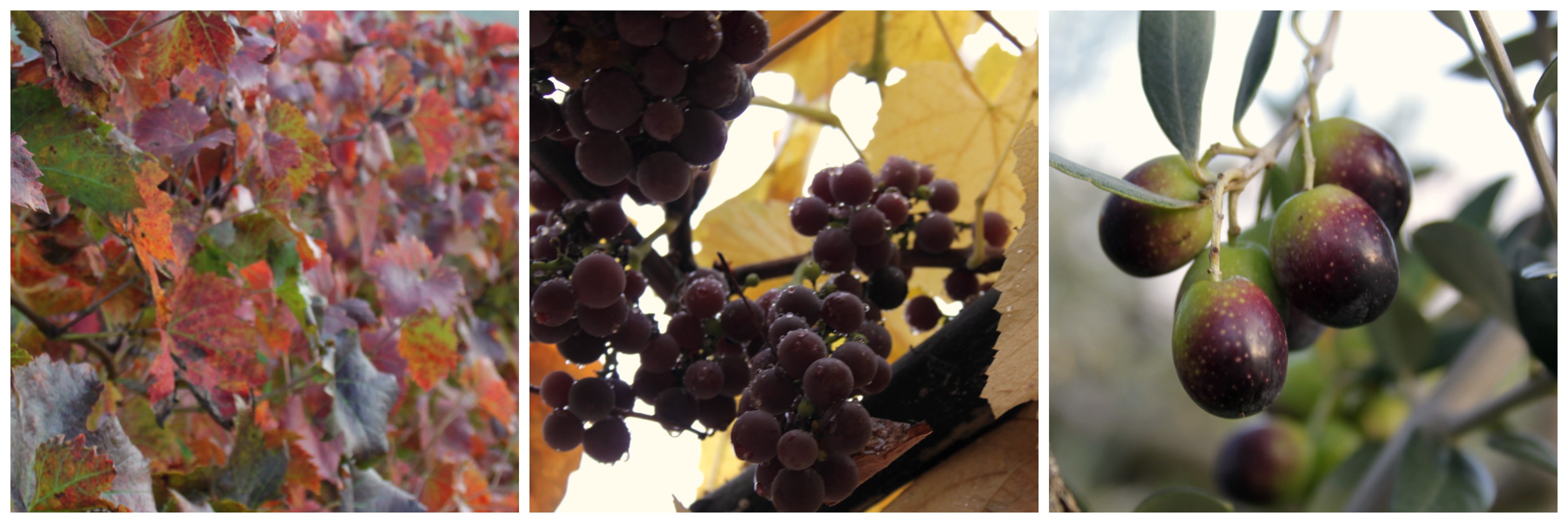
Autumn in Italy brings with it the highly anticipated grape harvest season, or “vendemmia,” especially in the renowned wine regions of Tuscany. While Rome itself isn’t a hub for winemaking, its close proximity to Tuscany offers the perfect opportunity for unforgettable day trips to experience this vibrant tradition.
.
.
Explore Tuscany’s Wine Country
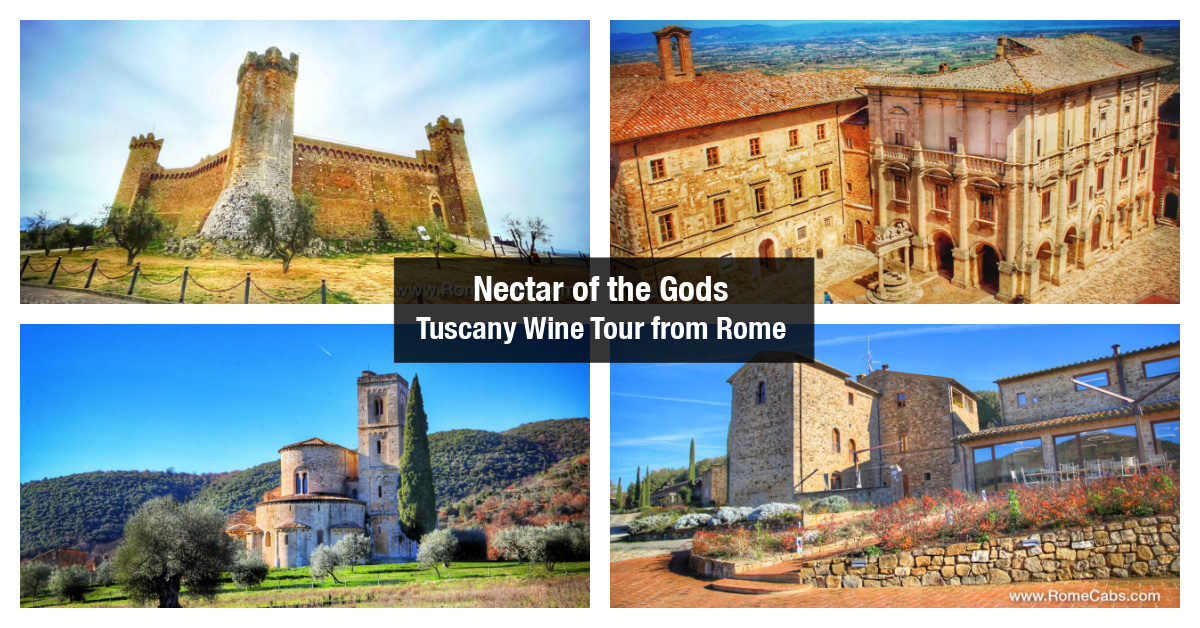
A journey from Rome to Tuscany places you in the heart of Italy’s wine country, where the picturesque landscapes of Montalcino, Montepulciano, and Chianti unfold. During the harvest season, vineyards are buzzing with activity as grape pickers meticulously gather ripe clusters of grapes by hand. Visitors to these vineyards can witness the traditional methods of winemaking, from the careful selection of grapes to the crushing and fermenting processes that are essential to producing world-class wines.
.
Indulge in Wine Tours to Tuscany and Day Trips from Rome
The fall season is an ideal time to visit Tuscan wineries, as many offer special tours and tastings that are uniquely tied to the harvest. Imagine walking through rows of sun-kissed vines, learning about the distinct characteristics of the grapes, and ending your tour with a tasting of the region’s finest wines. Notable varieties such as Brunello di Montalcino, Vino Nobile di Montepulciano, and Chianti are often featured in these tastings, accompanied by local delicacies like pecorino cheese, olive oil, and cured meats. These experiences allow you to fully appreciate the nuances of Tuscan wine, which are deeply rooted in the land’s terroir.
.
.
.
.
Vendemmia: Wine Harvest Season and Festivals
The grape harvest is more than just an agricultural event in Tuscany—it’s a time of celebration and cultural expression. Many small towns and villages throughout the region host festivals in honor of the vendemmia. These lively events often include parades, live music, traditional dances, and, naturally, an abundance of food and wine. Participating in a harvest festival offers a unique opportunity to immerse yourself in local traditions, where the joy of the harvest season is shared among locals and visitors alike.
While the focus may be on wine, these day trips from Rome to Tuscany also offer a chance to explore the charming medieval towns that dot the landscape. Strolling through the cobbled streets of Montepulciano or visiting the ancient fortress of Montalcino, you’ll find yourself surrounded by history and breathtaking views of the Tuscan countryside. Whether you’re a wine enthusiast or simply looking to experience the beauty of Italy’s autumn season, a visit to Tuscany during the grape harvest is an enriching and memorable experience..
.

.
.
.
Stefano Rome Tours offers two exciting tours to Chianti region that’s ideal to visit in the fall:
.
.
.
6. Savor Autumn Flavors in Rome
.
As the air in Rome turns crisp and the leaves begin to change, the city’s culinary scene bursts into vibrant flavors reflective of Italy’s rich autumn harvest. Visiting Rome in the fall offers an opportunity to indulge in seasonal delicacies that highlight the country’s agricultural traditions and the artistry of Italian cuisine.
.
Explore Rome’s Bustling Markets
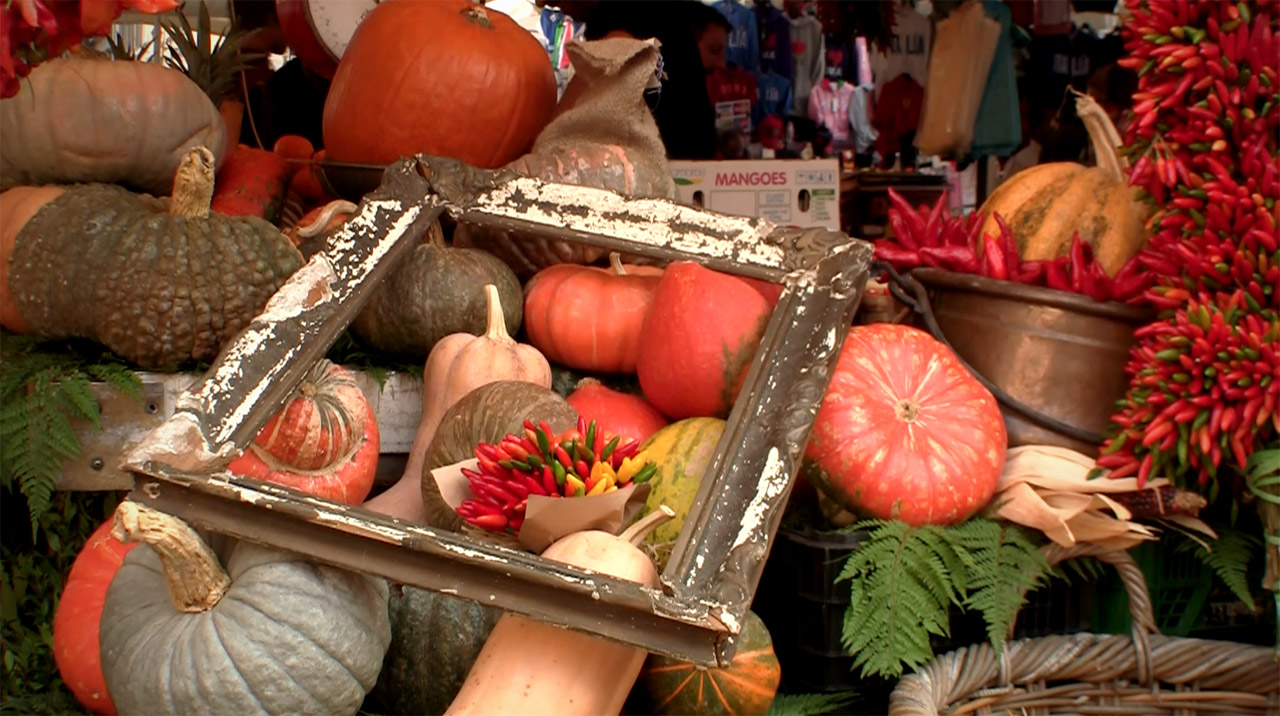
Autumn is a season of abundance in Rome, and the city’s markets are brimming with fresh, seasonal produce. Campo dei Fiori, one of the most iconic markets in Rome, becomes a colorful display of autumn’s best offerings. Here, you can find everything from plump, ripe figs and juicy grapes to earthy mushrooms like porcini, and the highly prized white and black truffles. Wandering through the market, you’ll be greeted by the vibrant hues of pumpkins, squash, and persimmons, alongside crates of chestnuts ready for roasting. The market is not only a place to purchase these ingredients but also a sensory experience, where the sights, smells, and sounds create an immersive introduction to Rome’s autumnal fare.
But Campo dei Fiori isn’t the only market to explore. The bustling Mercato Testaccio is another must-visit destination for food lovers. Located in the Testaccio neighborhood, this market is renowned for its authentic Roman atmosphere and wide variety of seasonal produce.
.
.
.
.
.
.Savor Seasonal Autumn Flavors: chestnuts, truffles and olive oil
Autumn marks the beginning of truffle season in Italy, and this prized delicacy takes center stage in many Roman restaurants. Truffles, known for their deep, earthy aroma and complex flavor, are often the star of seasonal dishes during this time. Whether freshly shaved over a plate of handmade pasta, incorporated into rich sauces, or used to enhance simple dishes like eggs or bruschetta, truffles elevate the dining experience to something extraordinary. Restaurants across Rome, from traditional trattorias to upscale dining establishments, offer special truffle menus that allow visitors to savor this luxurious ingredient in various forms.
As the weather cools, the streets of Rome fill with the aroma of roasted chestnuts, a quintessential autumn treat. Vendors set up carts throughout the city, offering paper cones filled with warm, freshly roasted chestnuts. This simple yet delicious snack is a beloved tradition during the fall months, providing a comforting taste of the season as you explore Rome’s historic streets.
In addition to chestnuts, autumn is also the time when freshly pressed olive oil from the recent harvest makes its debut. This “olio nuovo” is celebrated for its vibrant, peppery flavor, which is best enjoyed drizzled over rustic bread or used to enhance salads and simple pasta dishes. Many restaurants and specialty food shops in Rome highlight this new olive oil, offering tastings that allow visitors to appreciate its unique qualities.
The flavors of autumn are also prominently featured in Rome’s restaurants and trattorias, where chefs take full advantage of the seasonal produce. Dishes like pumpkin ravioli, risotto with porcini mushrooms, and roasted game meats with chestnut stuffing become staples on many menus. Desserts, too, reflect the season, with offerings such as fig tarts, chestnut cakes, and apple crostatas. Each meal during the fall in Rome is an opportunity to explore the rich culinary traditions of the region, where the emphasis is on fresh, locally sourced ingredients prepared with care and creativity.
.
7. Fall Food and Wine Festivals around Rome
.
As the leaves turn and the air cools, Italy’s love for food and wine is showcased in a series of vibrant festivals celebrating the fall harvest. For visitors in Rome, these festivals offer a unique opportunity to immerse themselves in the rich cultural traditions of the surrounding regions. From chestnuts to truffles and wine, the autumn months are filled with events that honor Italy’s culinary heritage, making it an ideal time for gastronomic exploration.
Chestnuts are a beloved autumn treat in Italy, and chestnut festivals, known as sagre delle castagne, are a highlight of the season. In small towns surrounded by chestnut groves, the aroma of roasting chestnuts fills the air as locals gather to enjoy chestnut-based dishes. From sweet chestnut cakes to savory stews, these festivals offer a delicious taste of the season’s bounty. One of the most famous chestnut festivals is held in the town of Soriano nel Cimino, located in the scenic region of Viterbo which is also a celebration of the town’s medieval past with historical reenactments to entertain the huge crowds is attracts.
.
.
.
.
Autumn is also the time of the olive harvest, and freshly pressed olive oil takes center stage at festivals across the country. In regions like Umbria and Tuscany, you can sample this “liquid gold” at olive oil festivals, where local producers showcase their finest oils. Visitors can taste the fresh, peppery flavors of the new season’s oil, often paired with bread or simple dishes that let the oil’s taste shine.
Truffle season is another autumn highlight, with festivals dedicated to the white truffle, one of Italy’s most prized ingredients. These festivals also offer truffle hunting demonstrations, giving a glimpse into the tradition of finding these fragrant fungi in the forests.
Fall is grape harvest time in Italy, and wine festivals are held to celebrate the new vintage. These events are a joyful celebration of the harvest and a perfect way to experience the warmth of Italian hospitality.
Click HERE for festivals near Rome
.
Visiting Rome in the fall offers a unique blend of cultural richness, seasonal beauty, and culinary delights that make it an unforgettable experience. Whether you’re strolling through ancient ruins without the crowds, savoring autumn’s bounty at a local market, or enjoying a warm evening in a charming piazza, fall is the perfect time to discover the eternal city.
Rome in the fall is not just a destination; it’s an experience that tantalizes all the senses and leaves you with memories that will last a lifetime. So pack your bags, and let the autumnal charm of Rome captivate you!
Thank you very much for visiting our travel blog.
For more information on our Airport Transfers, Civitavecchia Transfers, Day Tours and Shore Excursions, please visit our website below:
.
.
Find RomeCabs online also on:
- RomeCabs FACEBOOK
- RomeCabs PINTEREST
- RomeCabs TWITTER
- RomeCabs TUMBLR
- RomeCabs INSTAGRAM
- RomeCabs FLICKR Photo Gallery
.
If you are visiting Rome in the summer, here are some helpful articles:
10 Easy Ways to Survive Rome in the Summer
3 Common Mistakes that Ruin your Summer Trip to Rome
.
.
What is Ferragosto – the Italian August 15 Holiday
.
Buon giorno and welcome to Stefano’s RomeCabs Transfers and Tours Travel Blog.
In this post, we introduce you to a popular Italian holiday:
.
What is Ferragosto – the Italian August 15 Holiday
.
Buon giorno and welcome to Stefano’s RomeCabs, Rome’s leading company for private Transfers, Day Tours and Shore Excursions.
August may be considered a slow travel month in many parts of the world who normally take their summer vacations in June or July, but in Italy, August is the month to take a much anticipated annual vacation… anywhere from 2 – 4 weeks.
Many small local businesses shut down while Italians pack their bags and head to the coastline beaches or to the mountains. You’ll find cities like Rome to be almost void of locals and the usual heavy traffic. However, most businesses that tourists depend on still stay open
It’s really pleasant to visit Rome in August if you don’t mind the hot summer heat: hotel prices dip (while the beachside resorts peak), fewer crowds, less traffic, quieter atmosphere.
One of the most celebrated holidays in Italy is Ferragosto which falls on August 15. As with many things Italian, this holiday too originated over 2,000 thousand years ago in Ancient Rome and evolved over time.
How many holidays do you have in your home country that started 2,000 years ago and still continue?
Here is a bit of history about this famous Italian holiday.
.
ANCIENT ROME
Ferragosto – or Feriae Augusti (Festivals of the Emperor Augustus) – was introduced by Emperor Gaius Octavius Augustus himself in 18 BC, supposedly after his victory over Mark Antony at the Battle of Actium in 31 BC.
This festival was added to previous existing festivals that celebrated the end of a long laborious period of harvest, and the numerous festivals together offered workers a longer period of much needed rest called Augustali.
During these festivals, horse races took place across the Roman Empire, and beasts of burden that worked the fields such as mules and oxen, were unfettered and honored with flowers.
Some festivals still take place in Italy during Ferragosto such as the Palio dell’Assunta in Siena and other historic festivals that are set during Italy’s Medieval or Renaissance eras.
During the Ferragosto festival, one of the traditions was that workers greeted their masters who gave them a small monetary reward. This custom has become so entrenched in the local culture that it became obligatory in Papal States by the Renaissance era.
.
CATHOLIC
The Assumption of Mary falls on Ferragosto holiday, August 15 and it is a Catholic holiday (therefore the Vatican Museums are also closed in observation).
This holiday is important to Catholics and Orthodox Christians as the the day Virgin Mary’s sinless soul and incorrupt body was received into Heaven. The Assumption of Mary is symbolized by the Lilly Flower (fleur-de-lis)
.
FASCIST
In the late 1290’s during Italy’s fascist regime, leisure-time pursuits during the Ferragosto arose with the regime organizing hundreds of trips promoting mass leisure activities.
The commonly known “People’s Trains of Ferragosto” were available to the populace at steep discounts to give the less well of class access to regions of Italy they otherwise would not afford on their own. Options included shorter Single Day Trips within 50-100 kilometer radius, or a 3 day trip within a radius of 100-200 kilometers
.
TODAY
Nowadays Italians anticipate their (usually) month long Ferragosto vacation with trips to the seaside, the mountains, or to visit family either by car, train or plane.
.
.
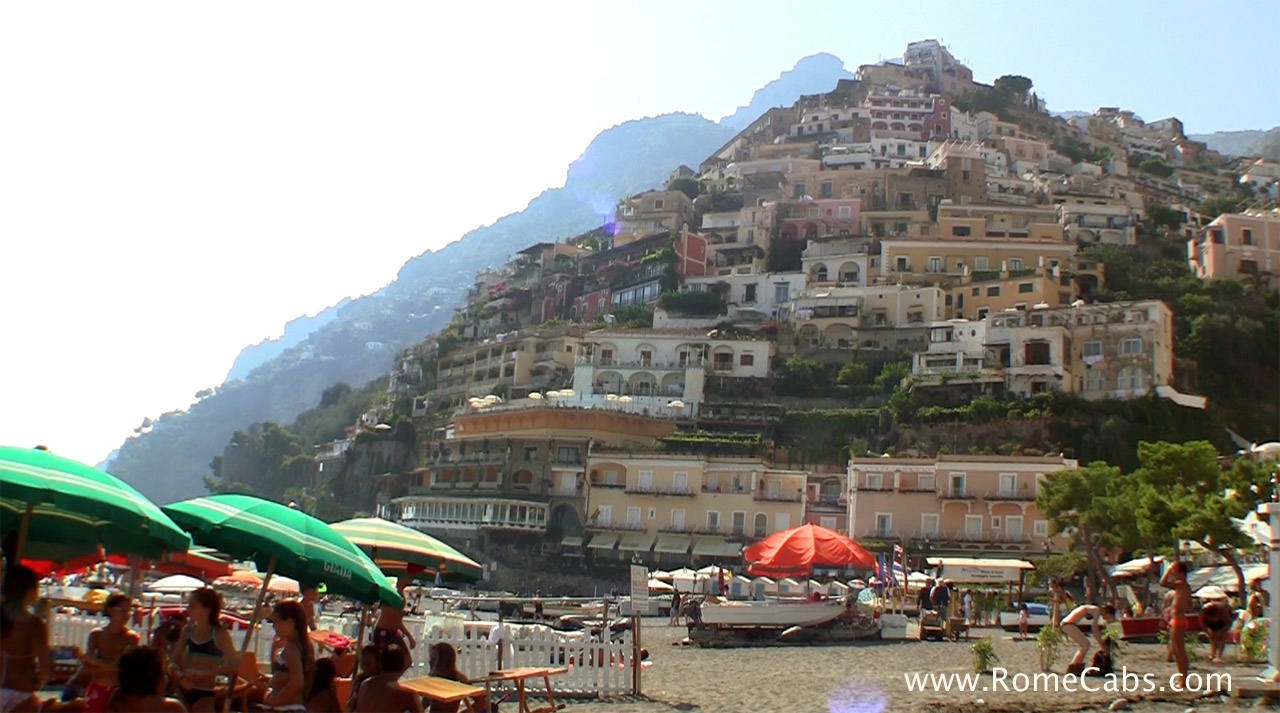
You can expect popular seaside destinations (such as Amalfi Coast, Sicily, Sardinia, to name a few towns and regions) to be packed with Italian and European tourists. These popular tourist destinations are best avoided in August.
To enjoy Italy in August, it’s best to avoid the popular beachside destinations in Italy, and enjoy the larger cities like Rome and Florence from where the locals depart from for a more quieter and serene visit.
For more information on visiting Rome in August, click on the following articles:
.
10 Things you need to know when visiting Rome in AUGUST!
RELATED ARTICLES:
3 Common Mistakes that Ruin Your Summer Trip to Rome
Visiting Rome in the Summer? What to expect
Essential Travel Tips for Visting Rome in August
.
For more information on Stefano’s RomeCabs, our Transfers, Day Tours and Shore Excursions, please visit our website below:
Stefano’s RomeCabs
10 Things you need to know when visiting Rome in AUGUST!
.
Buon giorno and welcome to Stefano’s RomeCabs Transfers and Tours Travel Blog. Our goal is to make your trip to Italy one of the most memorable experiences of your life. This blog we will cover the 10 things you need to know when visit in Rome in August.
August sees a dip in tourism in Italy from travelers outside of Europe… ironically, it is also when local tourist peaks since Italians and Europeans in general take their annual month long holiday in August. Depending on where in Italy you plan to go, you will either find a zoo (where the local tourists flock to – usually the beaches or the mountains)…. or a ghost town (usually the large cities the locals are fleeing from).
However, if you plan to visit Rome during the month of August, this blog post can help you.
.
10 Things you need to know when visiting Rome in AUGUST!
.
.
1. Be Prepared for the Heat – It is very hot out in August!
.
August in Rome can be exceptionally hot, with temperatures frequently climbing into the high 80s and 90s Fahrenheit (30s to 35°C). The combination of intense sun and high humidity can make it feel even hotter, so preparation is key to ensuring a comfortable visit.
.
.

.
.
Dress Appropriately: To cope with the heat, choose light-colored, breathable fabrics made from natural fibers such as cotton, linen, or bamboo. These materials help wick moisture away from your body and allow air to circulate, keeping you cooler. Avoid dark colors, which absorb heat, and steer clear of synthetic fabrics that trap sweat and heat.
Sun Protection: A wide-brimmed sun hat not only shields your face from direct sunlight but also protects your neck and shoulders. Complement this with a sun umbrella for extra shade. Sunglasses with UV protection are essential to safeguard your eyes from harmful rays and reduce glare. Opt for a high-SPF sunscreen, preferably water-resistant, and apply it generously to all exposed skin. Reapply every two hours or after swimming or sweating to maintain effective protection.
.
.

.
.
.
Hydration is Crucial: Staying hydrated is vital in the heat. Carry a reusable water bottle with you and refill it regularly. Drinking water throughout the day helps regulate body temperature and prevents dehydration. Avoid excessive consumption of caffeine and alcohol, as they can contribute to dehydration. Consider carrying electrolyte tablets or drinks if you’re engaging in strenuous activities.
Footwear Matters: While flip-flops might seem like the ideal summer footwear, they offer minimal support and protection. Instead, opt for sturdy sandals or comfortable walking shoes that provide good arch support and cushioning. Look for shoes with breathable materials and slip-resistant soles to handle Rome’s uneven cobblestones and potential slippery spots, especially when it rains.
Cooling Accessories: In addition to your hat and sunglasses, consider packing cooling accessories. A portable fan, cooling towel, or misting spray can provide immediate relief during your explorations. Cooling towels, which can be soaked in water and worn around your neck, are particularly effective at lowering your body temperature.
Plan Your Activities Wisely: Schedule your outdoor activities for the early morning or late afternoon when temperatures are lower. During the peak heat of midday, seek refuge in air-conditioned indoor attractions such as museums, galleries, or historical sites. This not only provides a break from the heat but also allows you to enjoy Rome’s rich cultural heritage comfortably.
Stay Aware of Heat Advisories: Keep an eye on local weather forecasts and heat advisories. Rome may experience heatwaves that push temperatures even higher, leading to potential health risks. Be mindful of your body’s signals and take breaks in shaded or air-conditioned areas if you start feeling overheated.
By taking these precautions and planning your attire and activities carefully, you can enjoy all that Rome has to offer while staying comfortable and safe in the summer heat.
.
.
.

.
.
2. Plan your touring activities to avoid intense heat
.
In the height of August’s heat, timing your sightseeing can make a significant difference in your comfort and enjoyment. Rome’s temperatures often peak between 11 a.m. and 3 p.m., so it’s wise to plan your outdoor activities for cooler parts of the day.
Early Morning Exploration: Start your day as early as possible to take advantage of cooler temperatures and less crowded attractions. Major sites like the Colosseum, Roman Forum, and Palatine Hill are best visited early in the morning, shortly after they open. Not only will you experience more comfortable weather, but you’ll also enjoy shorter lines and a more peaceful atmosphere. Arriving early allows you to capture stunning photos with softer morning light and fewer tourists in the background.
Late Afternoon Visits: If you prefer to avoid early mornings, schedule your outdoor activities for late afternoon or early evening. Temperatures begin to cool down, and many historic sites offer extended hours during the summer. The golden hour before sunset also provides excellent lighting for photography, particularly around landmarks like the Trevi Fountain, the Spanish Steps, Piazza Navona, and the Pantheon.
.
Incorporate Indoor Attractions in Rome
.
When the heat becomes unbearable, shift your focus to indoor activities. Rome is home to numerous museums and historical buildings with air conditioning or churches with cool interiors that offer both respite from the heat and enriching experiences.
Please note that not all museums have strong air conditioning systems due to the historical rooms that are richly adorned with walls and ceilings such as the Vatican Museums
.

.
.
Plan Breaks and Refueling: When scheduling your itinerary, allow for breaks and downtime. Rome’s historic center is dotted with charming cafes and gelaterias where you can rest, cool off, and enjoy local delicacies. Take advantage of these pauses to savor Italian coffee, refreshing gelato, or a light meal.
Stay Informed About Attraction Hours: Many attractions may adjust their hours in August due to the holiday season. Verify opening times and any special summer schedules in advance. This ensures you won’t miss out on must-see sites or be caught off guard by unexpected closures.
Combine Sightseeing with Refreshing Activities: Integrate activities that offer both sightseeing and cooling effects. For instance, take a leisurely stroll through Rome’s lush gardens, such as the Orange Garden (Giardino degli Aranci) or the Rose Garden (Roseto Comunale), which provide shade and beautiful views over the city.
Use Efficient Transportation: To avoid walking long distances in the heat, use Rome’s public transportation system, UBER, or taxis for longer journeys between sites. Opt for air-conditioned transport whenever possible and plan routes that minimize exposure to the sun.
By strategically planning your sightseeing activities and incorporating breaks, indoor attractions, and cooling spots, you can enjoy the best of Rome’s historic and cultural offerings while staying comfortable in the summer heat.
.
5 WAYS TO STAY COOL TOURING IN ROME THIS SUMMER
.
.
3. Many Romans go on a month-long holiday in August (Ferragosto)
.
August in Italy is deeply intertwined with the celebration of Ferragosto, a holiday steeped in history and cultural significance. This tradition offers a unique glimpse into Italian culture and affects various aspects of daily life in Rome.
.
What is Ferragosto?
The term “Ferragosto” is derived from the Latin phrase “Feriae Augusti”, which translates to “Festivals of Emperor Augustus.” This ancient celebration was instituted by Emperor Augustus in 18 BC to provide a period of rest and festivities following the completion of the harvest. The August festivals were a time for relaxation and enjoyment, allowing people to take a break from their hard agricultural labor. This practice evolved into a more generalized summer holiday over the centuries.
Today, Ferragosto aligns with the Catholic Feast of the Assumption of Mary on August 15. This religious celebration commemorates the belief that the Virgin Mary was assumed into heaven, body and soul. In Italy, it is one of the most significant public holidays, and the festivities are marked by a blend of religious observance and secular enjoyment. Many Italians take advantage of this time to travel, whether to coastal resorts, mountainous retreats, or rural areas.
.
What to expect in Rome during Ferragosto
.
During Ferragosto, a noticeable shift occurs in Rome. Many Romans leave the city to escape the heat and take advantage of their summer vacations. The city experiences a marked decrease in local activity, with many residents heading to beach towns, countryside villages, or the cooler mountain regions. This mass exodus results in:
Reduced Local Activity: The typically bustling urban environment of Rome quiets down as locals retreat from the city. The streets and public spaces may seem less crowded, and traffic congestion in the city center may be notably lighter, creating a more leisurely atmosphere for tourists.
Business Closures: While major tourist attractions and businesses in the historic center of Rome remain operational, some local businesses in residential neighborhoods might close for the entire month or for a period during August. This includes smaller shops, family-run restaurants, and neighborhood cafes that rely heavily on local patronage. As a result, these areas may appear almost deserted, which can affect your dining and shopping options if you’re staying in or frequently visiting these neighborhoods.
.

.
.
Special Ferragosto Events: During Ferragosto, some areas of Rome host special events, festivals, and outdoor concerts. These celebrations can provide a glimpse into local traditions and offer enjoyable entertainment during your visit. Check local event listings to find out what’s happening in the city during your stay.
..
4. Not EVERYTHING shuts down in Rome in August
.
A prevalent misconception about Rome in August is that it becomes a deserted city, with most businesses shutting down for the entire month. While it is true that many locals leave the city for their summer holidays, this does not mean that Rome becomes completely inactive. In fact, the city continues to bustle with activity, particularly in areas frequented by tourists.
.
Businesses Stay Open in August in Tourist Areas of Rome:
Historic Center: The historic center of Rome remains vibrant and operational throughout August. This area is home to numerous restaurants, shops, cafes, and attractions that cater primarily to tourists. Places like Trastevere, Piazza Navona, and the area around the Pantheon are bustling with visitors, and many establishments continue to serve the needs of tourists.
Restaurants and Cafes: While some neighborhood restaurants may close temporarily, popular dining spots in tourist-heavy areas typically remain open. These establishments are accustomed to serving visitors from around the world and are well-prepared to accommodate the influx of tourists during the summer months. Look for restaurants around major attractions, such as the Colosseum, the Vatican, and the Spanish Steps, where you’ll find a wide range of dining options available.
Shops and Souvenir Stores: Shops that cater to tourists, including souvenir stores and boutiques, also stay open. These businesses often capitalize on the summer tourist season and offer extended hours to cater to the influx of visitors. Popular shopping streets like Via del Corso, Via Condotti, and Via del Babuino are particularly active during August.
.

.
.
Practical Tips for Visiting Rome in August
.
Check Business Hours: While most tourist-focused businesses remain open, it’s a good idea to check the operating hours of specific establishments in advance. This ensures that you’re aware of any temporary closures or reduced hours.
Stay in the Historic Center: For convenience, consider staying in the historic center of Rome. This area offers easy access to major attractions, restaurants, and shops, reducing the need to travel far to find open businesses.
Be Flexible: Be prepared for some variability in the availability of services and attractions. Flexibility in your plans will help you adapt to any changes and make the most of your time in the city.
By understanding that Rome remains active and lively in August, particularly in tourist-centric areas, you can plan your visit with confidence and enjoy a fulfilling experience in the Eternal City.
5. Public transportation slows down in August as well
.
In August, Rome’s public transportation system undergoes noticeable changes that can impact your travel experience. With many locals taking their summer holidays, the demand for buses and metro services drops significantly. As a result, you might find that public transport operates on a reduced schedule, with fewer buses and trains running throughout the day. Some lines may also experience delays or interruptions, which can add frustration to your travel plans.
One major consideration is that many of Rome’s public transportation options lack air conditioning, which can be particularly uncomfortable during the hot summer months. Temperatures inside buses and metro trains can rise significantly, making for a stifling journey, especially during peak hours when these modes of transport are more crowded.
.

.
.
.
To mitigate these issues, it’s advisable to explore alternative transportation options.
Uber and private car services such as RomeCabs offer a more comfortable and reliable mode of travel, especially in the heat of August. With air-conditioned vehicles and more predictable schedules, these options can provide a welcome respite from the sweltering temperatures and the unpredictability of public transit.
Private car services, such as those provided by Stefano’s RomeCabs, can also streamline your travel between the airport, cruise port, and various city destinations, ensuring a smoother and more enjoyable experience. You can also explore Rome with ease with Private Driving Tours.
.
.

.
.
.
For those who prefer to use public transportation, planning your trips carefully and allowing extra time for potential delays can help minimize any inconvenience. It’s also a good idea to check the current schedules and any service updates before setting out to ensure you’re aware of any changes that might affect your travel plans.
.
RELATED BLOG POST: VISITING ROME IN THE SUMMER? WHAT TO EXPECT
.
6. In August, it is best to book accommodations in the center of Rome
.
To enhance your comfort and convenience during your August visit to Rome, it’s highly recommended to book accommodations in the historic center of the city. This strategic choice not only places you at the heart of Rome’s cultural and historical attractions but also helps you manage the challenges of the hot summer months more effectively.
Staying centrally located offers several advantages. First, it significantly reduces the need for long commutes across the city. Given the high temperatures in August, minimizing travel time helps you avoid the heat and potential discomfort associated with longer journeys. With major attractions like the Colosseum, the Roman Forum, and the Vatican Museums within walking distance or a short, air-conditioned ride away, you can explore Rome more leisurely and comfortably.
In the historic center, you’ll find a range of accommodations, from charming bed-and-breakfasts to elegant rental apartments. Many of these options provide easy access to essential services and amenities. You’ll be close to a variety of dining establishments, including restaurants and cafes that cater to both tourists and locals. This means you can enjoy a meal or a drink without having to travel far, allowing you to rest and recharge before continuing your exploration.
.

.
.
Book Hotels and Accommodation in the historic center of Rome
Opting for accommodations in or near the historic center also ensures that you are surrounded by the city’s vibrant atmosphere. You’ll have the opportunity to immerse yourself in Rome’s lively street scenes, cultural events, and local markets, which are particularly engaging during the summer. The central area remains active and bustling, even in August, offering you a genuine experience of Rome’s dynamic life.
On the other hand, staying in outlying neighborhoods or more residential areas can present challenges. Many local businesses in these areas might close for the month of August, as locals head on vacation and patrons diminish. This could leave you feeling isolated, with fewer dining and shopping options available. Additionally, the public transportation system, which may run on a reduced schedule during this time, could make commuting to and from more distant neighborhoods less convenient.
By choosing accommodations in the heart of Rome, you ensure that your stay is as enjoyable and hassle-free as possible. You can easily navigate the city’s historic sites, enjoy its rich cultural offerings, and avoid the discomforts associated with extensive travel and high temperatures. This thoughtful approach to your lodging choice can greatly enhance your overall experience in Rome during the summer.
.
7. You can still catch the last of the Summer Sales!
.
August presents a unique opportunity for savvy shoppers to score excellent deals in Rome. The summer sales season, which kicks off in early July, continues into August, making it an ideal time to explore the city’s retail scene and enjoy substantial discounts. As the month progresses, while some items may become scarce, the discounts typically deepen, offering significant savings on a wide range of products, from clothing and accessories to home goods and more.
To make the most of these sales, head to Rome’s popular shopping streets, such as Via del Corso and Via Condotti. Via del Corso, a bustling thoroughfare, features a variety of shops, from international fashion chains to local boutiques. Here, you’ll find everything from stylish apparel to trendy accessories at reduced prices during the Summer Sales.
For an even better shopping experience, plan your visits early in the morning or later in the afternoon to avoid the peak heat and crowds. Shopping in the cooler parts of the day not only makes for a more comfortable experience but also allows you to navigate the stores more easily.
.
.

.
..
.
8. Plan your Rome transportation wisely in August
.
Navigating Rome’s transportation system in August requires thoughtful planning to ensure a smooth and enjoyable travel experience. With the city experiencing a shift in both local and tourist activity due to the summer holidays, understanding your options can help you avoid potential hassles.
One of the most practical solutions for transfers between Rome and key locations such as the airport or the Civitavecchia Cruise Port is to book a private car service. Private transfers offer several distinct advantages over public transportation, especially during the hot summer months.
First and foremost, private car services provide a high level of convenience and comfort. Unlike public transport, which can be slow and unpredictable, private transfers offer a direct route to your destination. This means you can avoid the long waits and potential delays associated with buses and trains. Additionally, private cars come with air conditioning, ensuring a cool and pleasant journey, which is a welcome relief from the summer heat.
.

.
.
Rome Airport Transfers and Civitavecchia Cruise Port Transfers
For transfers from Fiumicino Airport to Rome or from Rome to Civitavecchia Cruise Port, Stefano’s RomeCabs offers reliable and efficient services. RomeCabs professional drivers are well-versed in navigating the city’s roads and can provide a seamless travel experience, including assistance with luggage and ensuring you reach your destination on time. This can be particularly beneficial if you’re arriving on a long-haul flight or heading to or from a cruise, where comfort and timely arrival are crucial.
By opting for a private car service, you not only enjoy a more comfortable ride but also benefit from a more personalized service. This can enhance your overall travel experience and ensure that your time in Rome remains as enjoyable and stress-free as possible.
August is also a great month to experience Rome’s Authentic Charm on a Car Tour with RomeCabs, touring in a deluxe air-conditioned vehicle maximizing your sightseeing opportunities in Rome comfortably and conveniently.
.
.

.
.
.
Public transportation, while a more economical option, often faces challenges in August. Buses and metro services can be irregular, with reduced schedules and potential delays due to the lower demand and higher temperatures. Minimizing your need for public transportation in Rome in August ensures a more comfortable visit.
Moreover, many of these modes of transport lack air conditioning, which can make for an uncomfortable ride. The combination of crowded spaces and heat can detract from the overall travel experience.
.
.

.
.
.
In contrast, private transfers eliminate these concerns, allowing you to travel in comfort and with peace of mind.
To further enhance your travel planning, consider booking your private transfer in advance. This allows you to secure your preferred service and avoid last-minute arrangements, which can be particularly important during peak travel times. Many services, including Stefano’s RomeCabs provides both Airport and Civitavecchia Transfers for a safe, comfortable, convenient, and affordable transfer option.
.
.
9. Hot summer days are great for enjoying cool refreshing treats in Rome.
.
Battling the summer heat in Rome can be a delicious endeavor when you indulge in the city’s renowned cool and refreshing treats. Italy’s culinary traditions include a variety of delightful options designed to help you stay cool while experiencing the rich flavors of Italian cuisine.
Gelato is undoubtedly one of the most popular ways to cool off in Rome. The city is home to some of the finest gelaterias in the country, where you can savor creamy, artisanal gelato made from high-quality ingredients.
.

.
.
.
If you’re looking for something with a slightly different twist, try granita, a semi-frozen dessert made from flavored ice. Granita is a refreshing option that’s perfect for a hot day, available in various flavors such as lemon, almond, and coffee. Many cafes and gelaterias in Rome offer granita, so you’ll have ample opportunities to enjoy this icy treat.
For a more sophisticated cooling experience, consider a chilled aperitivo at one of Rome’s outdoor cafes. The Italian tradition of aperitivo is a pre-dinner ritual where you can enjoy a light drink, often accompanied by small snacks. Opt for a chilled cocktail or a glass of Italian prosecco, which provides a refreshing way to unwind and cool down. Outdoor cafes in areas like Piazza Navona or Trastevere offer a perfect setting to enjoy your aperitivo while soaking in the vibrant atmosphere of the city.
In addition to these popular options, Rome also features various seasonal and regional specialties that can provide a refreshing respite from the heat. For instance, try a caffè freddo—an iced coffee that’s perfect for those who need a caffeine boost while cooling off. Alternatively, seek out local specialties like tartufo (a frozen dessert made from chocolate or fruit) which adds a touch of indulgence to your cooling treat.
.
5 DELICIOUS WAYS TO STAY COOL IN THE HOT SUMMERS OF ROME
.

.
.
10. Visit some cool places in Rome on hot August days
.
When the summer heat in Rome becomes overwhelming, seeking out cool and shaded attractions can provide a refreshing respite while allowing you to explore the city’s rich history and culture. Rome’s vast array of churches and historical sites offers both cooling relief and fascinating insights into the city’s past.
Churches in Rome like Santa Maria del Popolo, Sant’Ignazio Church, Saint Peter in Chains, San Luigi dei Francesi, Santa Maria Sopra Minerva, and Santa Maria in Trastevere serve as ideal sanctuaries from the heat. With nearly 1,000 churches scattered throughout the city, many of which are open to visitors, these sacred spaces often feature thick stone walls, high ceilings, and dim lighting, creating a naturally cool environment. Not only do these churches offer a break from the sweltering temperatures, but they also provide an opportunity to appreciate some of Rome’s most impressive architecture and art.
.
SAN CLEMENTE BASILICA and ROME UNDERGROUND
.

.
CASE ROMANE DEL CELIO (ROMAN HOUSES IN CELIO)
.

.
August in Rome presents unique opportunities and challenges. By preparing for the heat, understanding local traditions, and planning your activities carefully, you can make the most of your visit. Enjoy the vibrant city atmosphere, explore historic sites, and take advantage of the quieter streets to experience Rome in a way that few get to see.
We hope this guide helps you navigate Rome in August and makes your trip truly unforgettable. For any transportation needs or further assistance, don’t hesitate to reach out to Stefano’s RomeCabs Transfers and Tours for a comfortable and reliable experience.
Thank you very much for visiting our blog about 10 Things you need to know when visiting Rome in AUGUST!
.
Instead Of the Colosseum…go HERE
Buon giorno and welcome to Stefano’s RomeCabs Transfers and Tours Travel blog.
The Colosseum is the grandest ancient Roman monument and the icon of Rome. It’s also one of the top most visited sites in Rome drawing huge crowds thus creating long lines for tickets and/or to clear security.
.
.
Even though the number of persons visiting the Colosseum at a time are capped at 3,000 (much less than the 50,000 spectators that the Colosseum was able to accommodate during ancient times), you would find it to be quite crowded.
If when visiting the Colosseum you find the lines too long or the monument too crowded and you’d like to see something different nearby, we have a few options for you with No crowds, No security lines, No advance tickets required:
.
Instead Of the Colosseum… go HERE:
.
BATHS OF CARACALLA
.
.
.
Within walking distance from the Colosseum and Circus Maximus and seemingly secluded from the main road are the Baths of Caracalla: an extensive ancient Roman bath complex that is often overlooked by tourists who flock to its more famous neighbors: Colosseum and Circus Maximus.
With significantly fewer visitors you almost feel as though you have this imperial bath complex to yourself as you imagine what it must have been like in 3rd century AD when it was built with tall walls and ceilings luxuriously adorned with statues, marble, mosaics, and more. The Baths of Caracalla is a prime example of Ancient Roman tradition of public bathing in Rome.
.
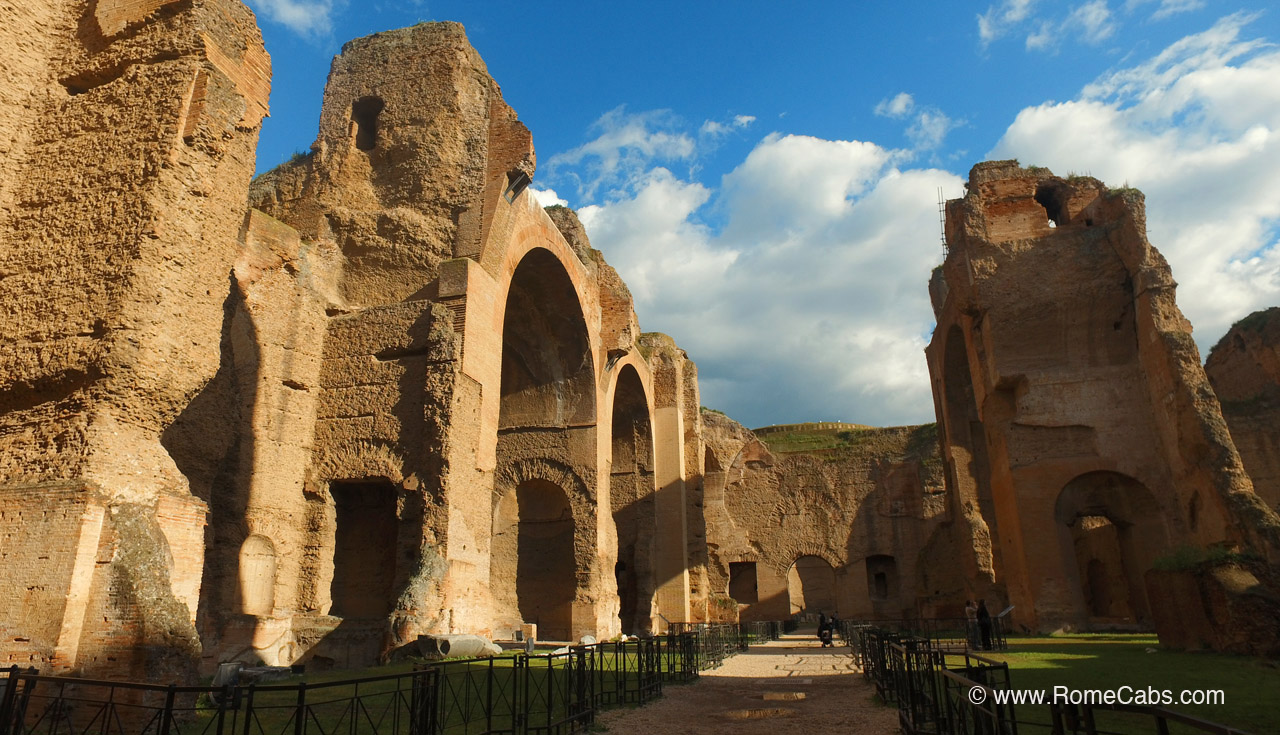
Baths of Caracalla with RomeCabs.
.
Even though Emperor Caracalla ruled for only 6 years between 211 – 217 AD, he initiated the construction of what would have become one of the ancient world’s most impressive Roman public baths. As with many other ruthless Roman emperors, Caracalla was also assassinated and never saw the completion of his dream imperial baths.
It is estimated that about 13,000 prisoners of war, 6,000 tradesmen, 21 million bricks, and about 6,300 cubic meters of marble was required to complete Rome’s 2nd largest bath complex.
When it was complete, the imperial baths of Caracalla included a park (you can still enjoy a shaded rest on a bench as you take in the immense structures around you), swimming pools, public libraries in both Greek and Latin, gymnasium, frigidarium (cold rooms), tepidarium (warm rooms), and caldarium (hot rooms). The bath complex was not just for bathing, but it was a social gathering place for leisure, study, or business meetings.
The Baths of Caracalla were open to everyone at no charge (upper and lower class had free access to public baths), and was able to accommodate up to 1,600 bathers at a time. The buildings were heated by a hypocaust – and underground heating system where burning wood or coal heated water provided by a dedicated aqueduct.
The baths were in continuous use for 400 years until it was destroyed in the 6th century by the Ostrogoths during the Gothic War.
Although nowadays it stands largely in ruins due to damages caused by man and nature, the Baths of Caracalla have inspired architects and visitors worldwide for centuries.
For more information on our SEVEN WONDERS OF ANCIENT ROME tour that includes a visit to the Baths of Caracalla, please visit our website.
.
ROMAN FORUM
.
Just across the Colosseum is the Roman Forum, one of the most well recognized ancient Roman ruins in Rome.
You can use your Colosseum tickets to visit the Roman Forum and Palatine Hill. Here you won’t find extensive lines as you would at the Colosseum, and with such a wide open spaces it will never feel crowded.
Rested in a shallow valley between Capitoline Hill and Palatine Hill, the Roman forum has been the most famous meeting place throughout history.
For centuries the Roman Forum stood as the center of public life for the Romans. It was their political, religious, judicial and commercial (and sometimes even entertainment) hub. People still gather today as visitors – about 4.5 million visitors each year.
.

.
Scattered ruins of pagan temples and buildings offers visitors a glimpse of what the Roman Forum was like doing the glory days of the Roman empire.
The Roman forum developed over time as it grew in importance and in architecture filling the form with large public buildings and temples the dramatically reduced the open area where people can gather.
You can enjoy the remains of the once impressive Temples of Castor and Pollux, Vesta, Romulus , Saturn, Caesar, Antonius and Fausta, and more.
Triumphal arches in the Roman Forum are the Arch of Titus and Arch of Septimus Severus.
Basilicas of Ancient Rome include Maxentius and Constantine, Julia and Aemilia.
Basilicas of Ancient Rome should to be confused with the Christian basilicas of today. In Ancient Rome basilicas were the Town Halls. The current basilicas got their names from the architectural plans of the Roman basilicas which they adopted.
Top 10 Must See Places in Rome – RomeCabs Travel Video
.
CASE ROMANE
.
Just beyond the Colosseum on the quiet Celio Hill, is a rather obscure church with a amazing Ancient Roman underground complex waiting for you to explore it.
Located beneath the Basilica of Saints John and Paul (Basilica di Santi Giovanni e Paolo) laid buried layers amazing ancient Roman architecture and history that were not discovered until late 19th century.
Paul and John were 2 Roman Christian brothers and soldiers who were martyred during the reign of Emperor Julian the Apostate in late 4th century AD during. It is said they were buried in their house on Celian hill (instead of burial tombs outside the city walls as it was the norm).
The Basilica we see today was built at the start of 5th century AD by Senator Pammachius – an affluent Roman and prominent Christian, and possibly the last owner of the residential complex upon which the church was built.
You can enter the Case Romane from Clivus Scauri – one of the most significant ancient Roman streets on Celian Hill. The entrance was once the portico of shops that were once located along this street.
By 2nd century AD, this area was occupied by a “domus” – luxurious 2 level residential building that was built parallel to Clivus Scauri.
By 3rd century, an “insula“– an apartment building, was erected with shops on the ground floor and apartments on the upper floors.
At the beginning of 4th century, a prominent individual purchased the domus and insula complex and integrated them into a large luxury residence. If you fast forward time several decades, you’ll arrive at the time when the 2 brothers John and Paul lived here before they were martyred.
It was on top of this residence that the basilica was erected at the behest of Senator Pammachius – perhaps also the last owner of the residence. Most of the structures on the property were abandoned so the foundation of the church could be built on top, however, some areas were still accessible over the centuries as indicated by a medieval oratory discovered there.
Upon visiting the Case Romane, don’t miss these important rooms:
ROOM OF THE GENIUSES
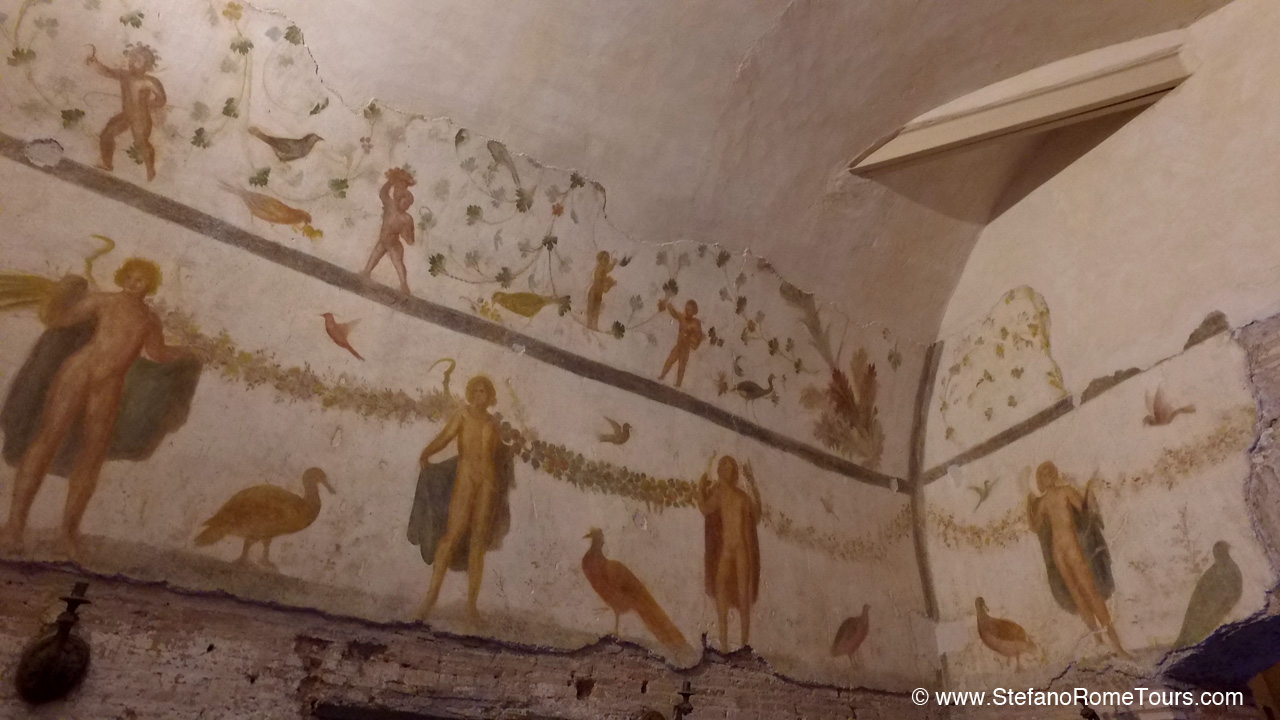
Case Romane del Celio Room of the Geniuses
Upon entering the Roman Houses you will step into the Room of the Geniuses (or “geni” – Roman mythological spirits believed to present in every living being and objects).
The upper walls are painted with two bands of stunning paintings of youthful winged nude figures (possibly the geniuses), garlands of flowers and fruit. Above this scenery, grape vines meander among cupids and exotic birds.
ROOM OF THE FAUX MARBLE
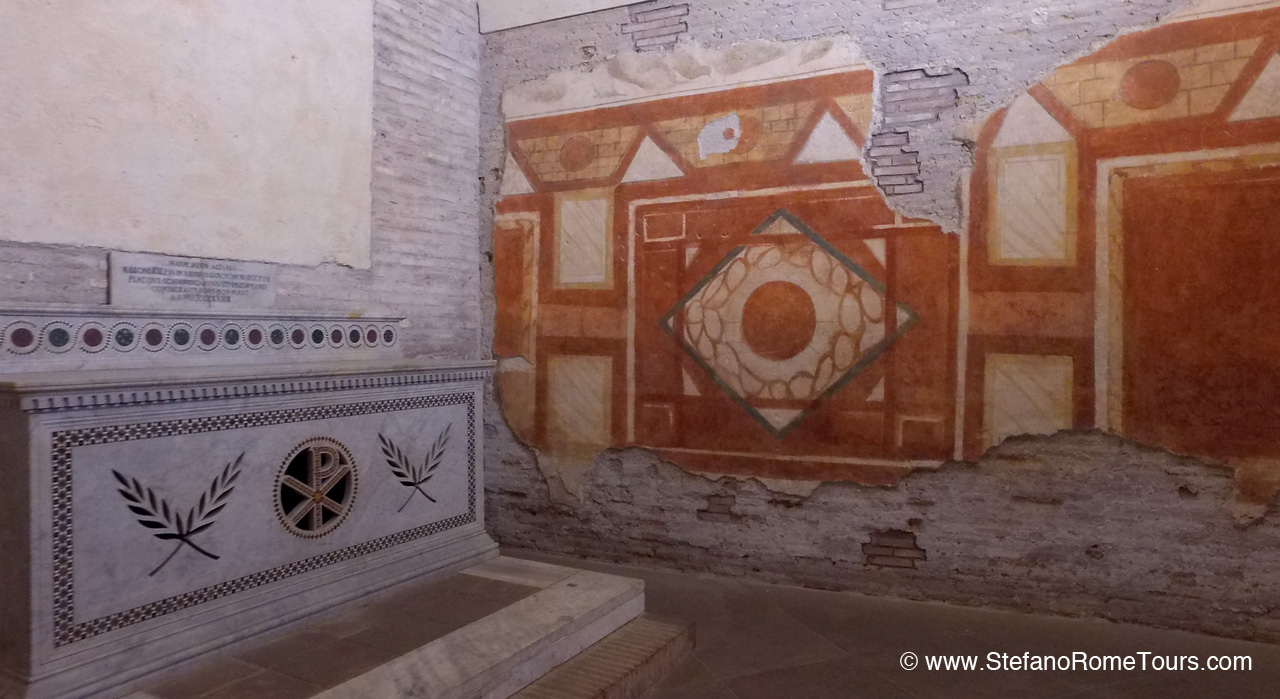
Case Romane del Celio – Room of the Faux Marble
Marble was precious and pricey in the ancient times as it is today, and decorative marble inlaid into walls to create patterns of images (opus sectile) was sometimes imitated with paint in a cost saving attempt.
ROOM OF THE ORANT
Case Romane del Celio Room of the Geniuses
The most ornate room is the vaulted Room of the Orant (Worshipper), named after the subject painted on the wall. Painted during the 4th century, the frescoes depict Roman figures of philosophers, mask of Slienius, a female theater mask, fantastical monsters, sheep,
Acanthus leaves and faux alabaster opus sectile that decorate the lower part of the walls.
.
THE ORATORY

Case Romane del Celio – The Oratory
.
By mid 4th century, a small chapel (a confessio) within a niche was constructed where so visiting pilgrims would able pray before the painted Christian scenes that are still very well preserved.
.
THE NYMPHAEUM OF PROSERPINA
 .
.
.
Originally, the nymphaeum was an interior roofless courtyard that separated the residential and commercial buildings from one another. Niches, fountains, frescoes and mosaics are well preserved and quite remarkable to view.
The large late 3rd century AD fresco on the upper part of the wall depicts mythological scenes taking place at sea. If you look down you will notice the original floor made of multi colored marble pieces.
In an adjacent alcove, you can admire the black and white tile floor with geometrical and floral motifs.
..
ANTIQUARIUM
.
Last but not least is the Antiquarium – the museum where the ancient Roman and medieval artifacts excavated on this site are on display for you to better understand the local lives of Romans and what they used in their daily lives,
Located right below the Chapel of Saint Paul of the Cross, the museum is in the shape of a Greek cross. Here you will find a variety of ancient Roman and Medieval objects excavated between 1887 and 1936.
Don’t miss the opportunity to also visit the Basilica of Saints John and Paul. It has a magnificent interior reminiscent of a early 20th century ballroom with delicate hanging chandeliers. No wonder it’s a popular church for wedding ceremonies.
For more information on our POSTCARD ROME TOUR FOR CRUISERS that includes a visit to the Roman Houses, please CLICK HERE.
CIRCUS OF MAXENTIUS – Rome’s “OTHER” Ancient Roman Chariot Racetrack
.
CASE ROMANE VISITOR INFORMATION:
VISITING HOURS:
10 AM – 1:00 PM then 3:00 PM – 6:00 PM
Closed Tuesdays and Wednesdays
TICKETS:
Adult price: 8 Euros
Children 12-18 years old: 6 Euros per person
Children up to 12 years old accompanied by adult: FREE
Thank you very much for choosing Stefano’s RomeCabs for your Transfers and Tours in Italy.
For more information on our services please visit our website below:
Stefano’s RomeCabs
Roman Houses / Case Romane del Celio
Buon giorno and welcome to Stefano’s RomeCabs Transfers and Tours blog.
Our sister company Stefano Rome Tours has launched a special tour: POSTCARD ROME TOUR FOR CRUISERS that features a magnificent yet relatively unknown site in Rome that you are sure to enjoy:
.
Roman Houses / Case Romane del Celio
.
.
The complete description of this ancient site is available on the Stefano Rome Tours Travel Blog, but in this photo blog we will focus on the visual aspects of this magnificent ancient place so you can see WHY Case Romane should be on your Must See List of places in Rome
.
ROOM OF THE GENIUSES
.
As you enter the Roman Houses from the ticket office you will step into the Room of the Geniuses. “Geni” are Roman mythological spiritual guides that are believed to be present in every living being and objects).
The upper walls are beautifully decorated with two bands of frescoes of youthful winged nude figures that more than likely represent geniuses, garlands made of summertime flowers and fruit. Above, undulating grape vines circle around cupids and exotic birds.
.
ROOM OF THE FAUX MARBLE
.
The Room of the Faux Marble is remarkable as well as it shows human creativity in reproducing fine marble by hand when the real marble is not possible.
Marble – especially intricate patterns and images (opus sectile) has been imitated since the Roman times and even in modern times.
Inlaid marble opus sectile has always been very laborious and expensive, so the painted version has been used whenever possible instead.
..
ROOM OF THE ORANT

.
Possibly the most ornate room is the vaulted Room of the Orant. An orant is a Worshipper, and the name of the room is based on the subject painted on the wall.
On the upper part of the wall, 4th century frescoes depict figures of philosophers, theatrical mask, fantastical monsters, and common sheep and goats.
On the lower part of the wall, acanthus leaves and faux alabaster opus sectile have also been beautifully preserved.
THE ORATORY
.
A small chapel (a confessio) was built in the 4th century within a niche where visiting pilgrims were able to come and pray before the painted Christian scenes.
.
THE NYMPHAEUM OF PROSERPINA
.
The Nymphaeum of Proserpina was originally an interior open air courtyard that separated the commercial buildings from the residential homes. Fountains, niches, frescoes and mosaics have been well preserved and are quite striking!
The large late 3rd century AD fresco painted on the upper part of the wall represents a mythological scenes at sea. The original floor was made of multi colored marble pieces.
.
ANTIQUARIUM
.
Your visit will conclude with a stop in the Antiquarium. Located right below the Chapel of Saint Paul of the Cross, it takes the shape of a Greek cross.
Here you will find a myriad of ancient Roman and Medieval objects excavated between 1887 and 1936.
.
Before you leave, be sure to also visit the Basilica of Saints John and Paul above. It has an elegant interior reminiscent of a early 20th century ballroom with low hanging glass chandeliers. It’s a popular church for weddings.
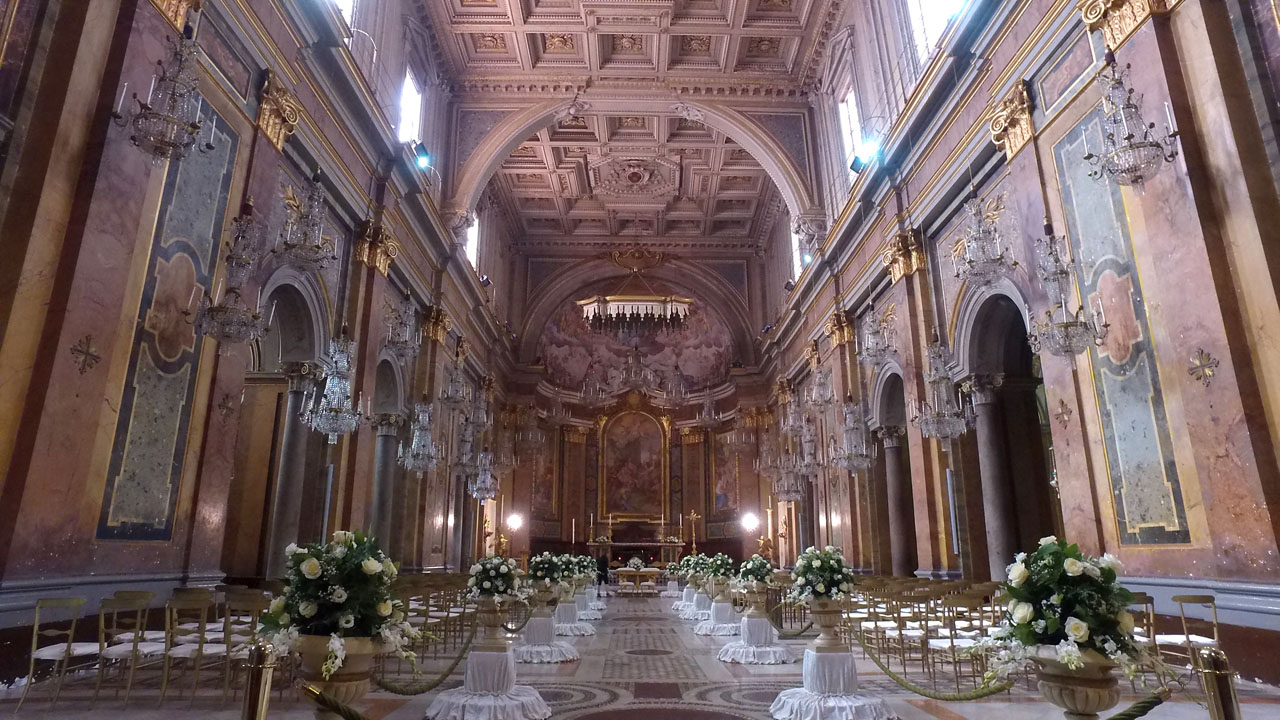
.
For more information on Stefano Rome Tours’ POSTCARD ROME TOUR FOR CRUISERS that includes a visit to the Roman Houses, please CLICK HERE.
Visitor Information on Case Romane:
VISITING DAYS and HOURS:
10 AM – 1:00 PM then 3:00 PM – 6:00 PM
Closed on Tuesdays and Wednesdays.
.
TICKETS:
Adult ticket price: 8 Euros per person
Children 12-18 years old: 6 Euros per person
Children up to 12 years old accompanied by adult: Free
.
Thank you very much for visiting our travel blog. For more information on RomeCabs Transfers and Tours, please visit our website below. We look forward to welcome you to Italy!
..
.
Additional Blog Post that you might be interested in:
.
Santa Maria Antiqua Church: Medieval Sistine Chapel
Baths of Caracalla: Video Postcard
.
Stefano’s RomeCabs Team
.
Summer Festival in Rome: Along Tiber River – RomeCabs
Buon giorno and welcome to Stefano’s RomeCabs Transfers and Tours Travel Blog.
In this blog post we will introduce you to a fun and entertaining Roman tradition that you should not miss if you are in Rome in the summer.
.
Summer Festival in Rome: Along Tiber River – Lungo il Tevere VIDEO
.
..
.
Each year between June and September, the banks of the Tiber River between Ponte Sublicio and Ponte Sisto come to life each evening starting at 7 PM with fun, music, food, culture, shopping and more.
This summer long festival is not just for the Romans. Millions of visitors make their way along the Tiber River to enjoy a festive evening in Rome.
Riverside tables invite visitors to sit and enjoy a variety of local and international food and wine, as well as a variety of other beverages.
.
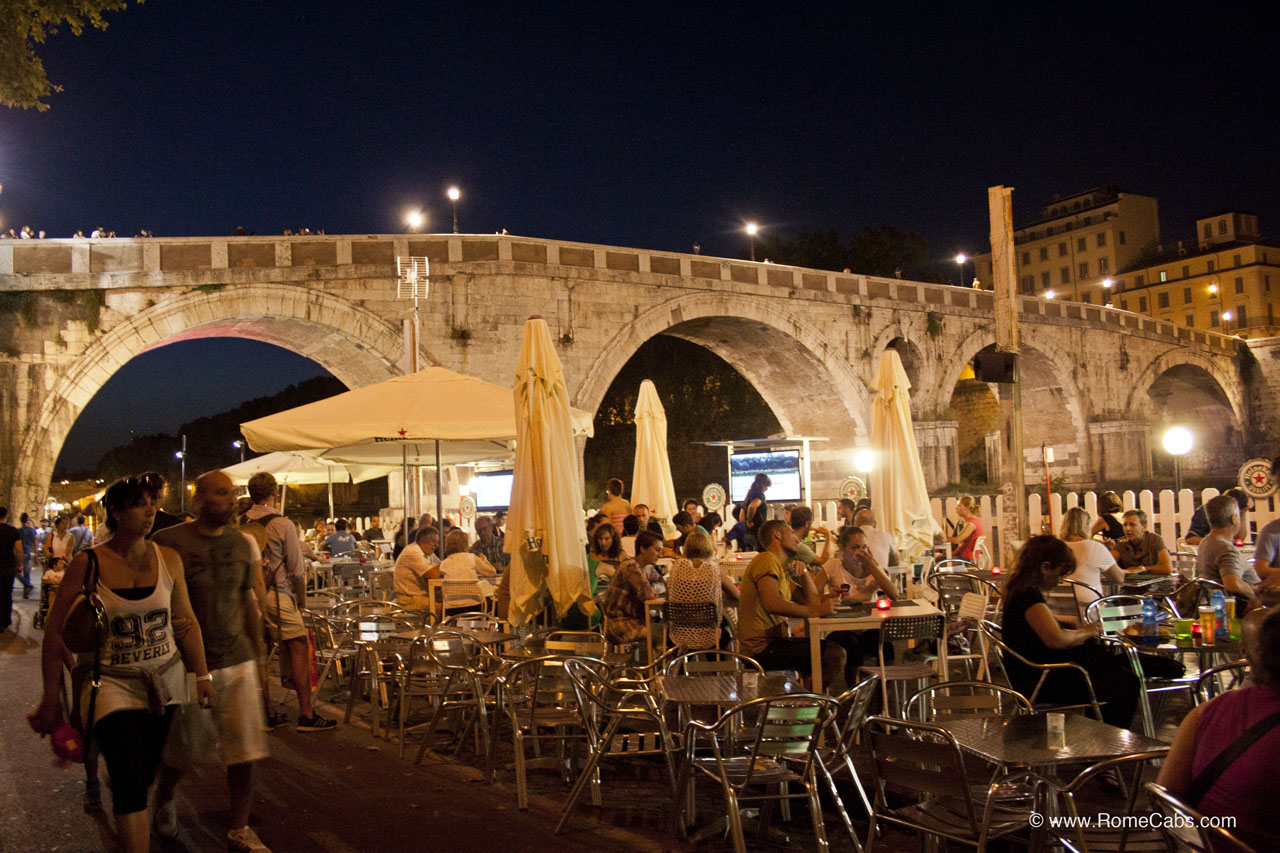
Summer Festival in Rome: Along Tiber River – Lungo il Tevere – RomeCabs
..
Clusters of stalls selling everything from crafts, souvenirs, clothing, accessories, works of art, music, toys, and knick knacks add a sparkle with unique shopping opportunities.
.
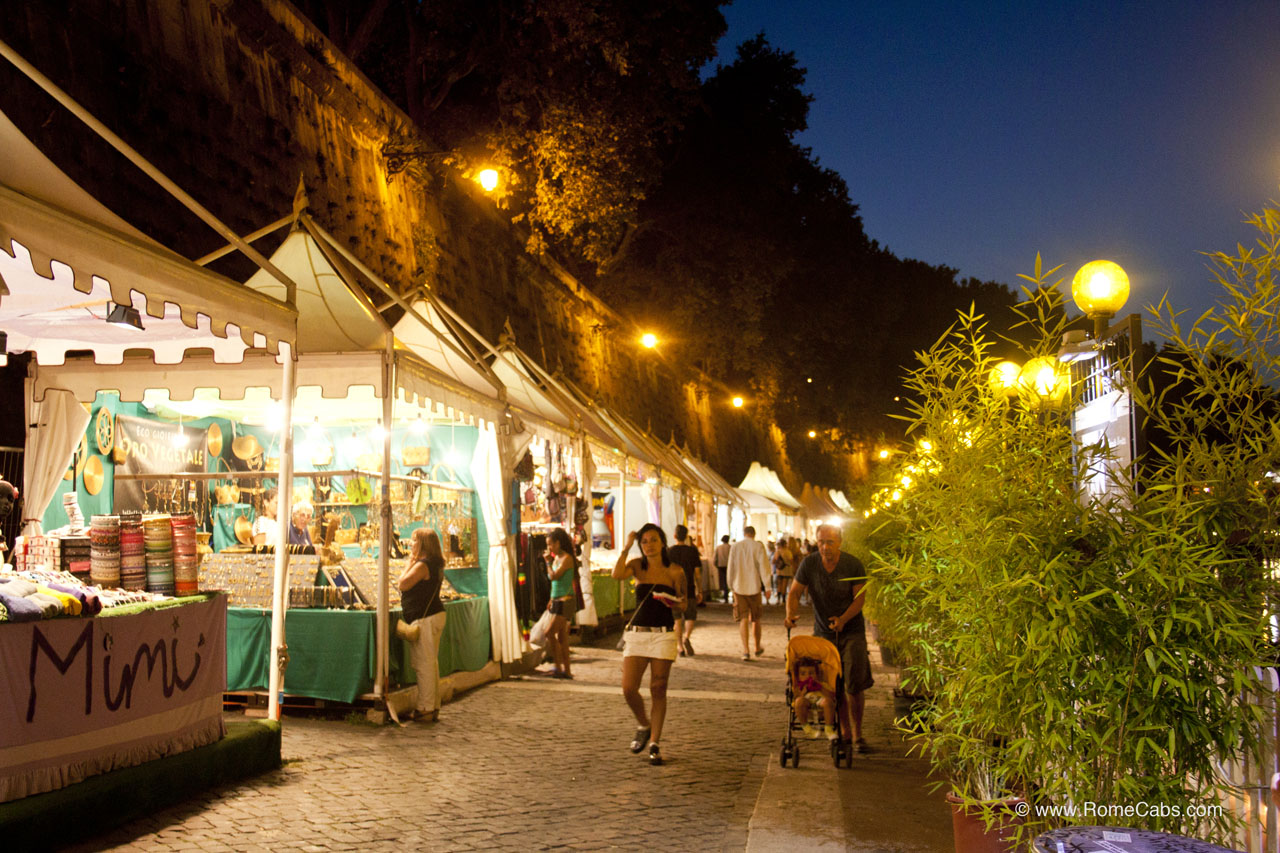
Summer Festival in Rome: Along Tiber River – Lungo il Tevere
Open air wine shops, bars, and lounges under the stars and along the rushing water of the Tuber sure beats their indoor counterparts.
Jazz music, films, performances, photo galleries and artistic exhibitions enhance your cultural experience.
.
Summer Festival in Rome: Along Tiber River – Lungo il Tevere – RomeCabs
..
A wide variety of eateries have set up cozy tables along the river. Most of the eateries are not restaurant style cuisine as they do not have fully equipped restaurant style kitchens. Most of the food is prepared and served quickly.
If you prefer a normal sit town dinner, perhaps you can enjoy an aperitif before dinner, or an after dinner drink with a stroll enjoying the night time festivities taking place.
.
Nearby on Isola Tiberina (Tiber Island), there is also the annual summer cinema festival “Isola del Cinema”. Foreign and Italian films are shown in open air cinemas.
As with along the river, Tiber Island is also lined with restaurants, bars, cafes, and shopping stalls.
For more information on Lungo il Tevere Roma
http://www.lungoiltevereroma.it/
.
For more information on L’Isola del Cinema
Next time you are in Rome between June and September, make your way to Tiber Island and enjoy the Roman Summertime Festival along the Tiber River for an entertaining evening outdoors.
.
FLICKR PHOTO GALLERY:
Summer Festival in Rome: Along Tiber River – Lungo il Tevere
.
.
For more information on Transfers and Tours with Stefano’s RomeCabs Transfers, Day Tours, and Shore Excursions please visit our website:
.
Stefano’s RomeCabs
.
.
Thank you very much for choosing Stefano’s RomeCabs for your Transfers and Tours in Rome and beyond.
We look forward to showing you beautiful places in Italy!
The Stefano Rome Cabs Team
CIRCUS OF MAXENTIUS – by RomeCabs
Buon giorno and welcome to Stefano’s RomeCabs, Rome’s leading company for quality transfer and tours in Rome and beyond. Just about everyone who visited Rome is familiar with Circus Maximus (Circo Massimo) not far from the Colosseum at the foot of Palatine Hill. Not many people are familiar with another ancient race track: Circus of Maxentius (Circo di Massenzio).
.
Historical and Architectural Background of Circus Maxentius:
The Circus of Maxentius was commissioned by Emperor Maxentius (Marcus Aurelius Valerius Maxentius) during his reign from 306 to 312 AD. Maxentius was known for his ambitious building projects in Rome, aiming to enhance his imperial presence and commemorate his rule. One of his most significant constructions was the Circus of Maxentius, situated along the Via Appia outside the city walls of Rome.
Maxentius’ choice of location along the Via Appia was strategic. The Via Appia was one of the most important and ancient Roman roads, connecting Rome to the southern parts of Italy. Building a monumental complex like the Circus of Maxentius along this route would have not only benefited the city of Rome but also served as a display of imperial authority to travelers and visitors passing through.
.
.
The site also includes a palace and a mausoleum known as the Tomb of Romulus where his son is believed to have been interred. This was the first imperial residence that combined a palaces with a stadium.
Maxentius likely constructed this circus as part of his effort to establish a grand imperial complex that showcased his power and authority. The circus was not only a venue for chariot races and public entertainment but also served as a symbol of imperial grandeur. The only games recorded in history were its inaugural games. Quite possibly, they could have been funerary games to honor Emperor Maxentius deceased son Valerius Romulus who died at a very young age in 309 AD.
.
.
The circus itself was an architectural marvel of its time, albeit smaller than the Circus Maximus at 513 meters long and 91 meters wide, and accommodating only about 10,000 spectators. Its dimensions and layout reflect the typical design of Roman circuses, characterized by a long central spina (spine) adorned with statues and an obelisk—a symbol of power and exoticism, likely brought from Egypt as spoils of conquest. The surviving obelisk that once adorned the spina of the Circus of Maxentius is now prominently displayed in Piazza Navona, as part of Bernini’s famous Fountain of the Four Rivers.
Despite Maxentius’ short-lived rule, his architectural legacy, particularly the Circus of Maxentius, endures as a testament to Roman engineering and imperial ambition. The circus’s survival and excavation by archaeologists have contributed significantly to our understanding of ancient Roman entertainment venues and urban planning. Today, the site remains under the care of the Soprintendenza Archeologica di Roma and is open to the public, allowing visitors to experience firsthand the splendor of Maxentius’ imperial vision.
Who was Emperor Maxentius?
Emperor Maxentius, also known as Marcus Aurelius Valerius Maxentius, was a Roman emperor who ruled from 306 to 312 AD. He was the son of Emperor Maximian and gained control of Italy and North Africa after a period of civil war following the abdication of Diocletian in 305 AD. Maxentius is particularly remembered for his ambitious building projects in Rome, seeking to enhance his legacy and authority in a city where monumental architecture played a crucial role in asserting imperial power.
During his brief reign, Emperor Maxentius initiated many building projects including such as the Basilica of Maxentius inside the Roman Forum, and the imperial complex that includes the Circus of Maxentius.
The downfall of Maxentius came in 312 AD, during Battle at the Milvian Bridge where he was decisively defeated by his rival Emperor Constantine. This battle marked a turning point in Roman history, leading to Constantine’s ascent and subsequent adoption of Christianity as the state religion.
Following Maxentius’ defeat, the Circus of Maxentius and its associated imperial complex likely underwent changes in ownership and use. With Constantine’s embrace of Christianity, many pagan structures were repurposed or integrated into Christian traditions. The complex’s subsequent incorporation into the patrimony of the Church of Rome reflects this transition, with the site acquiring new significance within the evolving religious landscape of Rome.
.
VIDEO POSTCARD FROM PIAZZA NAVONA
.
After this major defeat, Emperor Constantine (also regarded as the father of Christianity as he legalized Christianity in Rome whereas before it was illegal) possibly donated the imperial complex of Maxentius to the Church of Rome.
Since the 6th century, this complex was part of the Patrimonium Appiae (estate owned by the Catholic Church along Via Appia)
Currently, Circus Maxentius is under the care of Soprintendenza Archeologica di Roma, and it is open to the public for visits, for off-the-beaten-path place sin Rome to visit.
.
10 MUST SEE PLACES IN ROME PHOTO GALLERY
.
FOR MORE INFORMATION ABOUT VISITING CIRCUS OF MAXENTIUS
http://en.villadimassenzio.it/
Via Appia Antica 153 – 00179 Roma
Opening hours Tuesday-Sunday 9.00-13.30 (the ticket office closes an half hour in advance)
Closed Monday, 1st January, 1st May and 25th December
,
FOR MORE PHOTOS OF CIRCUS OF MAXENTIUS ON OUR FLICKR PHOTO GALLERY:
.
.
OTHER USEFUL INFORMATION:
10 IMPORTANT THINGS TO REMEMBER WHEN BOOKING ROME AIRPORT AND CIVITAVECCHIA TRANSFERS
.
Thank you very much for choosing Stefano’s RomeCabs for your Transfers and Tours in Rome and beyond.
For more information please visit our website:
.

.
Find RomeCabs online also on:
5 Ways to Stay Cool Touring in Rome this Summer – by RomeCabs
Buon giorno and welcome to Stefano’s RomeCabs Transfers and Tours travel blog.
Summer time is the best time to visit Rome. Long sunny days to enjoy more sites, cool evenings to enjoy the night time scenery, and the perfect time to sample as many gelato shops in Rome!
Rome can also get very hot in the summer, and for some making sightseeing a challenge when dealing with high temperatures. However, if you plan your days and sites in advance, you can enjoy Rome more comfortably.
5 Ways to Stay Cool Touring in Rome this Summer
1 BOOK MUSEUM AND MONUMENT TICKETS IN ADVANCE
Avoid long ticket lines that can cause you to wait hours in the heat or in the sun by booking your tickets for the Vatican Museums and Colosseum in Advance.
If you book your tickets in advance you can skip the unnecessary wait time in ticket lines – the time you save by avoiding ticket lines you will have to enjoy the museums and monuments!
Book your tickets below:
Vatican Museum Tickets
Colosseum Tickets
.
2 AVOID LONG SECURITY LINES UNDER THE SUN
Some sites like the Colosseum and St Peter’s Basilica have security checkpoints installed that require all visitors to first clear security prior to entering.
At the Colosseum, even ticket holders must clear security which can mean unpredictably long wait times in the security lines.
At Saint Peter’s Basilica the security checkpoints create lines that extend around St Peter’s Square.
Security lines at both the Colosseum and St Peter’s Basilica require standing under the hot sun and wait times can be anywhere from 10 minutes to more than 1 hour.
.
.
The best time to avoid long security lines at the Colosseum is to arrive just before the Colosseum opens in the morning.
Although you would find a small gathering of early risers in line to enter the Colosseum when it opens, the wait time is significantly shorter than if you wait until later morning or later in the day to visit.
.
.

.
Likewise, the best time to visit St Peter’s Basilica is also when it first opens in the morning.
Otherwise, if you are touring the Vatican Museum with a licensed tour guide, the guide can guarantee you shortcut access to St Peter’s Basilica through the guided tour designated entrance.
.
Be aware that if you book a Vatican Museum guided tour through the Vatican, it most likely their guide is not authorized to also guide visitors into St Peter’s Basilica and you will be left just before you enter the Sistine Chapel to proceed on your own.
Without a licensed guide you may or may not be permitted to access this backway entrance. As such, you will have to exit the Vatican Museums, travel around the Vatican to St Peter’s Square, and try to enter the basilica from St Peter’s Square with the potentially long security lines.
Rome licensed tour guides, such as the private guides from My Rome Guides are fully licensed to tour the Vatican Museums as well as St Peter’s Basilica and the rest of Rome.
.
3 COMMON MISTAKES THAT RUIN YOUR SUMMER TRIP TO ROME
….
3 VISIT “COOL” SITES
Some “cool” sites to visit that are both cool in temperature and magnificence are Churches and Rome underground.
With nearly 1,000 churches to choose from in Rome, there is no shortage of opportunities to enjoy the cool temperature and the artistic interiors of most churches that are most often Renaissance, Baroque, or Gothic in architecture and style. The thick stone walls and dim lights keep the interior of churches cool during the otherwise hot summer months.
Some other cool sites to visit will take you on a journey underground to distant eras from as far back as Ancient Rome
..
BASILICA OF SAN CLEMENTE
The Basilica of San Clemente is currently an early 12th century Roman Catholic minor basilica dedicated to Pope Clement I.
.
Basilica of San Clemente and Underground Excavations
.
What makes it fascinating is that it was built on top of a lower 4th century AD basilica, which was an early church converted from a Roman nobleman’s house. In turn, this early church was built on top of an early 1st Century AD Roman structure that included a sacred sanctuary dedicated to the roman god Mithras.
You can see this pagan Mithraeum within the ancient Roman structures deep underground.
.
Mithraeum
.
Ancient passageways and chambers, spectacular mosaics and frescoes, pagan temples and early christian churches make visiting San Clemente a fascinating journey into the ancient world of Rome!
Excavations below are open as follows:
Monday – Saturday 9 AM- 12:30 PM, 3:00 PM – 6:00 PM
On Sundays and State Holidays: 12:15 – 6:00 PM
Admission tickets to the Excavations below:
Adults tickets are 10 Euros per person
Students up to 26 years of age with valid Student ID are 5 Euros per person
Children under 16 years of age accompanied by their parents visit free
Children under 16 not accompanied by parents are 5 Euros per person
BASILICA DI SANTI GIOVANNI E PAOLO
The Basilica of Saints John and Paul (Basilica di Santi Giovanni e Paolo), is another historic church located on Celian hill near the Colosseum that is famous for its underground Roman Houses (Case Romane del Celio).
.
Basilica of Santi Giovanni e Paolo and Case Romane
.
Saints John and Paul were two Roman soldiers and brothers who were martyred in 262 AD and this church was erected in their honor on top of ancient Roman houses presumed to have been their family residence and burial site.
The Roman Houses beneath the church were excavated starting in late 19th century and a vast number of underground chambers were unearthed that contained stunning ancient frescoes that you can admire today. A small museum houses ancient artifacts discovered during the excavations of the site.
.
Fresco inside Case Romane del Celio / Roman House of Celio
.
Roman Houses of Celio are open from 10:00 AM – 1:00 PM, 3:00 PM – 6:00 PM
The site is closed on Tuesdays and Wednesdays.
Tickets are 8 Euros per person
Tickets for Children 12-18 years old are 6 Euros per person
Children up to 12 years visit Free.
..
SUMMER IN ROME FOR SHOPPING SPREES!
.
4 VISIT HOT SITES FIRST THING IN THE MORNING
Mornings are cooler in Rome and less crowded.
If you are a morning person, early mornings are great to explore Rome and enjoy the quiet streets and attractions.
Plan to arrive just before a site opens to be among the first to enter. Not only you will benefit from the cooler temperatures, but you will enjoy the sites before the crowds start pouring in.
.
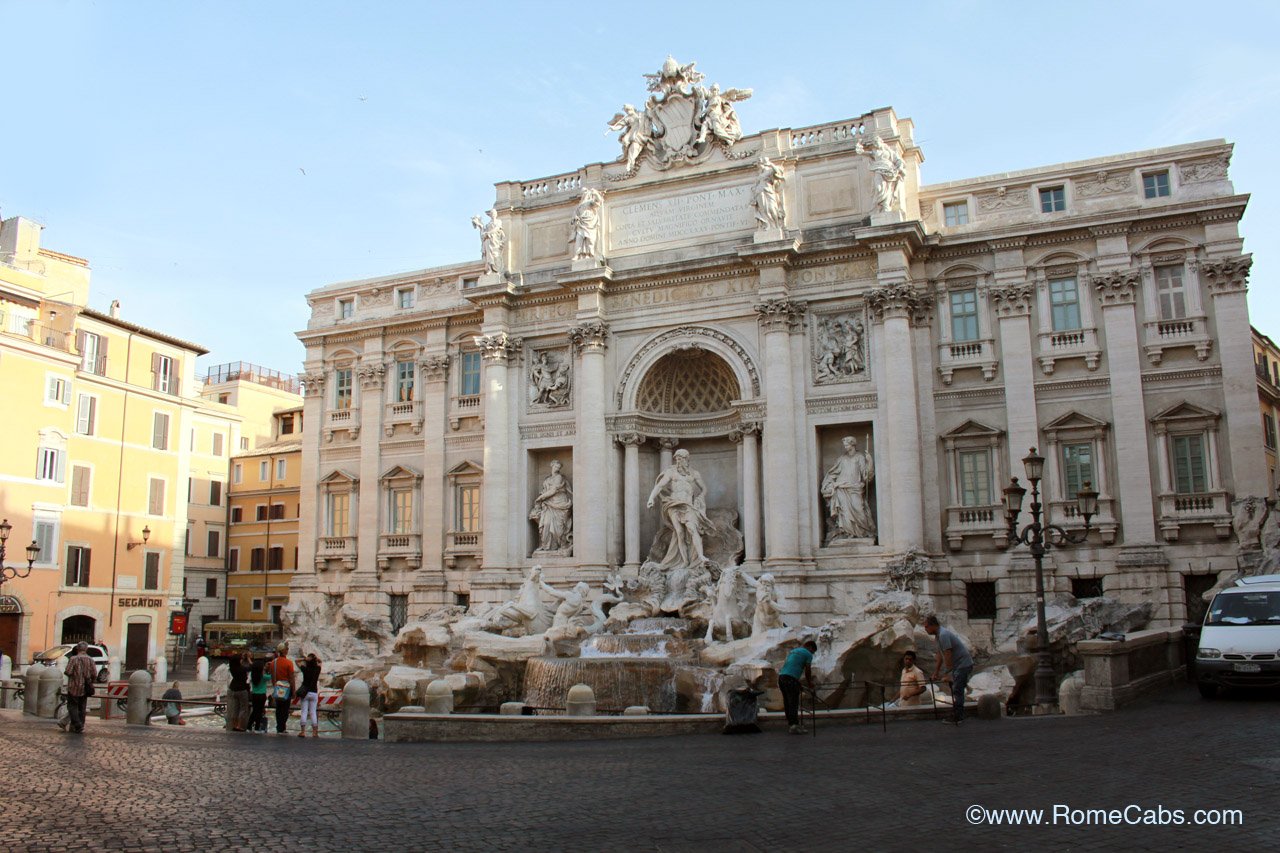
Trevi Fountain in the morning
..
.
5 BOOK A PRIVATE TRANSFER AND TOUR AND ENJOY ROME COMFORTABLY
.
If wandering through the hot cobble stoned streets of Rome from site to site under the baking summer sun, or depending on stuffy and crowded buses and metros to get around is not your cup of iced tea, then you can book a private day tour by car and enjoy Rome in the comfort of your private deluxe air conditioned vehicle with your personal English speaking driver who will whisk you on a wonderful day in Rome so you can see more in one day that you would in 2-3 days on your own.
Not only will your tour Rome comfortably and in style, not only will you see more of Rome in a single day, but at the end of your tour will you arrive at your hotel refreshed and rested, and ready for your evening out!
To enjoy Rome by car, please visit our website for a variety of tour options:
.
http://www.RomeCabs.com
.,.
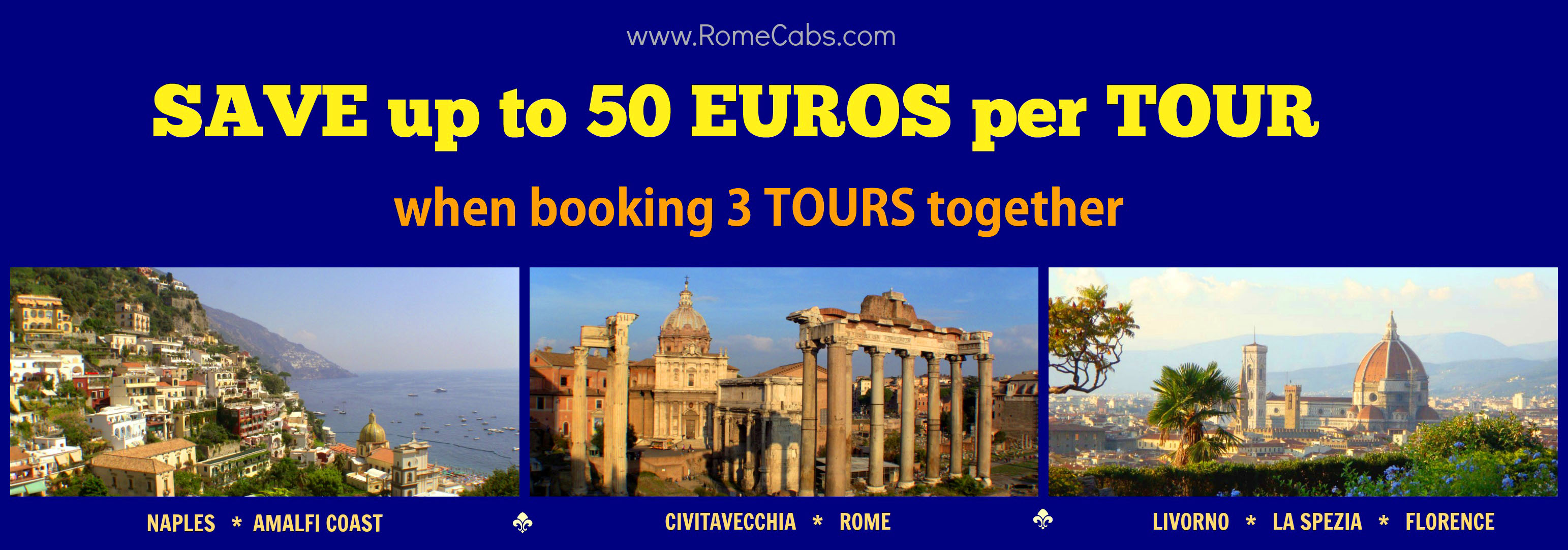
..
VISITING ROME THIS SUMMER? WHAT TO EXPECT
.
.
ENJOY YOUR TOUR VIDEOS ON STEFANO’S ROMECABS YOUTUBE CHANNEL
.
ROME IN A DAY TOUR with RomeCabs
.
.
PANORAMIC ROME TOUR with RomeCabs
.
.
.
.
Thank you very much for choosing Stefano’s RomeCabs for your Tours and Transfers in Rome and beyond. We look forward to welcome you to Italy!
.
Stefano’s RomeCabs Team
Summer in Rome Travel Trips from RomeCabs
More RomeCabs Rome Travel Blogs!
Must See Places in Rome
.
Find us online also on:
- RomeCabs FACEBOOK
- RomeCabs PINTEREST
- RomeCabs TWITTER
- RomeCabs TUMBLR
- RomeCabs INSTAGRAM
- RomeCabs FLICKR Photo Gallery
- RomeCabs Recommended on Cruise Critic
.
.
Summer in Rome for Shopping Sprees!
Buon giorno and welcome to Stefano’s RomeCabs Transfer and Tour Travel Blog. Our goal is to make your holiday to Rome as enjoyable and fun filled as possible!
Do you love to shop? Do you love summer in Italy? Do you love Rome?
Summer in Rome for Shopping Sprees!
Plan a summer trip to Italy and Rome this summer and bring enough space in your luggage for your newly acquired treasures.
Throughout Italy, starting the second week of July the annual summer sales begin. Large cities like Milan, Florence and Rome, are among the most exciting cities for shoppers who enjoy finely made Italian clothes, shoes and accessories.
In Rome, shopping opportunities are everywhere for all budgets and styles.
,
.
For the duration of the summer you can enjoy a wide variety of shopping opportunities at reduced prices, but as the summer goes by you will find less merchandise available. The best month for most variety of merchandise at great prices is July.
Here is where you can shop in Rome during your stay.
.
VIA DEL CORSO
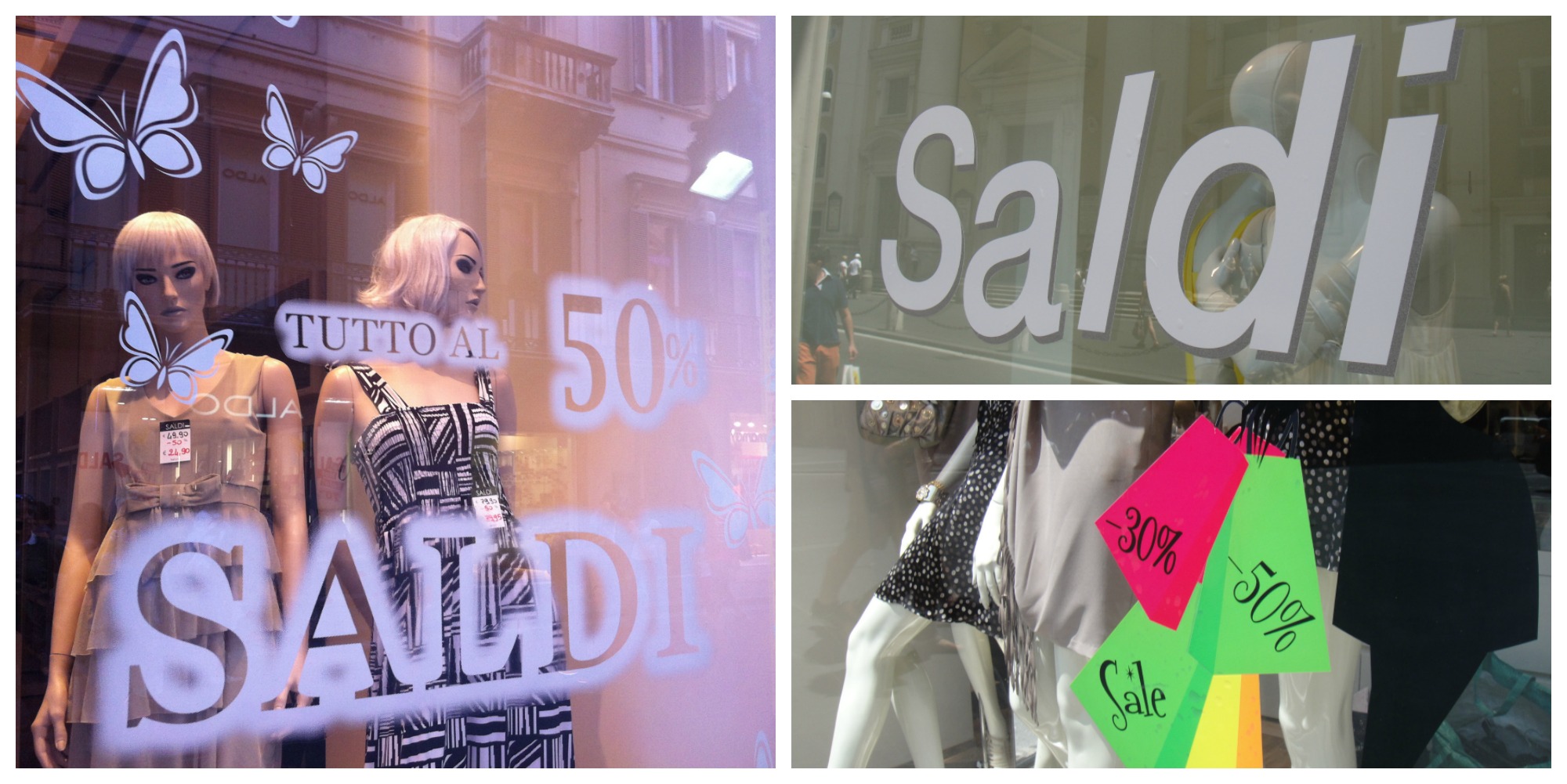
Summer Sale in Rome
Along via del Corso, you will find wide variety of shops that sell clothes, shoes, and accessories for the entire family. Many of the stores are well recognized chains like the Gap, Guess, Zara, Benetton, Disney, Desigual, Foot locker, Nike, Timberland, and more. You will also find cosmetic shops like Sephora and Lush, as well as Kiki for more budget priced Cosmetics.
Some great local shops for women’s clothing are twin set, Stefanel, Sisley, Chopin, Miss Sixty, Class, and Luisa Spagnoli.
Many shoe, accessory, handbags, men’s clothing, tie shops, and lingerie shops also line Via del Corso.
VIA DEI CONDOTTI
Via dei Condotti is one of the most elegant streets in Rome for shopping that springs from Piazza di Spagna (Spanish Steps).
Along this street you will find luxury shops and the finest in Italian fashion houses like Dior, Gucci, Armani, Burberry, Dolce & Gabbana, Ferragamo, Prada, Max Mara, Luis Vuitton, Tod’s, Bulgari, Trussardi, and more.
GALLERIA ALBERTO SORDI
For some indoor shopping, visit Galleria Alberto Sordi, an early 1900’s Art Nouveau style shopping arcade with sit down cafes, and shops like Calvin Klein Jeans, Furla, la Rinascente, Marina Militare, Pinko, Trussardi, La Feltrinelli (one of the best book store chains in Rome, also for books in English)
VIA DEL BABUINO
Via del Babuino runs parallel to Via del Corso from Piazza di Spagna (Spanish Steps) to Piazza del Popolo where multiple streets convene. The street got its name from the statue placed on the street of an unattractive ancient classical deity that resembles a monkey.
In spite of the unattractive name and statue, the street itself is pedestrian friendly and lined with more luxury shops like Diesel, Prada, Armani, Chanel, Sandro Ferrone.
OUTLET MALL SHOPPING
If you prefer to also do some outlet shopping with up to 70% off regular prices, outside of Rome is McArthur Glen Designer Outlet in Castle Romano that include shops from brands like Buberry for men, women and children, Class, Coach, Calvin Kelin, Desigual, David Sandler, Diesel, Furla, Gap, Guess, Gap, Hugo Boss, Liu-Jo, Moschino, Michael Kors, Roberto Cavalli, Salvatore Ferragamo, Swarovsky, Tommy Hillffiger, Valentino, Versace, Benetton and more.
We hope this information helps with your shopping spree in Rome during the Summer Sale.
Thank you very much for visiting our travel blog. For more information on tours and transfers please visit our website. Thank you very much and we look forward to welcome you to Rome.
Santa Maria Antiqua Church: Medieval Sistine Chapel
Buon giorno and welcome to Stefano’s RomeCabs Transfer and Tour blog.
The Roman Forum has just gotten more interesting in year 2016 from March 17 to September 11 with the opening of the much anticipated Santa Maria Antiqua Church (Ancient Church of Saint Mary).
For a limited time, you can visit this amazingly unique 6th century church that is one of the earliest surviving ancient Byzantine churches in Rome.
.
Santa Maria Antiqua Church: Medieval Sistine Chapel
.
.
Just behind the Temple of Castor and Pollux at the foothill of Palatine Hill you will discover what appears to be ancient ruins of imposing Roman structures. Inside one of these structures is the ancient church as it was built within an Roman structure.
This makes this church even more amazing: it was a Christian sanctuary converted from a 1st century Roman structure built by Emperor Domitian.
This ancient structure, still partially intact, was an imperial ramp that connected the palaces on Palatine hill with the Roman Forum below. Eventually a guard house was built to guard the entrance of the ramp. Shortly after, the guard house was converted into a church in in 565 AD that became Santa Maria Antiqua
.
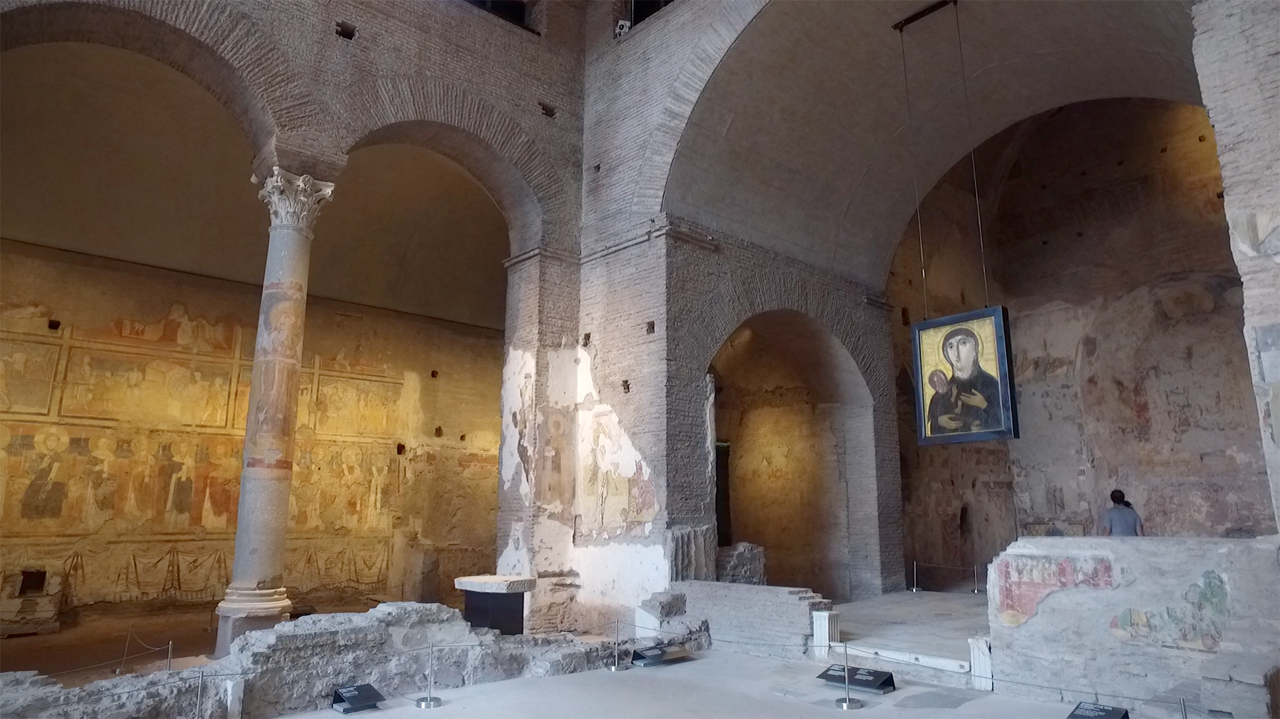
Santa Maria Antiqua Church
.
For nearly 3 centuries the church was decorated with Byzantine frescoes and mosaics several layers deep.
.
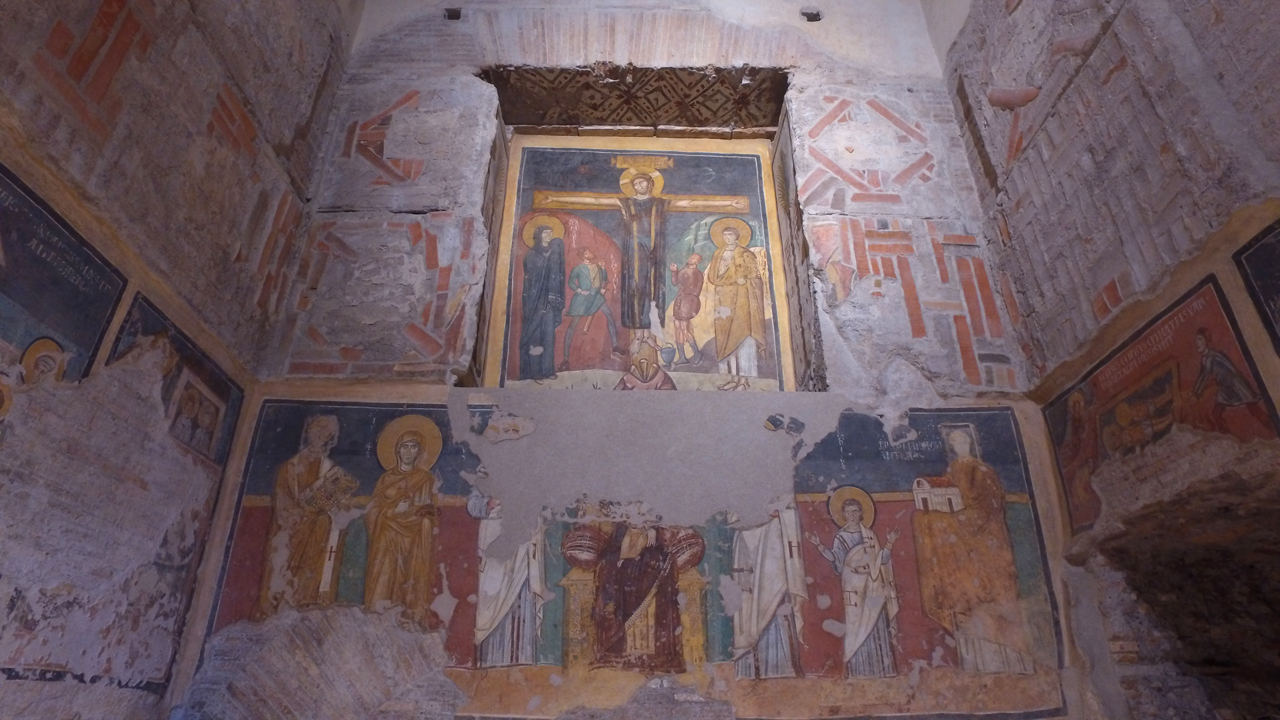
Santa Maria Antiqua Chapel of Theodotus
.
Disaster struck in the 9th century when an earthquake caused a portion of the Palatine Hill to crumble and bury the church in rubble, sealing it for 1,000 years.
The disaster was also a blessing since it preserved the church’s original style and works of art during the time of the Iconoclasm when a large number of Christian iconography were destroyed. Because the church was buried, it kept it unchanged until it was rediscovered in early 1900.
.
Byzantine Mosaics inside Santa Maria Antiqua Church
.
Although heavily damaged by the earthquake and time, decades of painstaking repairs produced a remarkably restored sanctuary with stunning and vibrant ancient biblical frescoes depicting the Virgin Mary, infant Jesus, saints and martyrs.
The remarkable works of art that covered the walls of the chapels have contributed to Santa Maria Antiqua to be referred to as the Medieval Sistine Chapel.
For complete article and information on Santa Maria Antiqua church, and how to visit this impressive sanctuary, please continue on to our main company Blog and click on the title below:
.
SANTA MARIA ANTIQUA CHURCH
If you are interested in visiting Santa Maria Antiqua on any of our day tours in Rome, please visit our website at www.RomeCabs.com where you will find a wide variety of Day Tours Around Italy and Shore Excursions from Civitavecchia
Thank you for choosing Stefano’s RomeCabs. We look forward to showing you Rome!
The RomeCabs Team
Suggested Travel Articles:
10 MUST SEE PLACES IN ROME IN A DAY
.
For fabulous views of the Roman Forum from the top of Vittorio Emanuele II Monument, enjoy our FLICKR PHOTO GALLERY:
..
.
WHAT OUR PAST CLIENTS HAVE SAID ABOUT US:
Thank you very much for choosing Stefano’s RomeCabs! We look forward to welcome you to Rome!
Stefano’s RomeCabs
.
Rome Airport Transfers with RomeCabs
.
Buon giorno and welcome to Stefano’s RomeCabs Transfers and Tours in Italy Travel Blog.
.
RomeCabs has been providing quality, reliable, and affordable Airport and Civitavecchia Transfers in Rome for more than 12 years and to tens of thousands of visitors traveling to Rome by plane or cruise ship.
.
Why book your Rome Airport Transfers with RomeCabs?
.
RomeCabs is a Long Term Trusted Company for Transfers and Tours
Stefano’s RomeCabs has long standing reputation as a trusted company for continued quality and reliable service.
Many repeat clients comment that while some companies waver from their initial good performance, RomeCabs have continuously kept our “Customer First” policy strong and enduring.
RomeCabs is Hghly Recommended by Trusted Sources and Previous Clients
Stefano’s RomeCabs has been recommended on many reputable travel forums where travelers and cruisers go for helpful advice, as well as on travel blogs world wide.
http://boards.cruisecritic.com/showthread.php?t=2026414
http://boards.cruisecritic.com/showthread.php?t=1462956
http://www.fodors.com/community/europe/taxi-rome-thumbs-up-for-rome-cabs.cfm
http://romewithkids.blogspot.it/2010/09/rome-with-private-driver.html
.
Read more: ROME CABS MENTIONED IN THE MEDIA
.
Honesty is the best policy at RomeCabs
RomeCabs does not make promises we cannot keep – honesty is the best policy.
Many companies make lofty promises to lure business and then under deliver on those promises.
Our website at www.RomeCabs.com is rich in information outlining everything our clients can come to expect when booking their Airport Transfers or Civitavecchia Transfers with us. We do not make promises we cannot keep, we do not engage in false advertising.
When booking with Stefano’s RomeCabs, you know in advance what we can and cannot provide because honesty is the best policy.
..
We help our clients be informed and prepared for their Airport Transfers
Stefano’s RomeCabs strives to inform and prepare our clients in advance prior to their transfers to relieve worries about where to meet their drivers at the Airport, Cruise Port, or hotels.
...
.
English Speaking Office Staff makes Contacting RomeCabs Easy and Efficient
Stefano’s RomeCabs has a team of English speaking office staff to clearly understand our clients’ requests, and reply in a professional clear manner.
When communicating with us, you don’t have to know Italian, or worry about difficulty communicating your transfer needs via phone or email.
.
Stefano’s RomeCabs has an Easy to Use and Informative Website
Stefano’s RomeCabs’ official website www.RomeCabs.com is rich in information, and placing your reservation online is easy and secure.
Unlike other companies that just jot down reservations by phone or in their notes and then lose or misplace the reservations (or misunderstand the information and provide incorrect service), we don’t take risks like that with your important reservations so your online bookings are safe and secure in our system and you have actual records of your reservations so you can review for accuracy and make changes if your travel plans change unexpectedly
.
RomeCabs Offers Additional Services to Improve your Transfers from the Airport
Stefano’s RomeCabs also offer a special feature to our Airport Transfers: VIP TRANSFER SERVICE.
. .
Our VIP Transfer Service was the perfect answer to high demand from clients wishing to make stops along the way from the airport to their hotel to either make some needed purchases, have a mini tour of Rome by car to orient themselves prior to their stay, or had some extra time before they were able to check into their hotel, B&B, or rental apartments, or wanted an English speaking driver guaranteed.
.
We offer the options of Airport Transfer with 2 hour tour by car of Rome (which our clients can use this time in Rome as they wish), and Airport Transfer with 4 Hour Tour of Rome with stops at some of Rome’s highlights to take photos.
You can also use this time to also visit places that are best accessible by car, or to get ideas of the places they would like to return to and see again during their stay in Rome.
. .
Thank you very much for choosing Stefano’s RomeCabs for your Airport Transfers, Civitavecchia Port Transfers, Day Tours and Shore Excursions in Italy.
We look forward to welcome you to Italy!
The Stefano’s RomeCabs Team
http://www.RomeCabs.com
.
.
.
7 Ways to book Perfect Civitavecchia Transfers – RomeCabs
Buongiorno and welcome to Stefano’s RomeCabs, your trusted company for Transfers, Day Tours, and Shore Excursions in Italy. Our passion is helping you turn your trip or cruise to Italy into the vacation of a lifetime!
If your cruise trip will start or end in Italy, chances are you will be leaving from or arriving at Civitavecchia cruise port. Civitavecchia is about 1.5 hours away from Rome and is considered the “Port of Rome”. Millions of cruisers travel through Civitavecchia each year.
Your Civitavecchia Transfers are the bookmarks that start and end your special cruise, so it’s important to make them the best possible experiences.
7 Ways to book your Perfect Civitavecchia Transfers
1 Book your Civitavecchia transfer in advance
If you will be cruising between April and November, it’s important to book all your Civitavecchia Transfers and Shore Excursions in advance as this is the peak cruise period in Italy.
By booking early you secure availability for a stress free journey between Fiumicino and Civitavecchia, or between your Rome hotel and Civitavecchia.
This also applies to Shore Excursions as well, book early, and have nothing to worry about before your cruise!
Stefano’s RomeCabs makes it easy to book your Civitavecchia Transfer online via our website www.RomeCabs.com
..
2 Don’t fly into Rome too late on the same day your ship departs.
It’s important to allow a few hours leeway in case you encounter flight or luggage delays. You don’t want to start off your cruise holiday by missing your ship!
We speak from experience, cruisers have missed their ships due to flight delays, missed connections or delayed luggage.
..
3 If staying in Rome, book your transfer between 11 AM – 1 PM
The best time frame to book your transfer from Rome to Civitavecchia is between 11:00 AM – 1:00 PM.
Leaving Rome prior to 11:00 AM, you may arrive so early to the ship that they have not yet finished disembarking yet, and you may be left waiting on the pier until the appropriate embarkation time.
Leaving Rome after 1:00 PM places you at risk of arriving too late to your ship for your embarkation.
.
4 If your Departure Flight from Rome is on the same day your ship docks in Civitavecchia, don’t book your flight too early in the morning
By booking your flight too early in the morning, you may risk missing your flight if your ship docks later than scheduled (it can happen due to rough seas or other unforeseen reasons), or if you encounter traffic on the way to the airport.
A safe flight time is 11 AM (or later). This allows you time to disembark without being rushed and not be stressed about arriving to the airport on time.
.
5 If going to your Rome hotel post cruise, don’t schedule your transfer pick after 9 AM
Most cruisers are disembarked by approximately 9 AM. If you schedule your transfer too late you may have to wait on the pier for your scheduled pick up.
Most of our clients schedule their transfer at 9:00 AM from the cruise ship when they travel to their Rome accommodation post cruise.
.
6 Traveling with extra luggage?
Be sure to inform your transfer provider in case you may need a vehicle upgrade or multiple vehicles if you are a large party of 7-8 traveling with extra luggage.
.
7 Turn your Civitavecchia Transfer into a fun filled tour
If you are staying in Rome pre cruise and have your morning free, if your flight arrives at Fiumicino Airport early in the morning (before 8 AM), or if you have afternoon flight from Fiumicino Airport on the same day your cruise ends at Civitavecchia and would like to make the most of this free time, you can enhance your Civitavecchia Transfer by adding a mini tour into the lovely Roman Countryside.
If you are staying in Rome pre cruise, you can book the standard Countryside Pre Cruise Tour that includes a visit to the lakeside village of Bracciano that boasts the impressive Renaissance Bracciano Castle with the opportunity to visit the enchanting estate, and enjoy a relaxing lunch in the medieval hilltop hamlet of Ceri.
.
PRE CRUISE COUNTRYSIDE TOUR
.
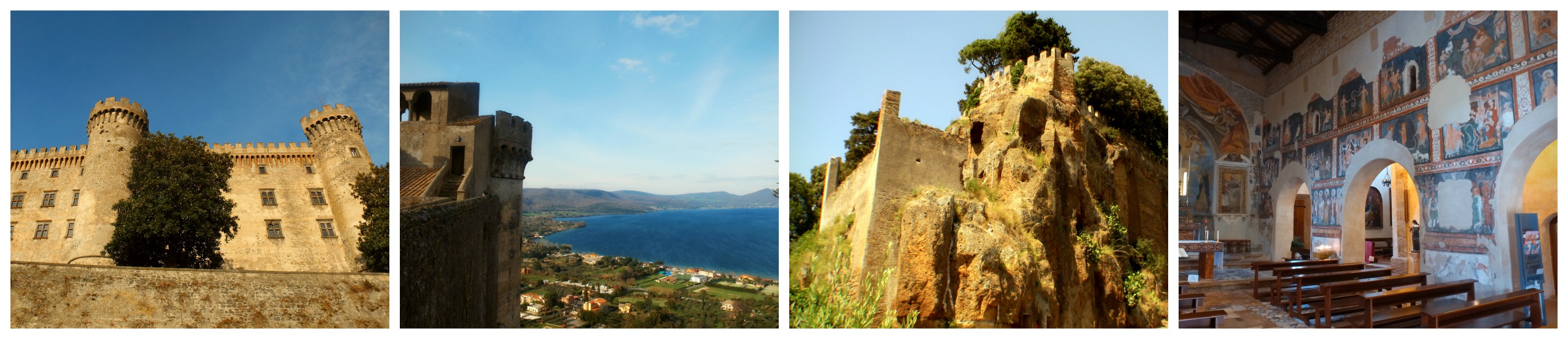
Pre Cruise Countryside Tour with Stefanos’ RomeCabs
..
.
For our guests who don’t have sufficient time from the airport pre cruise or on the way to the airport post cruise to enjoy the complete Countryside Pre Cruise Tour, you may still have enough time to enjoy the town of Bracciano and a visit to Bracciano Castle.
There’s no better way to start or end your cruise holiday in Italy than a visit to a fairy tale-like castle.
If you have a full day ahead, you can book the full Post Cruise Tour by selecting one of the following tours:
ROME IN A DAY POST CRUISE TOUR
..
.
.
PANORAMIC ROME POST CRUISE TOUR
.
.
.
.
COUNTRYSIDE SPLENDOR POST CRUISE TOUR
..
.
.
For more information on our Civitavecchia Transfers, click below to go to our website where you will find complete information with the option to book your transfer directly online.
CIVITAVECCHIA TRANSFER
.
.
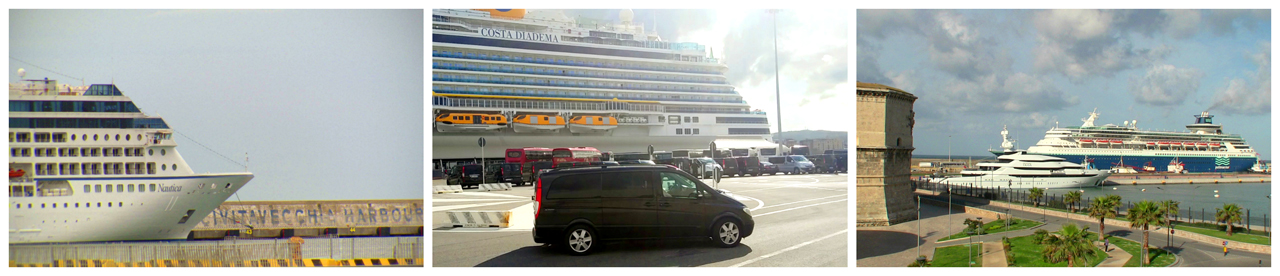
Will your ship also dock in Livorno and Naples?
We can assist you with exciting Shore Excursions from these ports as well. Just click on the ports below for complete tour selections:
RECOMMENDED ON CRUISE CRITIC
.
.
RomeCabs Transfers and Tours
.
* Find RomeCabs online also on:
RomeCabs FACEBOOK
RomeCabs PINTEREST
RomeCabs TWITTER
RomeCabs INSTAGRAM
RomeCabs FLICKR Photo Gallery
.
.
.
10 Must See Places in Rome in A Day
.
Buon giorno, and welcome to our RomeCabs travel blog. Rome, often referred to as the Eternal City, is a treasure trove of history, art, and culture spanning over 2,700 years. It’s a city where every cobblestone street and ancient monument whispers tales of emperors, gladiators, and Renaissance masters. Whether you’re a history buff, an art aficionado, or simply someone captivated by the charm of a city frozen in time, Rome has something extraordinary to offer to visitors staying in Rome booking Rome limousine tours or cruisers on a Civitavecchia shore excursion to Rome.
Sure, Rome was not built in a day, but you can see many of these top 10 must-see places in Rome in a day that define Rome’s allure and timeless beauty.
.
Below are the 10 Must See Places in Rome in A Day
.
.
You can also WATCH these 10 Must See Places in Rome in A Day by clicking to play the VIDEO below:
.
.
.
.
COLOSSEUM – the Icon of Rome
.
The Colosseum, originally named the Flavian Amphitheater, is an enduring symbol of ancient Rome’s architectural innovation and the spectacular entertainment culture of the Roman Empire. Commissioned by Emperor Vespasian in 70 AD and completed by his successor Emperor Titus in 80 AD, this monumental structure stands as the largest amphitheater ever built.
.
How did the Colosseum get its name?
The name “Colosseum” is derived from the colossal statue of Nero that once stood nearby. Despite being a symbol of tyrannical rule, the monument itself became a focal point of Roman cultural life.
.

.
.
.
Architecture of the Colosseum:
The Colosseum is an engineering marvel of its time, showcasing advanced techniques in construction and design. Its elliptical shape measures 189 meters in length, 156 meters in width, and originally stood at a height of over 48 meters. Made primarily of travertine limestone quarried from nearby Tivoli, the outer walls featured four stories of arches adorned with Corinthian, Ionic, and Doric columns. The exterior facade was once embellished with statues and decorations, adding to its grandeur.
Inside, the Colosseum was ingeniously designed to accommodate up to 50,000 to 80,000 spectators across its multiple tiers. The arena floor, known as the “arena“, featured a wooden stage (arena) covered with sand (harena) to absorb blood from gladiatorial combats and animal hunts. Beneath the arena, a complex network of tunnels and chambers, called the hypogeum, housed animals, slaves, and equipment, which could be hoisted to the surface using a sophisticated system of lifts and ramps.
.
.
.
History of the Colosseum:
The Colosseum was more than just an architectural marvel; it embodied the Roman Empire’s values, serving as a venue for gladiatorial games, wild animal hunts, mock naval battles, and theatrical performances. These spectacles were staged to entertain and distract the populace, maintaining social order and reinforcing imperial power. The inaugural games lasted for 100 days and nights, a testament to the scale and extravagance of Roman entertainment.
The Colosseum’s history reflects the shifting tides of Roman politics and culture. Over the centuries, it witnessed various modifications and adaptations, including the addition of awnings (vela) to provide shade for spectators, and even transformations into a fortress and a medieval workshop. Despite earthquakes and centuries of neglect, much of the Colosseum has survived, thanks to ongoing restoration efforts that have preserved its iconic status as a symbol of Rome’s grandeur and endurance.
Today, the Colosseum stands as one of Rome’s most visited tourist attractions and a UNESCO World Heritage site. Restoration efforts continue to safeguard its structural integrity and enhance visitor experiences, including access to previously inaccessible areas such as the upper tiers and underground chambers. These initiatives not only ensure the Colosseum’s preservation but also deepen our understanding of its multifaceted role in ancient Roman society.
..
CIRCUS MAXIMUS – Ancient Rome’s Chariot Racing Stadium
.
Located near the iconic Colosseum, Circus Maximus stands as a testament to ancient Rome’s passion for entertainment and spectacle.
Circus Maximus was the largest stadium in ancient Rome, dedicated primarily to chariot racing, a popular sport that captivated both the masses and the elite. Originally built in the 6th century BCE, it underwent several expansions over the centuries, reaching its peak size during the reign of Emperor Trajan in the 2nd century CE. The stadium could accommodate up to 150,000 spectators, showcasing the grandeur and scale of Roman public entertainment.
.
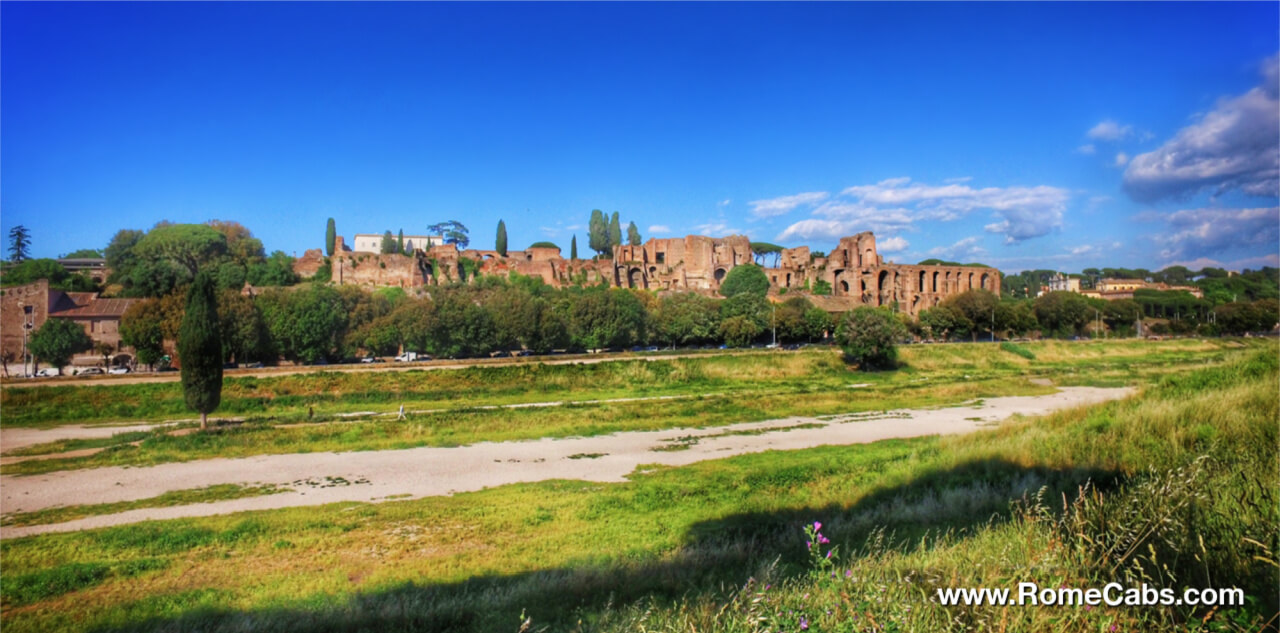
.
Chariot Races and Entertainment in Ancient Rome:
Chariot races held at Circus Maximus were thrilling events that drew immense crowds from all walks of life. Teams of skilled charioteers, known as factions, competed fiercely in races that symbolized social and political rivalries within Roman society. The races were not only a spectacle of speed and skill but also a reflection of Roman values and passions, making Circus Maximus a vibrant center of cultural expression and communal celebration.
Although little remains of the original structure today, the outline of Circus Maximus evokes its former glory. Stretching over 600 meters in length and 140 meters in width, the stadium was lined with seating tiers and adorned with statues and obelisks, enhancing its majestic appearance.
Adjacent to Circus Maximus lies the Palatine Hill, one of Rome’s legendary seven hills and the site of imperial palaces and gardens. The emperors and aristocracy of Rome often watched chariot races from their palatial residences on the Palatine, underscoring the stadium’s significance as a venue for imperial leisure and public spectacle.
Today, Circus Maximus remains a significant archaeological site that offers insights into ancient Roman culture, architecture, and urban planning. Excavations and ongoing research continue to reveal artifacts and structures that shed light on the stadium’s role in Roman society and its impact on public entertainment.
.
.
ROMAN FORUM – picture perfect view from Capitoline Hill
.
You can enjoy a panoramic sweeping view of the Roman Forum from a terrace tucked away behind Capitoline Hill. To your right you will see the Palatine Hill ruins, and also the Colosseum peeking through on the other side of the Roman Forum. No wonder this is one of the most photographed view in Rome! So don’t forget your cameras when you arrive here.
.
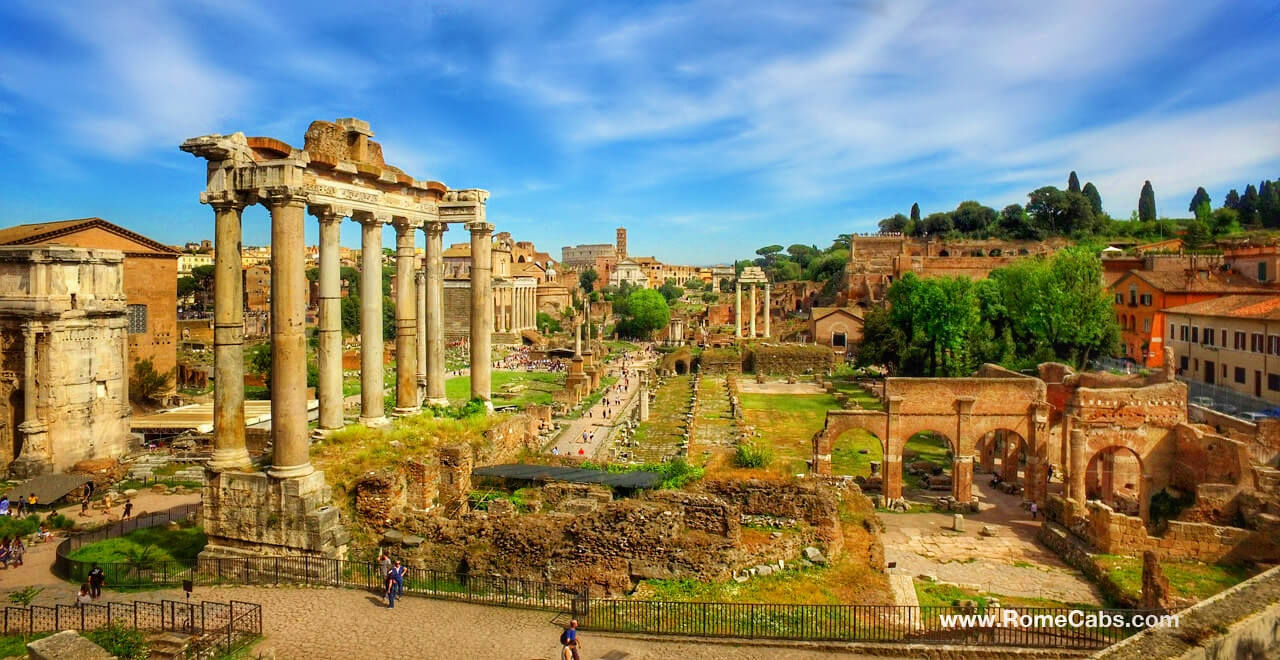
.
.
The Roman Forum: Heart of Rome’s Civic Splendor
Nestled in the heart of Rome, a mere stone’s throw from the majestic Colosseum, lies the Roman Forum—an archaeological marvel and the epicenter of ancient Rome’s civic, religious, and political life. Spanning over centuries of history, this sprawling site served as the beating heart of the Roman Empire, where monumental decisions were made, laws were enacted, and religious ceremonies were performed.
The Roman Forum’s layout evolved over time, reflecting Rome’s expansion and the consolidation of power. Initially a marshy valley, it was gradually transformed into a bustling marketplace and civic center lined with temples, basilicas, and government buildings. The architecture varied from simple structures of wood and brick to elaborate marble monuments that celebrated Rome’s victories and deities.
Key structures included the Temple of Saturn, where the treasury and state archives were housed; the Curia, or Senate House, where debates shaped Roman policies; and the Rostra, a platform from which orators addressed the public. The Forum also featured grand triumphal arches, such as the Arch of Septimius Severus, commemorating military victories and showcasing Roman engineering prowess.
.
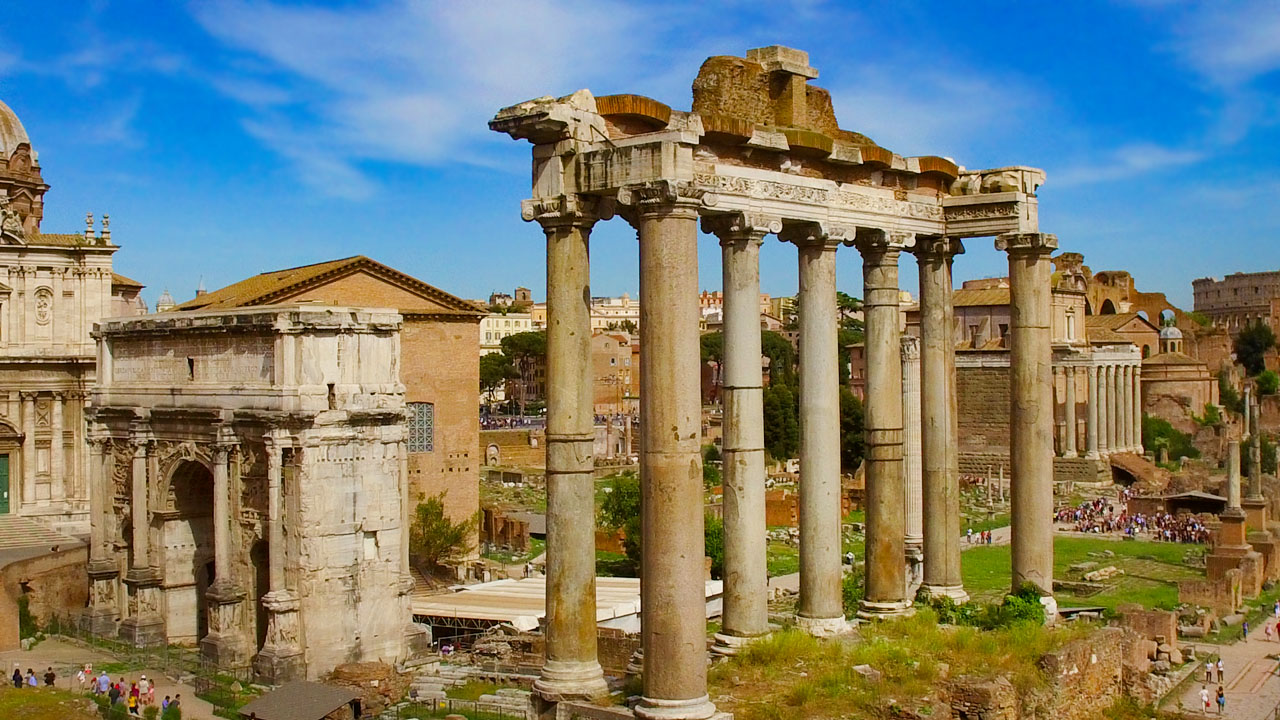
.
.
Historical Significance of the Roman Forum
The Roman Forum was more than just a collection of buildings; it was the symbolic and functional heart of Roman governance and religious life. Here, the Vestal Virgins tended sacred flames in the Temple of Vesta, ensuring the eternal continuity of Rome. It was a place where emperors were inaugurated, triumphal processions paraded, and citizens gathered for public events and festivals.
The Forum witnessed pivotal moments in Roman history, from the rise of Julius Caesar and Augustus to the fall of the Roman Empire. Its monuments bore witness to the evolution of Roman architecture and urban planning, influencing subsequent cities and civilizations across Europe.
The Roman Forum’s cultural legacy extends beyond its historical artifacts. It symbolizes the ideals of Roman governance, the integration of civic life with religious rituals, and the development of architecture and urban planning. Each structure tells a story of Roman ingenuity, from the innovative use of concrete to the artistic mastery of marble sculpture and reliefs.
Today, the Roman Forum stands as an open-air museum, allowing visitors to walk through the remnants of Rome’s golden age. Excavations and restoration projects have uncovered new insights into its layout and function, while modern amenities ensure accessibility for tourists eager to explore its labyrinthine streets and monumental ruins.
.
.
PIAZZA DELLA ROTONDA – A Living Legacy of the Pantheon
.
If the Pantheon could speak, it would narrate the vibrant history of Piazza della Rotonda, the charming square that lies before it. Named after the informal title of the Pantheon, Santa Maria Rotonda (from the word rotund which means round) bestowed upon it after its conversion into the Church of Saint Mary and the Martyrs, this square has witnessed centuries of evolution and transformation.
.
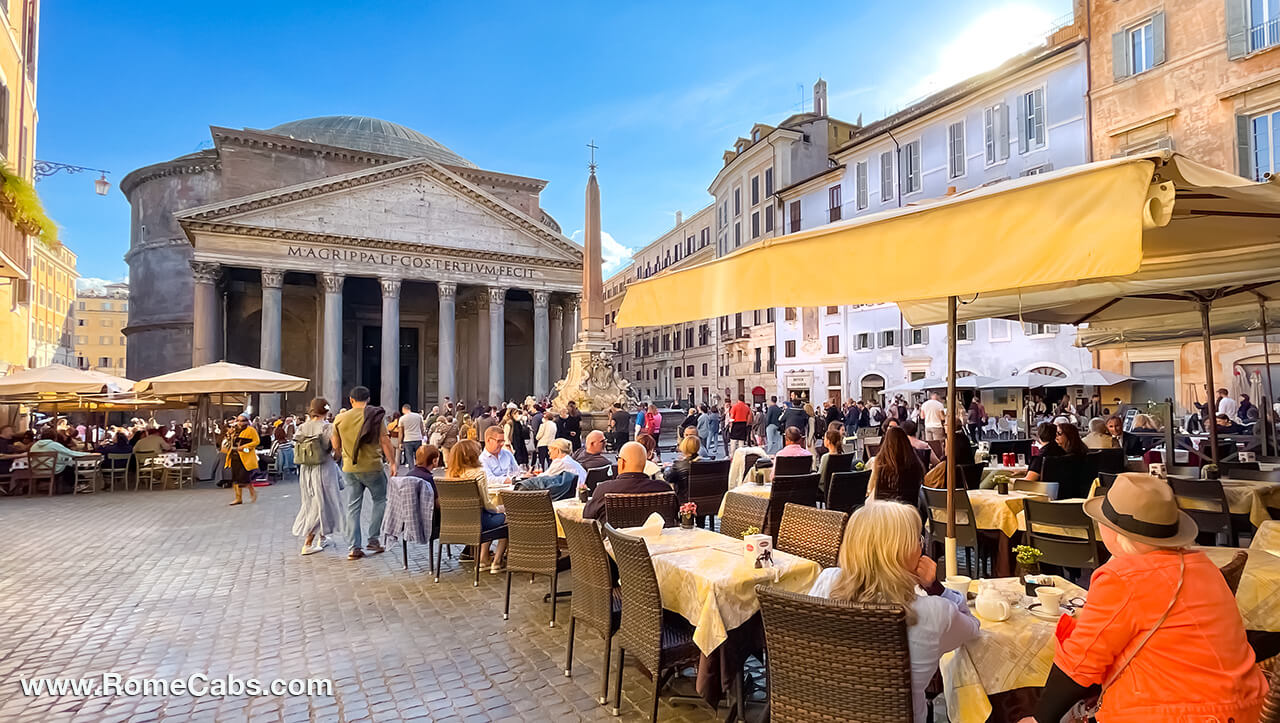
.
.
Throughout its history, Piazza della Rotonda has served as a focal point for Roman life and commerce. In its early days, the square was surrounded by a bustling market, with stalls and sheds that enveloped the Pantheon, catering to the needs of pilgrims, locals, and traders alike. This lively market continued well into the late 1800s, a testament to the square’s enduring importance as a center of activity.
In the 1430s, Pope Eugenius IV took decisive action to clear the cluttered market from around the Pantheon, restoring the square to its more dignified stature. Despite these efforts, the square remained a hub of daily life, frequented by Romans going about their business and visitors exploring the wonders of the Pantheon.
.
Modern-Day Piazza della Rotonda:
Today, Piazza della Rotonda retains its allure, attracting both locals and tourists who come to admire the Pantheon and soak in the ambiance of this historic square. Visitors can be seen sitting on the steps of the central fountain, Fontana del Pantheon, which dates back to 1575. This fountain, adorned with an ancient Egyptian obelisk originally commissioned by Pharaoh Ramses II for the Temple of Ra in Heliopolis (now known as Obelisco Macuteo), adds a touch of antiquity to the square.
.
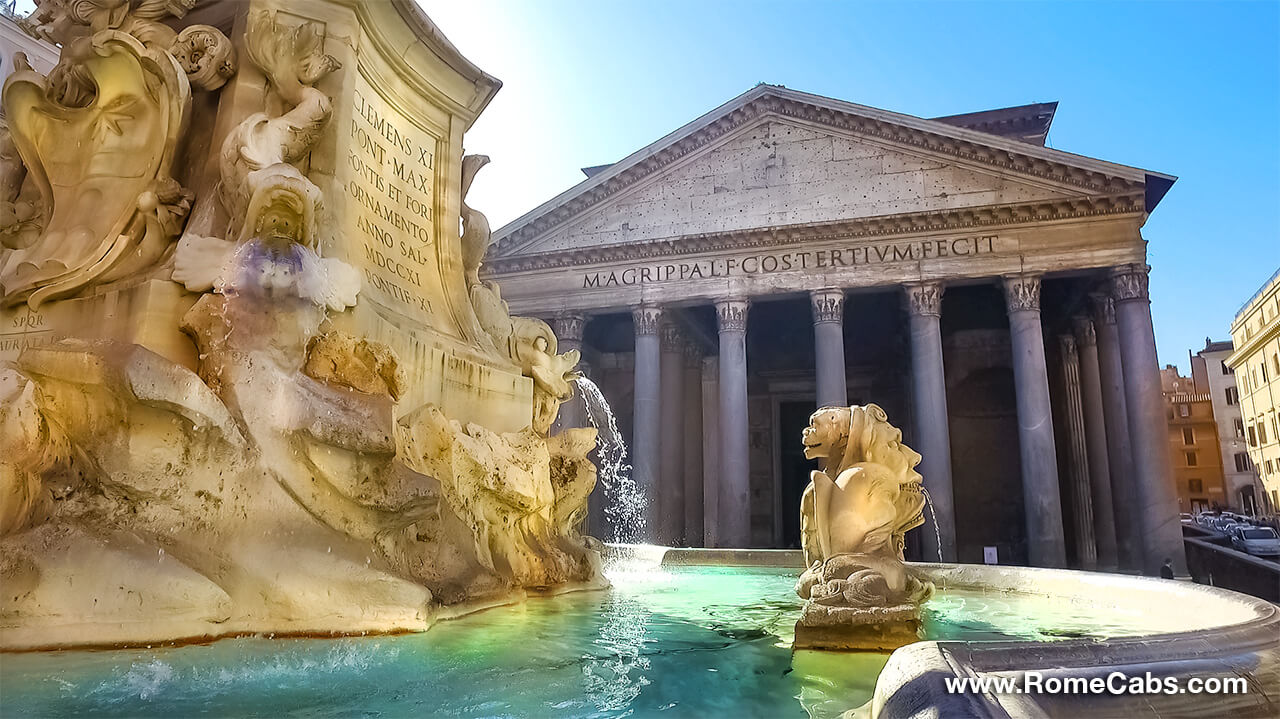
.
.
Surrounding the square are charming cafes and restaurants with outdoor seating, where patrons can enjoy a meal or a drink while taking in views of the Pantheon and the bustling activity of the square. Piazza della Rotonda continues to serve as a gathering place for Romans and visitors alike, offering a glimpse into daily Roman life amidst the backdrop of ancient splendor.
.
.
The PANTHEON: Ancient Marvel of Rome
.

.
.
Dominating Piazza della Rotonda, the Pantheon stands as a pinnacle of ancient Roman architectural achievement, blending engineering innovation with religious significance. Initially constructed as a temple dedicated to all Roman gods, its transformation over the centuries mirrors Rome’s cultural evolution and enduring legacy.
Commissioned by Emperor Hadrian around 126 AD, the Pantheon is renowned for its grandeur and structural ingenuity. The temple’s iconic feature is its massive dome, which spans 43.3 meters in diameter and was, until the 20th century, the largest dome of its kind. Constructed using unreinforced concrete, the dome’s weight is lightened by progressively thinner layers of concrete as it rises, culminating in the oculus—an opening at the apex that allows sunlight and rain to enter, symbolizing the connection between the temple and the heavens.
Surrounding the rotunda, the Pantheon’s portico features towering Corinthian columns imported from Egypt, showcasing the empire’s vast reach and architectural prowess. The portico’s pediment once displayed bronze relief sculptures depicting the mythological battles of Hercules and Theseus, adding to the temple’s grandeur and cultural significance.
.
Historical Evolution of the Pantheon:
Throughout its history, the Pantheon has undergone several transformations, reflecting shifts in Roman religious practices and societal norms. In the early 7th century, Emperor Phocas gifted the Pantheon to Pope Boniface IV, who consecrated it as a Christian church dedicated to St. Mary and the Martyrs. This conversion saved the Pantheon from neglect and destruction, ensuring its preservation as a sacred space within the Christian community.
The Pantheon’s dual identity—as a temple to Roman gods and later as a Christian church—highlights its enduring importance in Roman and Western history. Its architecture influenced Renaissance and Baroque masters, including Michelangelo and Bernini, who drew inspiration from its harmonious proportions and celestial design.
.
.

.
.
The Pantheon is a Mausoleum of Kings and Artists:
In addition to its religious and architectural significance, the Pantheon serves as a mausoleum for prominent figures in Italian history. Among its interments are Italian kings, including Vittorio Emanuele II and Umberto I, and the celebrated Renaissance artist Raphael. Their tombs within the Pantheon underscore its role as a repository of national pride and cultural heritage.
Today, the Pantheon welcomes visitors from around the world, drawn by its timeless beauty and historical importance. The interior’s serene atmosphere, illuminated by the oculus’s natural light, evokes a sense of awe and contemplation. Visitors can marvel at the precision of Roman engineering while reflecting on the temple’s enduring legacy as a symbol of spiritual devotion and architectural innovation.
Efforts to preserve the Pantheon continue, ensuring its structural integrity and accessibility for future generations. Restoration projects focus on maintaining the dome’s stability and conserving the ancient marble, bronze, and concrete that adorn its interior and exterior.
For some fascinating insider look into the Pantheon, we invite you to read:
10 Unique Facts about the Pantheon you probably didn’t know
.
.
The TREVI FOUNTAIN: Rome’s Baroque Jewel
.
The Trevi Fountain, a pinnacle of Baroque art and one of Rome’s most iconic landmarks, captivates visitors with its grandeur, mythology, and cultural significance.
Designed by Nicola Salvi and completed in 1762, the Trevi Fountain stands as a testament to the Baroque period’s exuberance and artistic prowess. The fountain’s facade, adorned with Corinthian columns, statues, and bas-reliefs, creates a dramatic backdrop for its central figures. At its center, the triumphant figure of Oceanus (depicted as Neptune, god of the sea) commands attention, astride a chariot drawn by sea horses and surrounded by tritons and mythical creatures.
.

.
.
Symbolism and Mythology of Trevi Fountain:
The Trevi Fountain is steeped in symbolism and mythology, reflecting Rome’s connection to water and the sea. Oceanus symbolizes the vastness and power of the ocean, while the sea horses represent the changing moods of the sea. The fountain’s design evokes a sense of movement and dynamism, with water cascading from multiple sources into a large basin below, creating a symphony of sight and sound that enchants visitors.
.
Cinematic and Cultural Legacy of Trevi Fountain:
Beyond its architectural brilliance, the Trevi Fountain has attained cultural immortality through its portrayal in literature, art, and cinema. The tradition of tossing a coin into the fountain, believed to ensure a return to Rome, has become a globally recognized ritual. Inspired by legends and perpetuated by films such as Federico Fellini’s “La Dolce Vita“, starring Anita Ekberg wading into its waters, this tradition attracts millions of visitors annually who seek to partake in its mystical allure.
Over the years, the Trevi Fountain has undergone several restorations to preserve its structural integrity and artistic beauty. The most recent extensive restoration, completed in 2015 by the Fendi fashion house, revitalized the fountain’s facade, sculptures, and hydraulic system, ensuring its continued splendor for future generations to admire.
.
The SPANISH STEPS / Piazza di Spagna – A Symbol of Rome’s Splendor
.
The Spanish Steps, linking the Piazza di Spagna below with the Trinità dei Monti church above, epitomize the charm and elegance of Rome’s Baroque period.
Designed by Francesco de Sanctis and constructed between 1723 and 1725, the Spanish Steps are a masterpiece of Baroque architecture. The monumental staircase consists of 138 steps that rise in a series of terraces, creating a graceful ascent from the bustling Piazza di Spagna to the serene Trinità dei Monti church. The steps were commissioned by Pope Benedict XIII to link the Bourbon Spanish Embassy in the piazza below with the church and French square above.
.

.
Fontana della Barcaccia:
At the foot of the Spanish Steps lies the Fontana della Barcaccia, or “Fountain of the Old Boat“, designed by Pietro Bernini (father of Gian Lorenzo Bernini). This Baroque fountain, completed in 1627, takes the shape of a sinking boat, its water overflowing with a gentle cascade. The fountain’s design cleverly incorporates its low water pressure, deriving from an ancient Roman aqueduct, to create a serene ambiance amidst the bustling square.
.
Keats-Shelley Memorial House
Nearby, the Keats-Shelley Memorial House commemorates the Romantic poets John Keats and Percy Bysshe Shelley, who found inspiration in Rome’s timeless beauty. The house, now a museum, preserves the legacy of these poets who contributed to the Romantic movement with their evocative poetry and prose. Visitors can explore the rooms where Keats spent his final months, overlooking the Spanish Steps, and discover the library that holds an extensive collection of Romantic literature and artifacts.
The Spanish Steps and Piazza di Spagna have long been a favored gathering place for locals and tourists alike. Whether climbing the steps to reach the Trinità dei Monti church or simply standing on the terraces to admire the views, visitors immerse themselves in the vibrant atmosphere of Roman life. The steps themselves serve as a meeting point, a place for artists and musicians to showcase their talents, and a backdrop for social gatherings and cultural events throughout the year.
.

.
.
Over the centuries, the Spanish Steps have undergone several restorations to maintain their architectural integrity and historical significance. Recent renovations in 2016, funded by luxury brand Bulgari, revitalized the steps and surrounding area, ensuring they continue to attract visitors while preserving their Baroque splendor.
.
.
THE VATICAN MUSEUMS
.
Located within the Vatican City, the smallest independent state in the world, the Vatican Museums are a treasure trove of art and history that draws millions of visitors annually. Founded by Pope Julius II in the early 16th century, the Vatican Museums began as a collection of sculptures displayed in the Cortile Ottagono (Octagonal Courtyard).
Over the centuries, successive popes expanded the collection, acquiring masterpieces from across Europe and beyond. Today, the Vatican Museums encompass multiple galleries and halls, showcasing art from various periods of history.
.

.
.
The Vatican Museums boast an unparalleled collection of artworks spanning millennia. Visitors are greeted by ancient sculptures such as the famous Laocoon and Apollo Belvedere, which have influenced artists and scholars for centuries. The museums’ corridors lead to a series of breathtaking galleries, each dedicated to specific artistic movements and periods.
One of the highlights of the Vatican Museums is its Renaissance art collection. Works by Leonardo da Vinci, Raphael, and Caravaggio adorn the walls, showcasing the brilliance of these masters during the cultural flowering of the Renaissance. Raphael’s “School of Athens” in the Raphael Rooms.
Visiting the Vatican Museums is a journey through art and history. The museums’ vastness and diversity ensure there is something for every visitor, from ancient history enthusiasts to admirers of Renaissance art. The galleries are meticulously curated, offering insights into the evolution of art and culture under the patronage of the papacy.
Among the most Must See galleries and rooms in the Vatican on a short time are Octagonal Courtyard, The Round Room, The Raphael Rooms, the Gallery of the Tapestries, the Gallery of the Maps as they are rich with the most awe inspiring works of art by the world’s greatest Masters.
.
The SISTINE CHAPEL – A Sanctuary of Renaissance Art
.
The Sistine Chapel, nestled within the Apostolic Palace in Vatican City, stands as a timeless testament to the intersection of art, religion, and papal history. Commissioned by Pope Sixtus IV della Rovere in the late 15th century, the Sistine Chapel was envisioned as a grand space for papal ceremonies and gatherings. Named after its patron, Pope Sixtus IV, the chapel’s construction and decoration aimed to glorify the papacy and reinforce its spiritual authority.
.
The “Conclave” – Sistine Chapel’s Role in Papal Ceremonies:
Beyond its artistic grandeur, the Sistine Chapel plays a pivotal role in the ecclesiastical life of the Catholic Church. It serves as the site for the papal conclave, the secretive gathering of cardinals to elect a new pope. The chapel’s secluded setting and sacred ambiance provide a solemn backdrop for this centuries-old tradition, emphasizing its role as the spiritual heart of Vatican governance.
.
Michelangelo’s Masterpieces in the Sistine Chapel
The Sistine Chapel is most renowned for its ceiling frescoes, executed by the genius of Michelangelo Buonarroti. Commissioned by Pope Julius II in 1508 and completed in 1512, Michelangelo’s ceiling frescoes depict nine scenes from the Book of Genesis, including the iconic “Creation of Adam” where God breathes life into Adam. These frescoes exemplify Michelangelo’s mastery of anatomy, perspective, and storytelling, transforming the chapel’s ceiling into a celestial narrative of divine creation.
.
.

.
.
Later, between 1536 and 1541, under the patronage of Pope Paul III, Michelangelo returned to the Sistine Chapel to paint the “Last Judgment” on the altar wall. This monumental fresco portrays the Second Coming of Christ and the final judgment of souls, with vivid depictions of heaven, hell, and purgatory.
Michelangelo’s bold composition and powerful figures underscore the theological themes of redemption and damnation, solidifying the Sistine Chapel as a sanctuary of spiritual reflection.
.
.

.
.
In addition to Michelangelo’s frescoes, the Sistine Chapel features side walls adorned with a series of frescoes depicting biblical narratives. Florentine painters such as Sandro Botticelli, Domenico Ghirlandaio, and Pietro Perugino contributed to these narrative cycles, each artist infusing their distinctive style and interpretation of sacred stories. These frescoes, divided into three horizontal sections, create a harmonious ensemble that complements Michelangelo’s ceiling and altar wall masterpieces.
.
Architectural and Decorative Details of the Sistine Chapel:
The architectural integrity of the Sistine Chapel is enhanced by its intricate decorative elements. Below the narrative frescoes on the side walls, realistic Damask-style draperies adorned with the papal coat of arms enrich the chapel’s visual tapestry. The juxtaposition of narrative frescoes and decorative motifs creates a dynamic visual experience, inviting contemplation and admiration of both artistic technique and religious symbolism.
The Sistine Chapel stands as a cultural and artistic pinnacle of the Renaissance, embodying the period’s ideals of humanism, creativity, and spiritual expression. Michelangelo’s frescoes transcend their religious context, inspiring admiration and study across disciplines of art history, theology, and philosophy.
.
.
SAINT PETER’S BASILICA – the Largest Church in Christendom
.
Saint Peter’s Basilica, nestled within Vatican City, is not only the largest church in Christendom but also a marvel of Renaissance and Baroque architecture. Saint Peter’s Basilica stands on the site believed to be the burial place of Saint Peter, one of the twelve apostles of Jesus Christ and considered the first pope by Catholics.
The basilica’s construction spanned over a century, beginning in 1506 under Pope Julius II and culminating with its completion in 1626 under Pope Urban VIII. Architects including Donato Bramante, Michelangelo, Carlo Maderno, and Gian Lorenzo Bernini contributed to its design and construction.
.
.
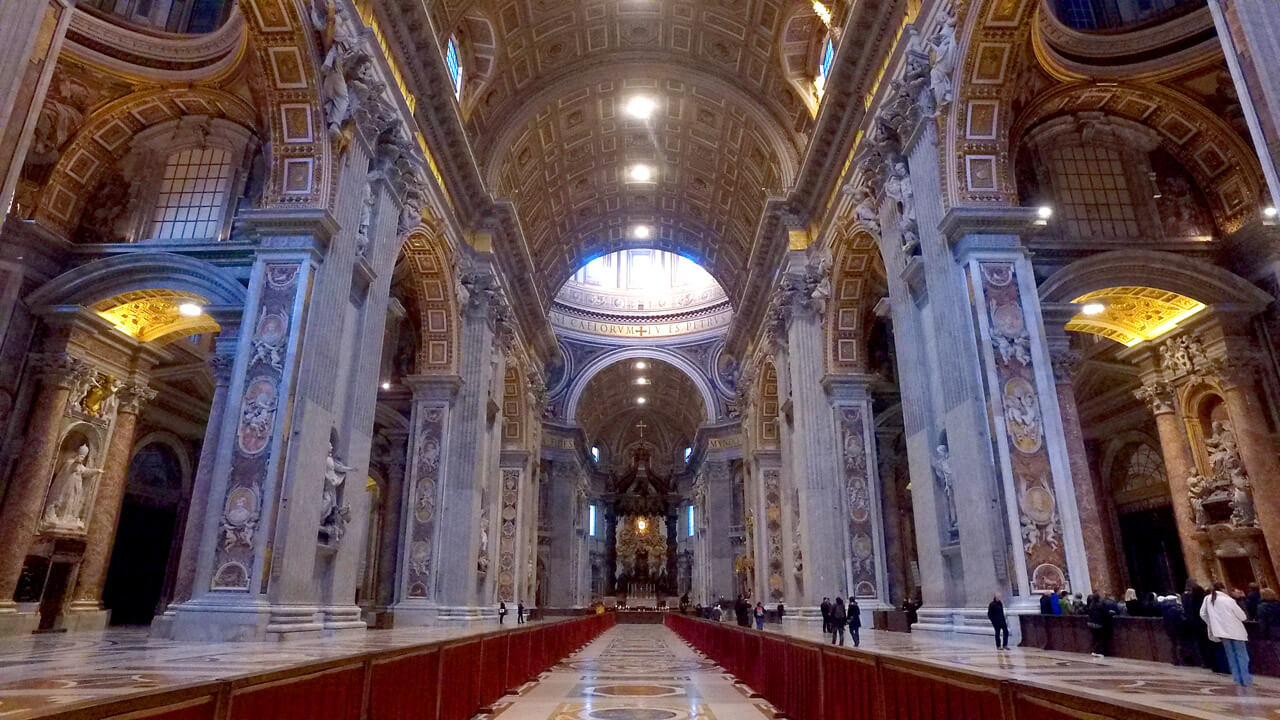
.
.
Renaissance and Baroque Splendor of St Peter’s Basilica:
The basilica’s facade, designed by Carlo Maderno, features colossal Corinthian columns and intricate details that reflect the grandeur of Roman architecture. The interior, however, is where Saint Peter’s Basilica truly astonishes visitors. Michelangelo’s majestic dome, rising to a height of 136 meters, dominates the skyline of Rome and serves as a symbol of spiritual aspiration.
Saint Peter’s Basilica houses an unparalleled collection of art, including sculptures, mosaics, and paintings by renowned artists. Michelangelo’s “Pieta“, a stunning depiction of the Virgin Mary cradling the body of Jesus, greets visitors near the entrance.
Gian Lorenzo Bernini’s masterpiece, the Baldacchino, stands beneath the dome, marking the high altar and symbolizing the unity of the Church under the guidance of the papacy.
.
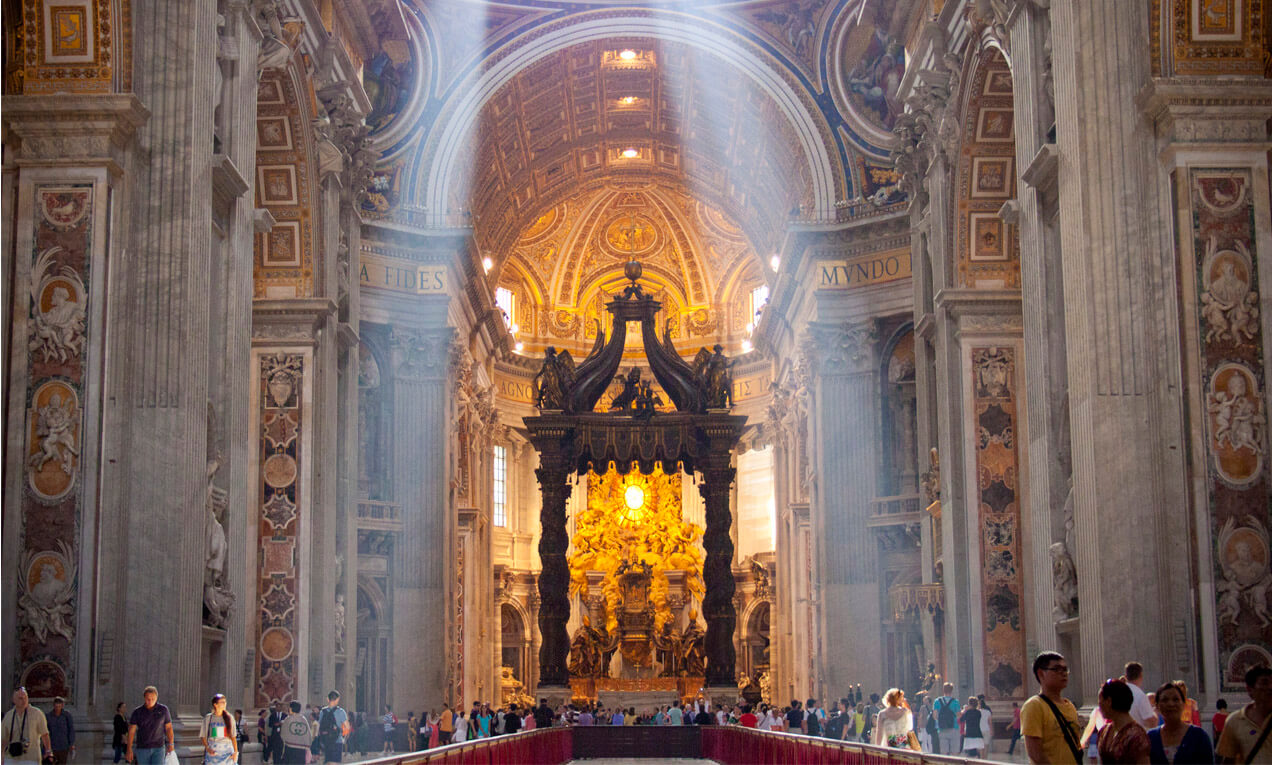
.
.
Historical Significance of St Peter’s Basilica:
Throughout its history, Saint Peter’s Basilica has been a focal point of religious and cultural significance. It has witnessed papal coronations, solemn ceremonies, and historic events that shaped the course of Christianity and Western civilization. The basilica’s architecture and artwork reflect the artistic achievements of the Renaissance and Baroque periods, attracting pilgrims and art enthusiasts from around the world.
Visiting Saint Peter’s Basilica is a sensory journey through history and spirituality. The vast interior, adorned with marble, gold, and precious stones, evokes a sense of reverence and awe. Pilgrims and tourists alike marvel at the basilica’s architectural grandeur and artistic splendor, making it one of the most visited religious sites in the world.
The Vatican continues to uphold Saint Peter’s Basilica as a center of religious worship and cultural heritage. Preservation efforts ensure that the basilica’s artworks and architectural features remain intact for future generations to appreciate and admire. Restoration projects, such as those undertaken on the facade and dome, uphold the basilica’s structural integrity while enhancing its beauty.
.
To visit many of these sites in a single day, you can book private Rome tours by car, or a Private Tour from Rome Sea port. Your personal driver will take you to all the sites in comfort and style as you enjoy Rome in the comfort of your private deluxe vehicle driven by your personal English speaking Driver at your disposal to ensure your day in Rome will be your most memorable day in Italy!
.
More information is available on our website www.RomeCabs.com.
Thank you very much for choosing Stefano’s RomeCabs.
We look forward to showing you Rome!
The RomeCabs Team
http://www.RomeCabs.com
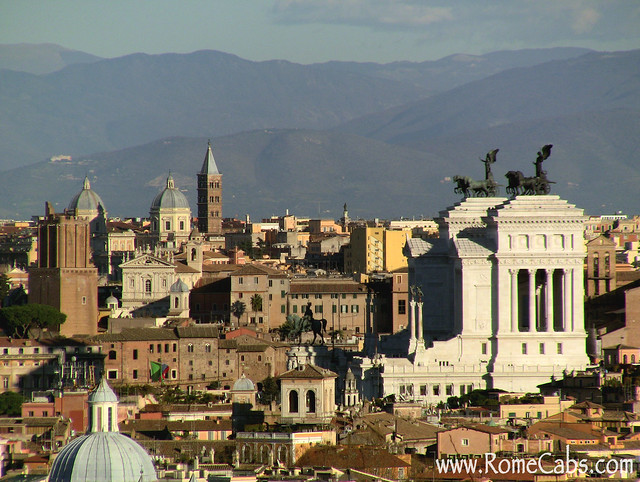
.
Find RomeCabs online also on:
RomeCabs FACEBOOK
RomeCabs PINTEREST
RomeCabs TWITTER
RomeCabs TUMBLR
RomeCabs INSTAGRAM
RomeCabs FLICKR Photo Gallery
RomeCabs Recommended on Cruise Critic
.
Check out our other Italy Travel Blogs by RomeCabs:
https://romecabsdotnet.wordpress.com/
https://rome-cabs.org/
https://rome-cabs.net/
https://romecabs.wordpress.com/
.
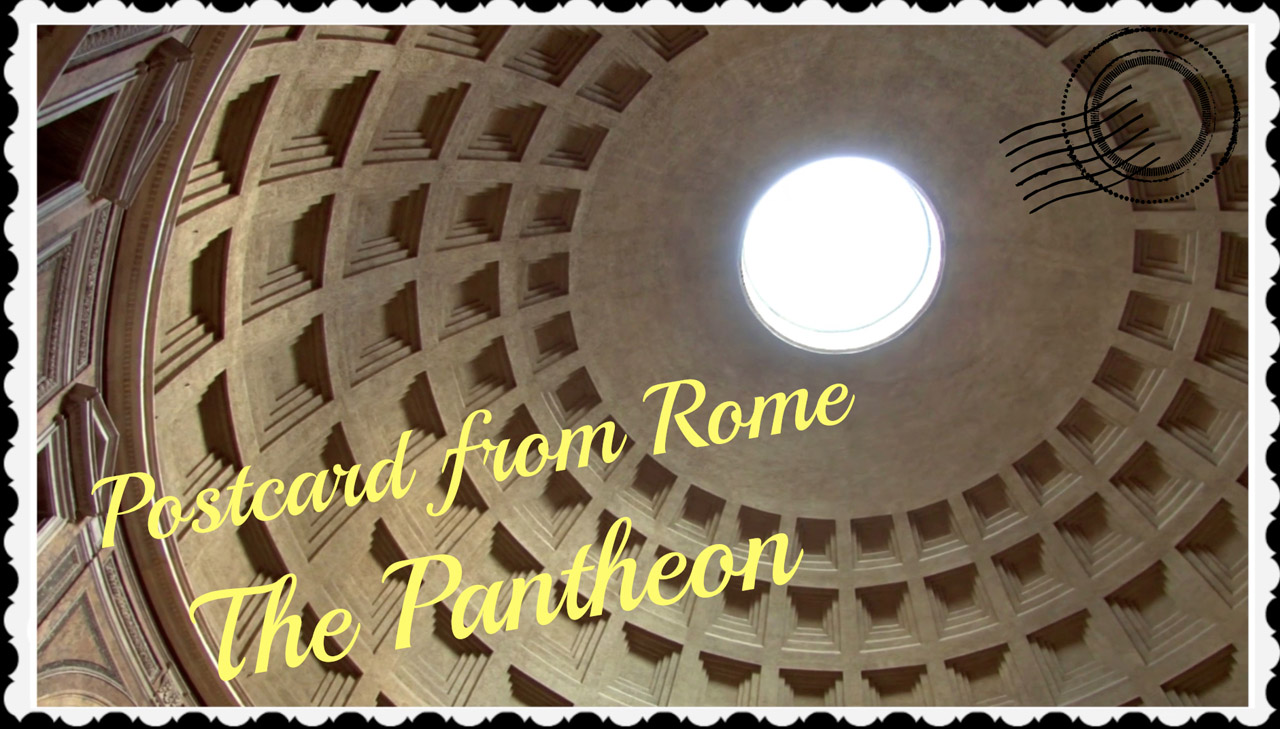 .
.
.
.
.
What to see from Civitavecchia other than Rome?
Buon giorno and welcome to Stefano’s RomeCabs, Rome’s leading company for private Transfers, Day Tours, and Shore Excursions in Italy.
Our goal is to help you make the most of your holiday or cruise in Italy and turn your trip into the vacation of a lifetime!
Civitavecchia is considered the “Port of Rome“, and it has been since the Ancient Roman times when it was built by Emperor Trajan as a harbor. Even today, 2000 years later, a stop in Civitavecchia is synonymous to a shore excursion to Rome.
But what if you’ve already been to Rome before?
Many cruisers who cruise the Mediterranean and have been to Rome either on previous cruises or on a holiday stay in Italy ask us:
What to see from Civitavecchia other than Rome?
If your cruise ship will be docking in Civitavecchia Cruise Port on our cruise, and if you’re among the many who have already been to Rome and would like to experience something different, we have some wonderful suggestions for shore excursions from Civitavecchia to places other than Rome.
For tour destinations closest to Civitavecchia for less driving time and more sightseeing time, we suggest the following 2 tours offered by RomeCabs or by our sister company Stefano Rome Tours.
COUNTRYSIDE SPLENDOR Shore Excursion
.
The rustic Roman countryside a historically and aesthetically distinctive region in central Italy with history that dates back to the pre-Roman civilization known as the Etruscans.
In fact, this entire region was once known as “Etruria”, the land of one of the world’s most advanced and mysterious ancient civilizations that you will learn more about on your countryside tours.
The Countryside Splendor Shore Excursion with Stefano’s RomeCabs will take to Bracciano, one of the medieval villages that dot the shores of the large pristine volcanic Lake Bracciano.
Bracciano is quite popular for its famous 15th century Renaissance Bracciano Castle (formally named Castello Orsini-Odescalchi) that overlooks the lake. Be sure not to miss the breathtaking vista that can be enjoyed from the top of the castle on your visit through the magnificent estate’s opulent rooms with original Renaissance era furnishings, paintings, and frescoes, and the castle grounds.
A stop in the Medieval clifftop hamlet of Ceri for lunch in one of the local family owned restaurants has been a delightful surprise for many of our clients because they felt they’ve just stepped back in time 1,000 years!
.
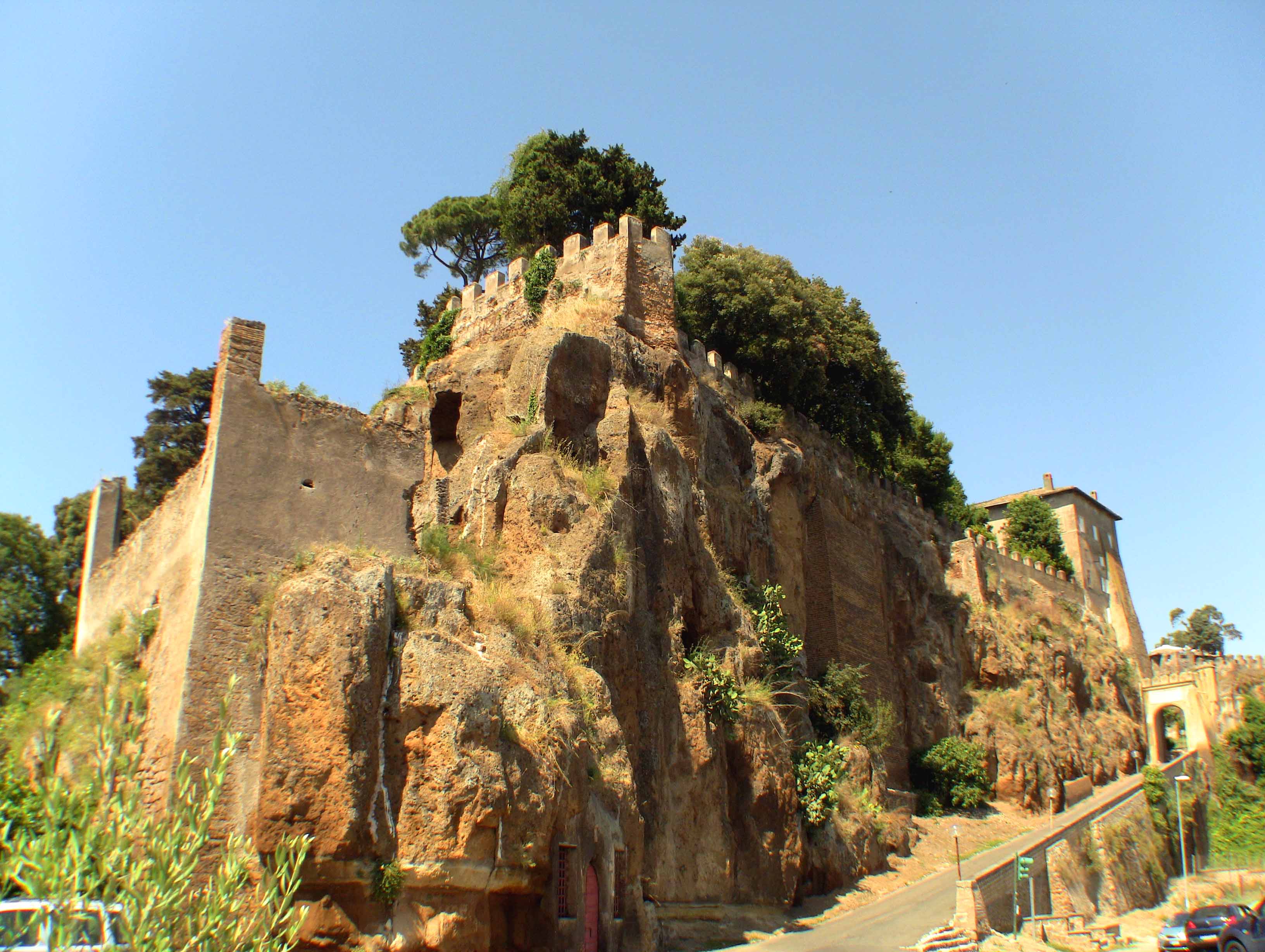
Medieval Hamlet of Ceri – Countryside Splendor tour with RomeCabs
.
After a delicious relaxing lunch, adventure waits in Cerveteri when you arrive at the Banditaccia Etruscan Necropolis for a once in a lifetime opportunity to explore ancient tombs that date as far back as 9th century BC to 3rd century BC when the Etruscans were conquered by the Romans.
The most characteristic tombs are shaped in circular hut-like mounds carved from the living tuffa rock, and also “dice” shaped tombs lined up like modern city neighborhoods with streets for processions, and squares for funeral gatherings.
So get in touch with your inner Indiana Jones as you explore (not raid) the ancient Etruscan tombs in Cerveteri.
.
ETRUSCAN MYSTERY Shore Excursion
.
The Etruscans, their history, their advance skills in engineering and goldsmithery, and the mystery that surrounds them have captivated so many people who just can’t get enough of the Etruscans!
Many of our clients who enjoyed their visit to Cerveteri Etruscan Necropolis have also requested the very popular Etruscan Mystery Tour offered by our sister company Stefano Rome Tours.
This time your Etruscan adventure will take you to Tarquinia and underground as you visit the roughly dozen or so tombs that are open at a time (they tombs are rotated for visits to preserve them) to witness one of the most beautiful works of art in human history: the Etruscan frescoes inside the walls of the underground tombs of the Monterozzi Necropolis.
These vibrant and beautifully crafted frescoes that are more than 2,000 years old portray the everyday life of the Etruscans as they celebrated life and death.
There are no other tombs like this in the world, and both Cerveteri and Tarquinia Necropolis are UNESCO World Heritage Sites.
The nearby medieval town of Tuscania (not to be confused with Tuscany, the region in the north of here) also boasts a distant history of about 3,000 years as a former Etruscan establishment and one of the most significant crossroads of Etruria.
.
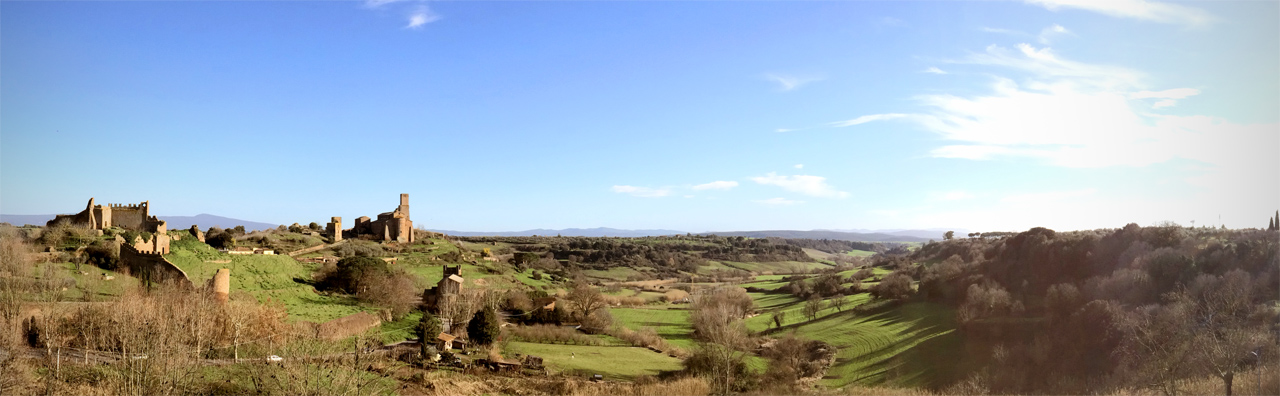
.
Tuscania’s and its picturesque surrounding was also regarded as “The most beautiful view in Italy: the Etruscan valley of Tuscania” by English poet D.H. Lawrence.
Just outside the town walls are 2 amazing 12th century imposing churches built upon previous Etruscan temples: San Pietro and Santa Maria Maggiore that are shrouded in legends, pagan mythologies, and mysteries.
.
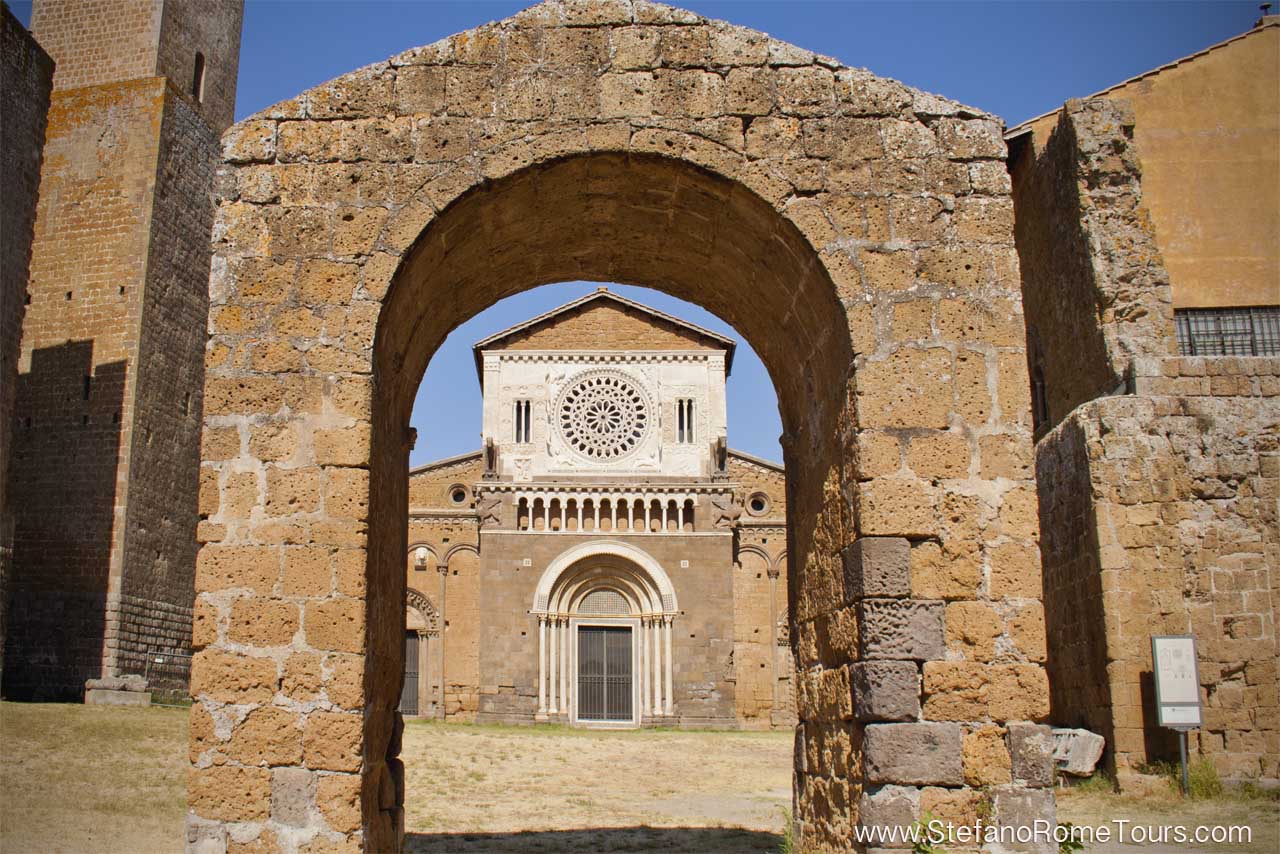
San Pietro Church in Tuscania – Etruscan Mystery Tour with Stefano Rome Tours
.
We hope this 2 shore excursions from Civitavecchia to the Roman countryside pique your curiosity and interest in the beauty and history of this fascinating region.
Thank you very much for choosing Rome Cabs and Stefano Rome Tours for your Day Tours and Shore Excursions in Italy.
.
For more exciting Day Tours and Shore Excursions, visit Stefano Rome Tours at www.StefanoRomeTours.com
For Day Tours, Shore Excursions as well as Airport Transfers and Civitavecchia Transfers with RomeCabs, please visit us at www.RomeCabs.com
We look forward to showing you Italy!
The RomeCabs Team
http://www.RomeCabs.com
10 Tips on Booking Civitavecchia Transfers – RomeCabs
.
Buon giorno and welcome to Stefano’s RomeCabs, Rome’s leading company for quality Civitavecchia transfers, Airport Transfers, Day Tours and Shore Excursions.
Our mission is to help you make your Italy transfers and tours easy, enjoyable, and affordable.
.
Here are 10 Tips on Booking Civitavecchia Transfers – RomeCabs
.
TIPS For Transfers from Fiumicino Airport to Civitavecchia
1 Plan your flight arrival at Fiumicino Airport as early in the morning as possible to allow you plenty of extra leeway time in case you experience any flight delays, missed connections, or delayed luggage.
Travel time from Fiumicino to Civitavecchia is about 1 hour (give or take depending on traffic conditions).
2 Play it safe with your arrival and fly into Fiumicino the day before and either stay overnight at a Fiumicino Hotel or a hotel in Civitavecchia to rest up before your cruise.
.
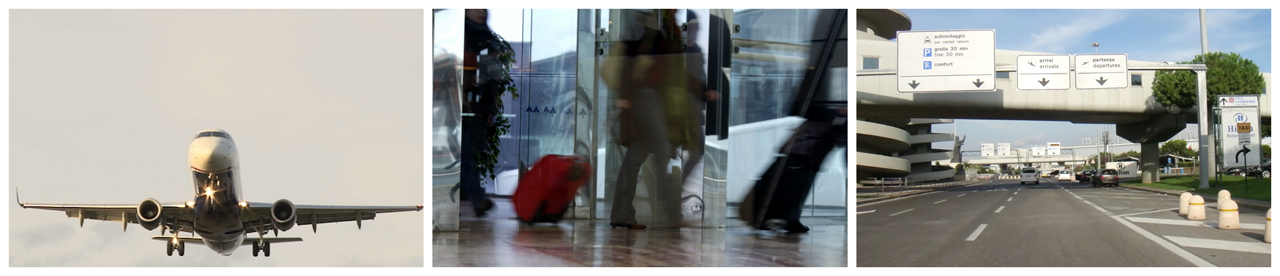
.
If you plan to arrive early and stay in Rome, see below:
.
TIPS For transfers from Rome to Civitavecchia
3 Ideal pick up time from Rome hotel to Civitavecchia is 11:00 AM – 1:00 PM.
Travel time from Rome to Civitavecchia is about 1.5 hours (give or take depending on traffic conditions).
4 If you wish to see more of Rome or the Roman Countryside, you can upgrade your Civitavecchia Transfer into a Rome Pre Cruise Tour with transfer to Civitavecchia, or Countryside Pre Cruise Tour with Transfer to Civitavecchia.
.
...
TIPS For transfers from Civitavecchia to Fiumicino Airport
.
5 If you have an early morning flight out of Fiumicino Airport on the same day your ship docks in Civitavecchia, be sure to secure an early disembarkation pass from your cruise ship to ensure you will disembark as quickly as possible.
Check with your cruise line or cruise ship for details and information on early disembarkation
The safest early morning flights from Fiumicino Airport is approximately 11 AM (the earliest). This allows you flexibility should you encounter any delays with the ship docking, disembarkation, or traffic.
When you have an international flight to catch, it’s potentially risky to cut it so close that that any slight unforeseen delay can cause you to miss your flight.
.
6 When you book your Civitavecchia Transfer with Stefano’s RomeCabs, don’t forget to include your Ship Name (not Cruise Line) in your reservation so your driver will know which ship to pick you up at. There are often many ships docking in Civitavecchia, and sometimes one cruise line company can have more than one ships docked together on a single day.
For example, the ship name would be: Crown Princess (Princess Cruises)
.
.
..
TIPS For Transfers from Civitavecchia to Rome
..
7 Most cruises who are going to Rome or local hotel post cruise disembark at approximately 9 AM.
Many cruisers who have early morning flights to catch from Fiumicino Airport disembark early such as between 7 – 8 AM.
It is not recommended to schedule your pick up from Civitavecchia later than 9:00 AM if you are going to Rome accommodation unless you have a late disembarkation pass as most cruisers are disembarked by 9 AM.
If, for example, you book a transfer with 10 AM pick up and you are disembarked by 9 AM, that would mean 1 hour unnecessary wait for your scheduled pick up.
As Civitavecchia Transfer providers, Stefano’s RomeCabs are not privy to the internal workings of cruise ships and their disembarkation process as ships vary in their procedures. We can only offer suggestions based on statistical averages and observations over time.
.
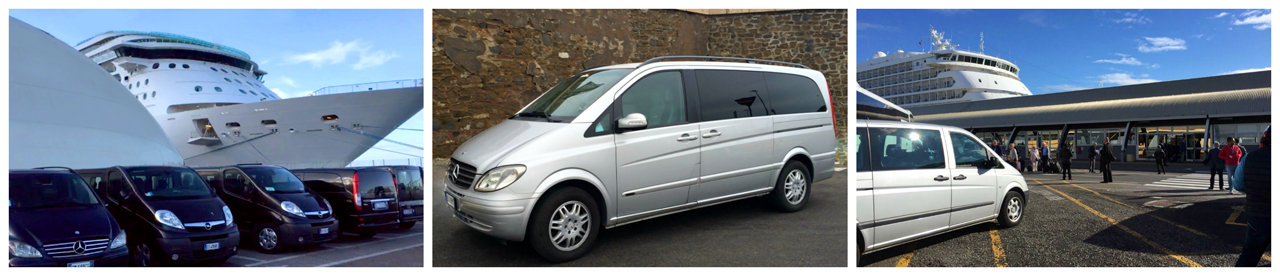 .
.
..
8 Do you have limited time post cruise and wish to make the most of your full day ahead of you? Turn your Civitavecchia Transfer into a Post Cruise Tour.
Stefano’s RomeCabs offers 2 popular Rome in A Day Post Cruise Tour, and Countryside Splendor Post Cruise Tour with pick up from Civitavecchia and drop off at your hotel accommodation in Rome.
.
 .
.
.
9 Check your belongings so you don’t leave anything behind in Hotels, Vehicle, Port
It’s not uncommon for cruises to leave their documents behind at the hotel.
Please don’t forget to check the safe box to make sure you’ve collected all your valuables as well as your passport from Front Desk.
Cruisers have also left luggage behind at Civitavecchia.
Please count your total luggage after you’ve collected it to make sure not only you haven’t left any items behind, but also that you haven’t grabbed the wrong piece of luggage.
Check behind you after you exit our vehicles when you are dropped off at your final destination.
It’s easy to leave bags, cameras, phones, tablets, glasses, medicine, and other items in the back seats, under the seats, or inside the pockets.
It’s important to check carefully that you’ve collected ALL your belongings and left NOTHING behind in the vehicle because once your driver leaves Civitavecchia or Fiumicino Airport, it is very difficult to detour back from the highway as detours are few and far in between and drivers usually have other scheduled services following yours and may not be able to return in time to deliver your forgotten items.
..
10 Inform the company of your total luggage count: Check in suitcases and carry ons together.
This is important to ensure you will be issued a large enough vehicle, and depending on your party size and the total number of luggages you may be required to upgrade to a larger vehicle (such as from a car for up to 3 passengers to a minivan), or if you are a party of 7-8 with extra luggage you may need 2 vehicles if your total luggage exceeds the maximum luggage capacity of a minivan (up to 8 suitcases and up to 8 carry ons together).
. 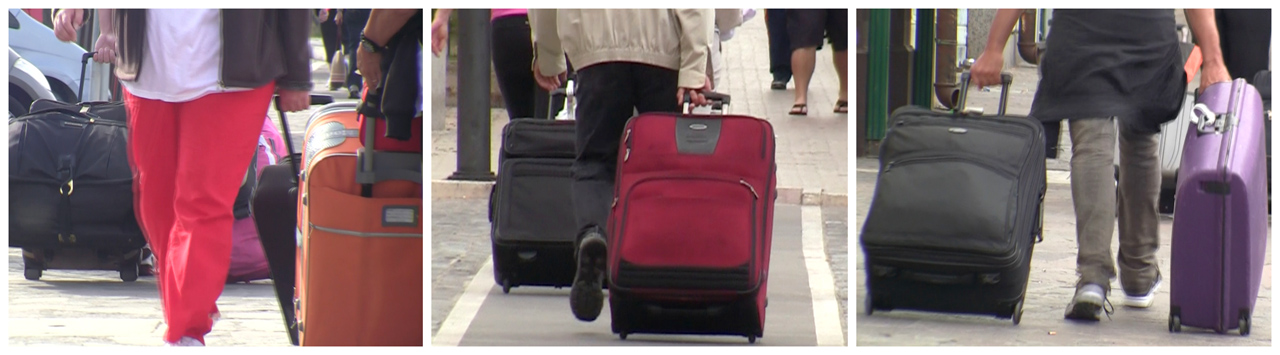
.
Thank you very much for booking your transfers with Stefano’s RomeCabs.
For more information on our Transfers to and from Civitavecchia, as well as Pre Cruise Tours, please click the options below:
.
CIVITAVECCHIA TRANSFERS
ROME PRE CRUISE TOUR
COUNTRYSIDE PRE CRUISE TOUR
.
See you soon in Italy!
The RomeCabs Team
http://www.RomeCabs.com
.
* Find RomeCabs online also on:
RomeCabs FACEBOOK
RomeCabs PINTEREST
RomeCabs TWITTER
RomeCabs INSTAGRAM
RomeCabs FLICKR Photo Gallery
.
Check out our other Italy Travel Blogs by RomeCabs:
https://rome-cabs.net/
https://romecabs.wordpress.com/
https://romecabsdotnet.wordpress.com/
.
Best time to book your Fiumicino Airport Transfers
.
Buon giorno and welcome to Stefano’s RomeCabs Travel Blog providing visitors of Rome with useful and helpful travel information.
We strive to provide visitors of Rome with quality and reliable Airport Transfers, Civitavecchia Transfers, Day Tours and Shore Excursions from Civitavecchia, Livorno and Naples.
This article is dedicated to offering helpful advice and answer many common questions our clients have, such as:
.
When is the best time to book your Fiumicino Airport Transfers to/from Rome?
..
This is one of the most frequently asked questions and it’s a very important because securing your transportation to and from Fiumicino Airport can make or break the start and end of your vacation in Italy.
Here are some guidelines to follow when booking your Airport Transfers with Stefano’s RomeCabs, or with any other company during your travels in Europe or elsewhere abroad:
.
1 Book your Airport Transfers as soon as you’ve secured your flights and hotels as these are required information to have when booking airport transfers.
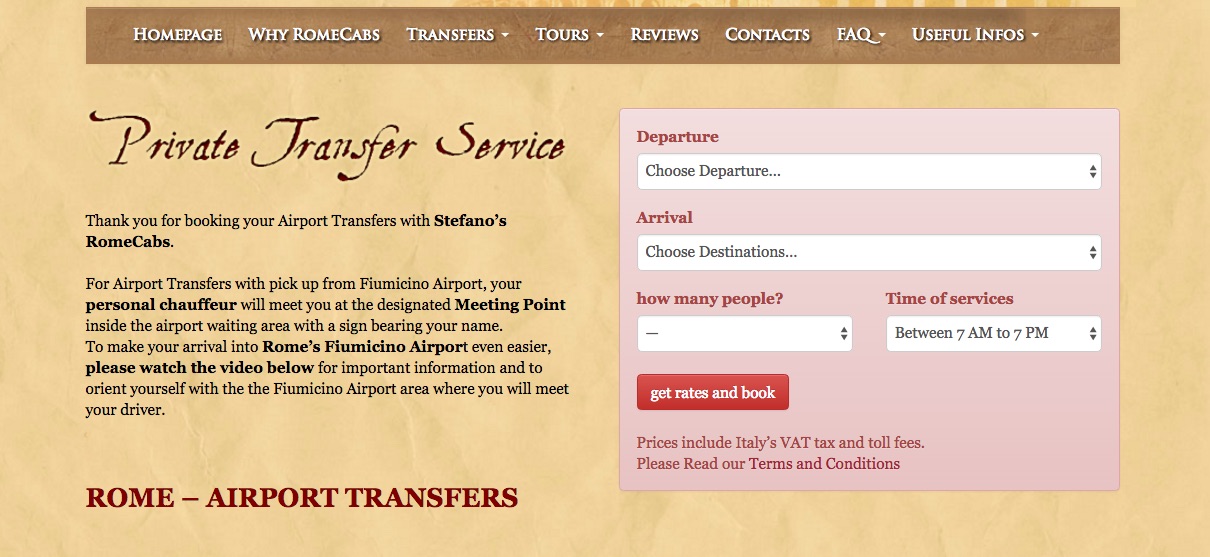
RomeCabs Official Airport Transfer Booking Page on http://www.RomeCabs.com
.
2. Do not book your Airport Transfers before you’ve secured your flight and hotels.
Sometimes eager travelers want to book their transfers as quickly as possible but have not yet secured their hotels or flights and leave this option open as “To Be Determined”.
Often times, travelers forget to contact the transfer company to update their reservation and the drivers are not able to provide accurate service with incomplete information.
Last minute contact many not be possible while you are traveling and unable to reply to emails or answer your phone, so it’s best not to leave this important information out of your transfer reservation.
3 Book ALL your transfers together before your trip in order to secure all your transfer needs in advance.
Savvy and cautions travelers book all their transfers in advance not only to have the peace of mind of not worrying about making these important arrangements during their vacation, but also to secure all their services together because they understand that availability is not always possible or guaranteed last minute.
.
4 Do not wait until last minute to book your Airport Transfers
Some travelers either because they enjoy short term planning, prefer to decide what to do as they go, or they want to try out the company first before committing to additional transfers, wait until relatively last minute to book their return transfers and find themselves unable to secure the needed service due to lack of availability.
By booking last minute you may also not be able to secure a driver at the time you need the service, or a suitable size vehicle for your party size.
The most reliable transfer companies in Rome such as Stefano’s RomeCabs also accepts only advance reservations for obvious reasons: providing reliable service takes time to confirm for accuracy, properly schedule the transfers for timely service, and allow the drivers advance planning of their transfer routes.
Rome is also very busy especially on days when cruise ships dock at Civitavecchia, when there are special events that require large volume of car services, on certain holidays that bring additional visitors to Rome, and of course the usual unpredictable influx of tourists. If your last minute departure transfer falls on days that are heavily booked with cruisers and local events, you may not find availability on your date and time.
.
5 Book your transfers only through the company website or email the company for information on how to book online.
Booking online through a company’s booking system is the best means to secure your reservation and ensure it doesn’t “get lost” if emails on either end can accidentally go to spam or unintentionally deleted.
Do NOT book important transfers by phone.
When booking by phone you do not have any physical records of your reservations to refer to and information can sometimes be misunderstood over the phone – especially with less than clear international phone lines and different languages and dialects being spoken that can cause simple words to be misunderstood and service provided inaccurately.
By booking online with Stefano’s RomeCabs you will be provided all the important information necessary to prepare you for your transfer and to feel confident you will be taken care of, such as the helpful video:
.
HOW TO MEET YOUR ROMECABS DRIVER AT FIUMICINO AIRPORT
.
.
7 Double check the details of your Airport Transfer reservations for accuracy
Some of the most common mistakes when booking an airport transfer to watch out for are:
Book the correct Date of Arrival at the airport in Rome.
Some travelers incorrectly book their airport pick up on the date they are leaving their country. Check and recheck your airline tickets for your date and time arriving at your FINAL destination.
If you are leaving from the American continent (United States, Canada, or South America), you would arrive in Rome the following day.
Book your correct Flight Number arriving in Rome
Check your airline tickets for the Flight Number you will arrive on in Rome,. It very important to double check, especially when making multiple connections on your way to Rome and the different flights can become confusing.
For Departure Transfers To Fiumicino Airport, include your flight’s departure Terminal Number as many airlines depart from multiple terminals.
You can check your Departure Terminals here: www.adr.it or www.flightstats.com
.
Be specific if your flight arrives in the AM or PM.
If your flight arrives at Noon time, it’s 12:00 PM
If your flight arrives at Midnight, it’s 12:00 AM
.
Include a Telephone Number to contact you either at home or on your international phone.
Contacting our clients by phone is important when our emails bounce back or our email correspondence is not answered, or if we need to reach you with urgent information when email may not be the quickest option to reach you.
Savvy travelers bring with them an international cell phone which is extremely helpful when traveling abroad.
.
7. Inform the transfer company of any changes in your arrival flight or time
If your flight arrival or Flight Number changes, be sure to inform the company as soon as possible so they can make arrangements for you as needed.
It is very important that you driver has your correct flight arrival information in Rome in order to track your flight for Terminal Number Arrivals, and for any potential delays.
Without your accurate Flight Number arriving at Fiumicino Airport, your driver will not know which terminal to meet you at, and the exact time of your arrival.
8. Keep your Reservation Number, Reservation Details, and Company Contact Number with you when you are traveling.
You can either print a copy of your reservation confirmation email that contains all the important information about your transfers, or save the information on your smart device to have handy.
This is very important so you are able to contact the company in case of flight changes during your travels, delays at the airport, or unable to spot your driver.
9. Contact the company if you experience any delays at the airport.
Delays in customs or baggage claims can happen, so it’s very important to contact the company if you experience any delays at the airport so they can assist you.
By failing to contact the company they would not be able to assist you and ensure you will have a driver to meet you at a time later than you booked. Wait time varies from company to company, and if clients fail to contact the company to inform them of delays, the driver may eventually be released from duty due to Client No Show.
If you do not have a working cell phone in Italy, you can use public pay phones available throughout the airport, or ask for assistance at the help desks (especially for luggage lost or delayed).
Failure to contact your transfer company can result in not having a driver to meet you when you eventually exit into the main waiting hall.
10. Be sure you leave with the correct driver – your official Stefano’s RomeCabs Driver!
You’ve made it this far, so be sure to follow one last important step: make sure you are leaving with the correct driver!
With tens of thousands of travelers arriving at the airport each day, it is possible to have more than 1 passenger with the same or similar names have drivers waiting for them. Don’t just assume that when you see your name or similar name to yours that he or she is your driver, please double check that they KNOW and HAVE your transfer details.
Our Stefano’s RomeCabs Driver have all their clients reservation information with them. If you meet a driver or are approached by someone claiming to be your driver and they do NOT have the details of your reservations, they are NOT your driver.
There are also many imposter copycat “companies” that copy the names of legitimate companies to confuse travelers.
Don’t just go to a driver who is holding a sign with the company name you booked with, or a similar name to it…it may be a scam.
Don’t accept transfers from tours that approach travelers as asking them if they need a driver…. They may be illegal and you would place your safety at risk leaving with an unknown person.
Go to the designated meeting point explained in your Confirmation Email, and when you see a driver holding a sign with your name confirm the driver has your complete transfer information and they already have your drop off destination and price in advance.
Your Stefan’s RomeCabs driver does NOT need to be told where to go, he or she already knows by your confirmed reservation.
.
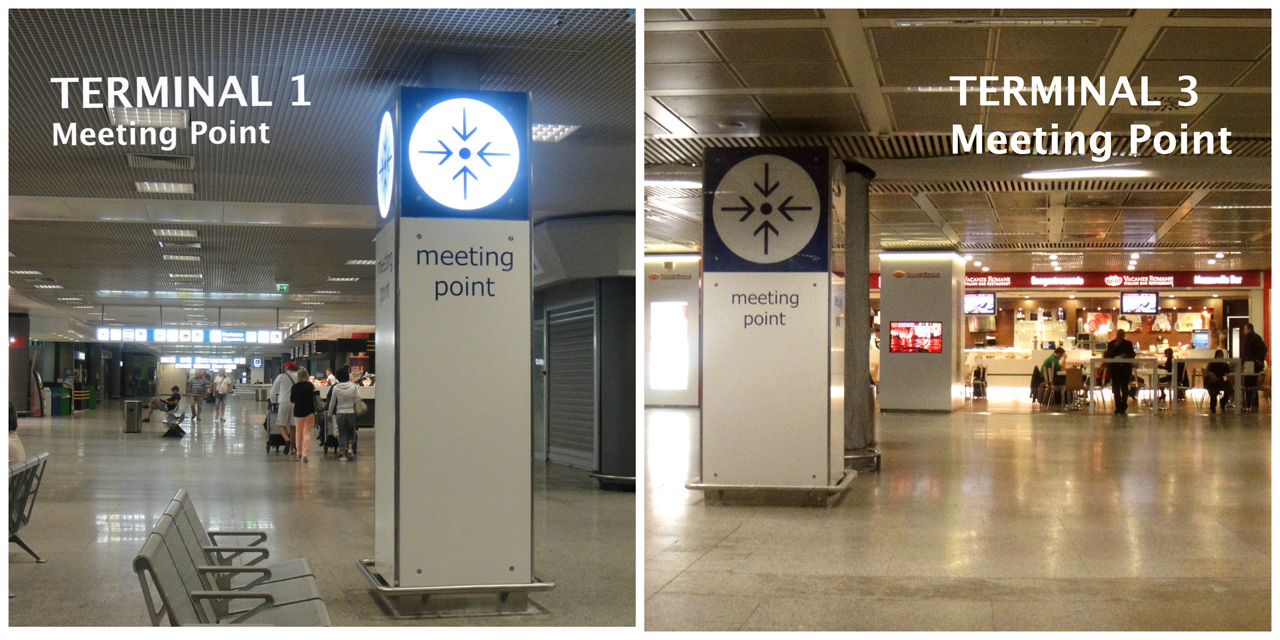
Fiumicino Airport Meeting Points at Terminals1 and 3 – RomeCabs
.
.
To book your transfers with Stefano’s RomeCabs, select from the following and click to arrive to the designated transfer page for complete information, price list, and option to book online.
You can also visit our official website at http://www.RomeCabs.com
AIRPORT TRANSFERS
VIP TRANSFERS
CIVITAVECCHIA TRANSFERS
.
NEED ASSISTANCE WITH BOOKING TRANSFERS?
Click to READ: How To Book Your Rome Cabs Transfer
Click to WATCH Video: How To Book Your RomeCabs Transfer
.
We’d like to invite you to also visit our sister company Stefano Rome Tours for more exciting Tours and Shore Excursions in and around Rome: www.StefanoRomeTours.com.
Thank you very much for booking with Stefano’s Rome Cabs, we look forward to welcome you to Rome!
The RomeCabs Team
http://www.RomeCabs.com
.
RomeCabs Transfers and Tours
Rome Cabs Flickr Photo Gallery


 RomeCabs Transfers and Tours in Italy (Rome Cabs)