10 Must See Places in Rome in A Day
.
Buon giorno, and welcome to our RomeCabs travel blog. Rome, often referred to as the Eternal City, is a treasure trove of history, art, and culture spanning over 2,700 years. It’s a city where every cobblestone street and ancient monument whispers tales of emperors, gladiators, and Renaissance masters. Whether you’re a history buff, an art aficionado, or simply someone captivated by the charm of a city frozen in time, Rome has something extraordinary to offer to visitors staying in Rome booking Rome limousine tours or cruisers on a Civitavecchia shore excursion to Rome.
Sure, Rome was not built in a day, but you can see many of these top 10 must-see places in Rome in a day that define Rome’s allure and timeless beauty.
.
Below are the 10 Must See Places in Rome in A Day
.
.
You can also WATCH these 10 Must See Places in Rome in A Day by clicking to play the VIDEO below:
.
.
.
.
COLOSSEUM – the Icon of Rome
.
The Colosseum, originally named the Flavian Amphitheater, is an enduring symbol of ancient Rome’s architectural innovation and the spectacular entertainment culture of the Roman Empire. Commissioned by Emperor Vespasian in 70 AD and completed by his successor Emperor Titus in 80 AD, this monumental structure stands as the largest amphitheater ever built.
.
How did the Colosseum get its name?
The name “Colosseum” is derived from the colossal statue of Nero that once stood nearby. Despite being a symbol of tyrannical rule, the monument itself became a focal point of Roman cultural life.
.

.
.
.
Architecture of the Colosseum:
The Colosseum is an engineering marvel of its time, showcasing advanced techniques in construction and design. Its elliptical shape measures 189 meters in length, 156 meters in width, and originally stood at a height of over 48 meters. Made primarily of travertine limestone quarried from nearby Tivoli, the outer walls featured four stories of arches adorned with Corinthian, Ionic, and Doric columns. The exterior facade was once embellished with statues and decorations, adding to its grandeur.
Inside, the Colosseum was ingeniously designed to accommodate up to 50,000 to 80,000 spectators across its multiple tiers. The arena floor, known as the “arena“, featured a wooden stage (arena) covered with sand (harena) to absorb blood from gladiatorial combats and animal hunts. Beneath the arena, a complex network of tunnels and chambers, called the hypogeum, housed animals, slaves, and equipment, which could be hoisted to the surface using a sophisticated system of lifts and ramps.
.
.
.
History of the Colosseum:
The Colosseum was more than just an architectural marvel; it embodied the Roman Empire’s values, serving as a venue for gladiatorial games, wild animal hunts, mock naval battles, and theatrical performances. These spectacles were staged to entertain and distract the populace, maintaining social order and reinforcing imperial power. The inaugural games lasted for 100 days and nights, a testament to the scale and extravagance of Roman entertainment.
The Colosseum’s history reflects the shifting tides of Roman politics and culture. Over the centuries, it witnessed various modifications and adaptations, including the addition of awnings (vela) to provide shade for spectators, and even transformations into a fortress and a medieval workshop. Despite earthquakes and centuries of neglect, much of the Colosseum has survived, thanks to ongoing restoration efforts that have preserved its iconic status as a symbol of Rome’s grandeur and endurance.
Today, the Colosseum stands as one of Rome’s most visited tourist attractions and a UNESCO World Heritage site. Restoration efforts continue to safeguard its structural integrity and enhance visitor experiences, including access to previously inaccessible areas such as the upper tiers and underground chambers. These initiatives not only ensure the Colosseum’s preservation but also deepen our understanding of its multifaceted role in ancient Roman society.
..
CIRCUS MAXIMUS – Ancient Rome’s Chariot Racing Stadium
.
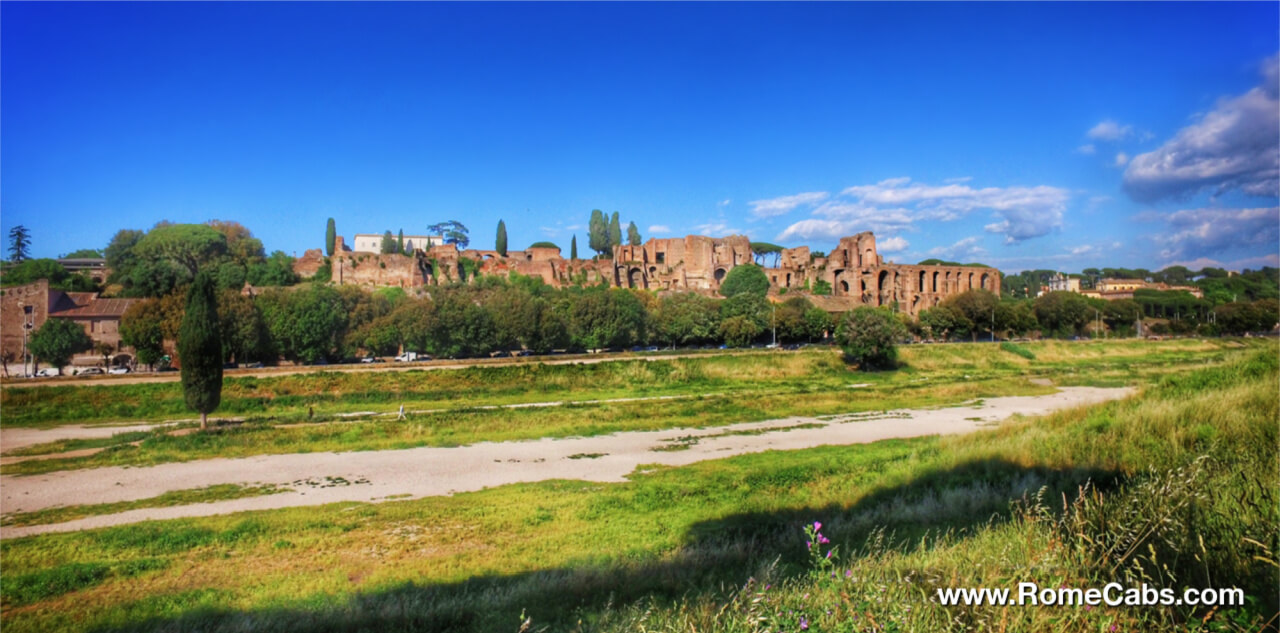
Located near the iconic Colosseum, Circus Maximus stands as a testament to ancient Rome’s passion for entertainment and spectacle.
Circus Maximus was the largest stadium in ancient Rome, dedicated primarily to chariot racing, a popular sport that captivated both the masses and the elite. Originally built in the 6th century BCE, it underwent several expansions over the centuries, reaching its peak size during the reign of Emperor Trajan in the 2nd century CE. The stadium could accommodate up to 150,000 spectators, showcasing the grandeur and scale of Roman public entertainment.
.
.
Chariot Races and Entertainment in Ancient Rome:
Chariot races held at Circus Maximus were thrilling events that drew immense crowds from all walks of life. Teams of skilled charioteers, known as factions, competed fiercely in races that symbolized social and political rivalries within Roman society. The races were not only a spectacle of speed and skill but also a reflection of Roman values and passions, making Circus Maximus a vibrant center of cultural expression and communal celebration.
Although little remains of the original structure today, the outline of Circus Maximus evokes its former glory. Stretching over 600 meters in length and 140 meters in width, the stadium was lined with seating tiers and adorned with statues and obelisks, enhancing its majestic appearance.
Adjacent to Circus Maximus lies the Palatine Hill, one of Rome’s legendary seven hills and the site of imperial palaces and gardens. The emperors and aristocracy of Rome often watched chariot races from their palatial residences on the Palatine, underscoring the stadium’s significance as a venue for imperial leisure and public spectacle.
Today, Circus Maximus remains a significant archaeological site that offers insights into ancient Roman culture, architecture, and urban planning. Excavations and ongoing research continue to reveal artifacts and structures that shed light on the stadium’s role in Roman society and its impact on public entertainment.
.
.
ROMAN FORUM – picture perfect view from Capitoline Hill
.
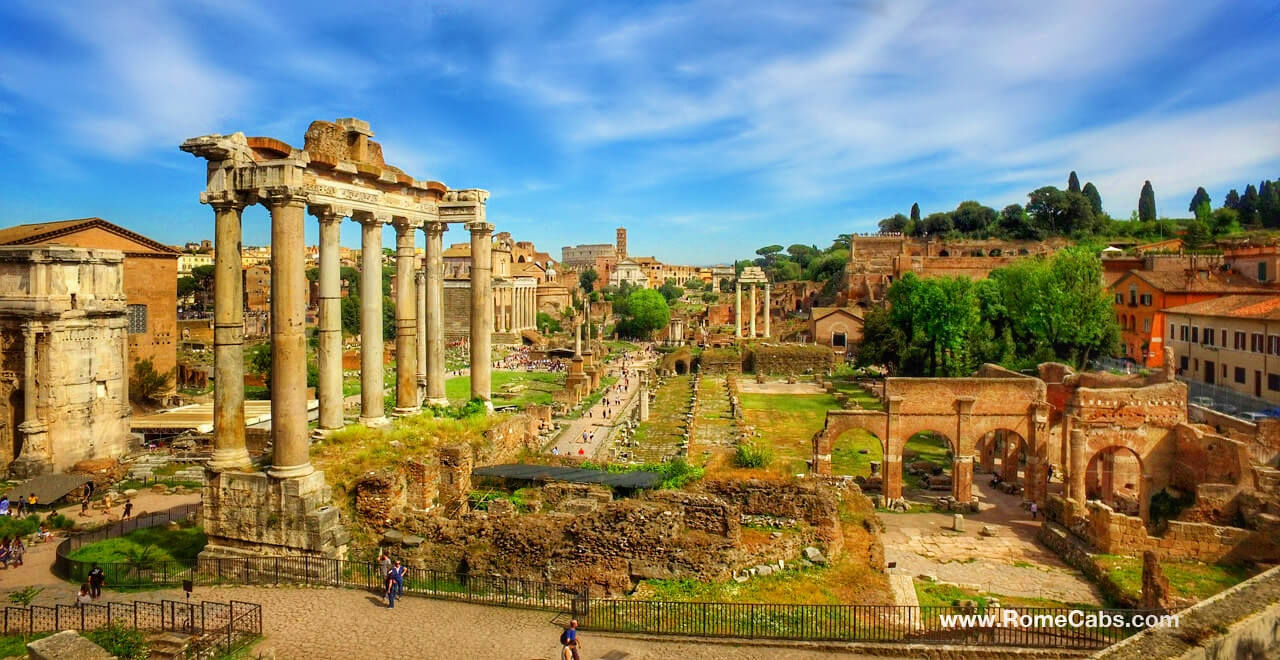
You can enjoy a panoramic sweeping view of the Roman Forum from a terrace tucked away behind Capitoline Hill. To your right you will see the Palatine Hill ruins, and also the Colosseum peeking through on the other side of the Roman Forum. No wonder this is one of the most photographed view in Rome! So don’t forget your cameras when you arrive here.
.
.
.
The Roman Forum: Heart of Rome’s Civic Splendor
Nestled in the heart of Rome, a mere stone’s throw from the majestic Colosseum, lies the Roman Forum—an archaeological marvel and the epicenter of ancient Rome’s civic, religious, and political life. Spanning over centuries of history, this sprawling site served as the beating heart of the Roman Empire, where monumental decisions were made, laws were enacted, and religious ceremonies were performed.
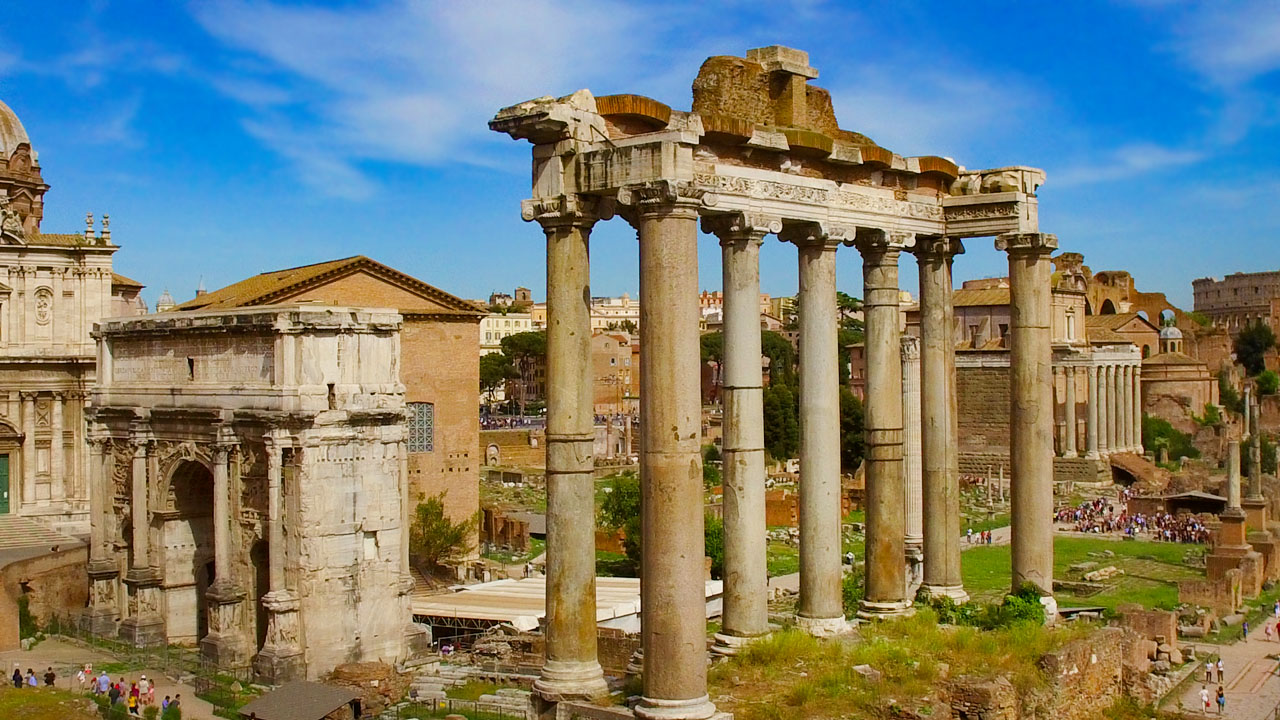
The Roman Forum’s layout evolved over time, reflecting Rome’s expansion and the consolidation of power. Initially a marshy valley, it was gradually transformed into a bustling marketplace and civic center lined with temples, basilicas, and government buildings. The architecture varied from simple structures of wood and brick to elaborate marble monuments that celebrated Rome’s victories and deities.
Key structures included the Temple of Saturn, where the treasury and state archives were housed; the Curia, or Senate House, where debates shaped Roman policies; and the Rostra, a platform from which orators addressed the public. The Forum also featured grand triumphal arches, such as the Arch of Septimius Severus, commemorating military victories and showcasing Roman engineering prowess.
.
.
.
Historical Significance of the Roman Forum
The Roman Forum was more than just a collection of buildings; it was the symbolic and functional heart of Roman governance and religious life. Here, the Vestal Virgins tended sacred flames in the Temple of Vesta, ensuring the eternal continuity of Rome. It was a place where emperors were inaugurated, triumphal processions paraded, and citizens gathered for public events and festivals.
The Forum witnessed pivotal moments in Roman history, from the rise of Julius Caesar and Augustus to the fall of the Roman Empire. Its monuments bore witness to the evolution of Roman architecture and urban planning, influencing subsequent cities and civilizations across Europe.
The Roman Forum’s cultural legacy extends beyond its historical artifacts. It symbolizes the ideals of Roman governance, the integration of civic life with religious rituals, and the development of architecture and urban planning. Each structure tells a story of Roman ingenuity, from the innovative use of concrete to the artistic mastery of marble sculpture and reliefs.
Today, the Roman Forum stands as an open-air museum, allowing visitors to walk through the remnants of Rome’s golden age. Excavations and restoration projects have uncovered new insights into its layout and function, while modern amenities ensure accessibility for tourists eager to explore its labyrinthine streets and monumental ruins.
.
.
PIAZZA DELLA ROTONDA – A Living Legacy of the Pantheon
.
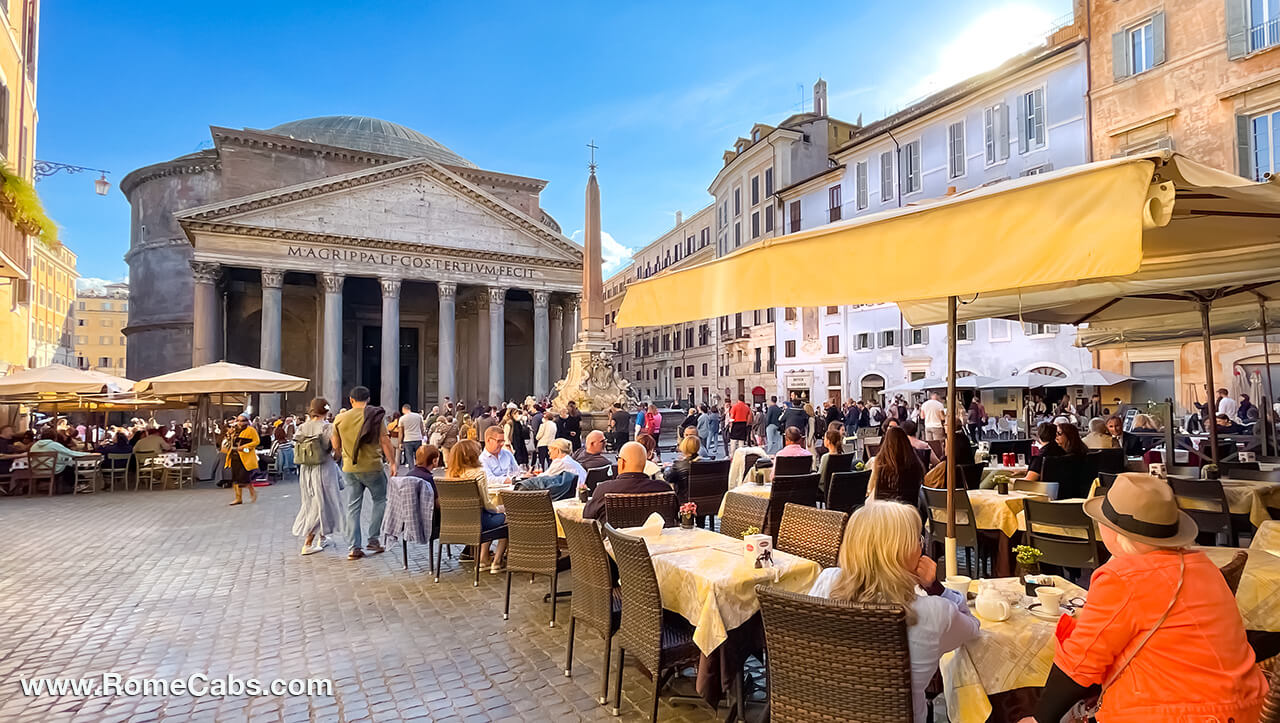
If the Pantheon could speak, it would narrate the vibrant history of Piazza della Rotonda, the charming square that lies before it. Named after the informal title of the Pantheon, Santa Maria Rotonda (from the word rotund which means round) bestowed upon it after its conversion into the Church of Saint Mary and the Martyrs, this square has witnessed centuries of evolution and transformation.
.
.
.
Throughout its history, Piazza della Rotonda has served as a focal point for Roman life and commerce. In its early days, the square was surrounded by a bustling market, with stalls and sheds that enveloped the Pantheon, catering to the needs of pilgrims, locals, and traders alike. This lively market continued well into the late 1800s, a testament to the square’s enduring importance as a center of activity.
In the 1430s, Pope Eugenius IV took decisive action to clear the cluttered market from around the Pantheon, restoring the square to its more dignified stature. Despite these efforts, the square remained a hub of daily life, frequented by Romans going about their business and visitors exploring the wonders of the Pantheon.
.
Modern-Day Piazza della Rotonda:
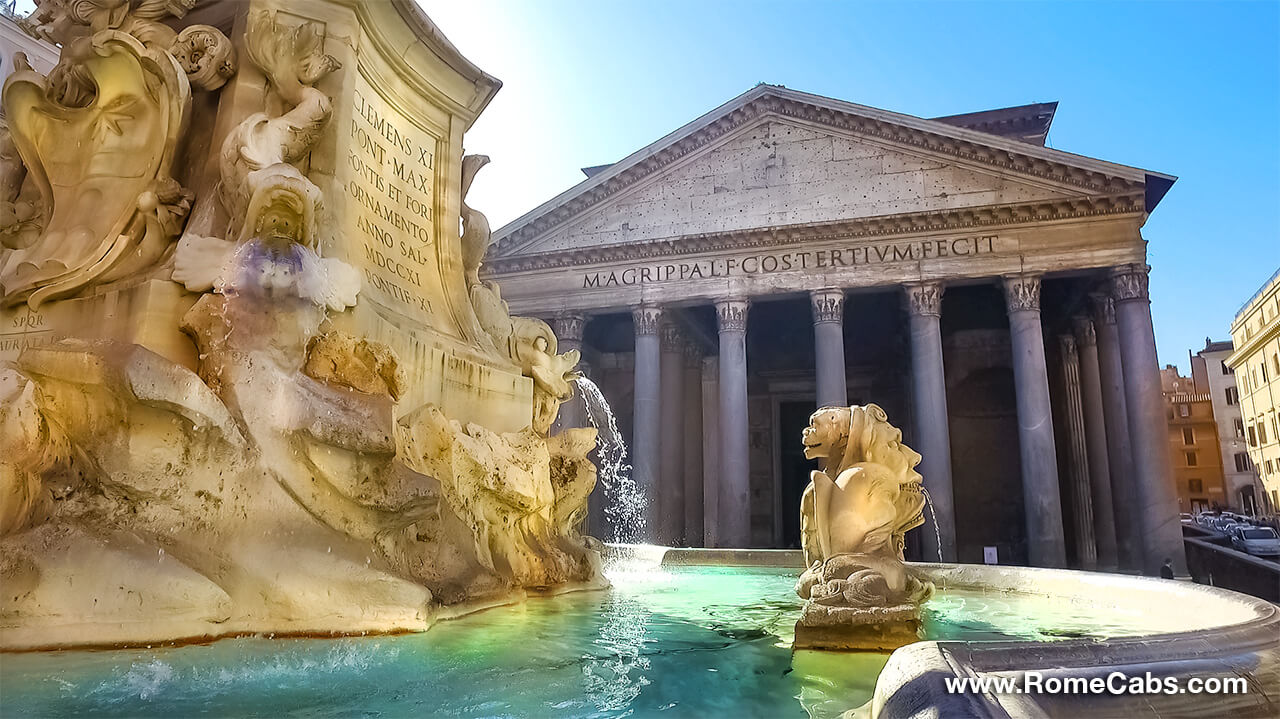
Today, Piazza della Rotonda retains its allure, attracting both locals and tourists who come to admire the Pantheon and soak in the ambiance of this historic square. Visitors can be seen sitting on the steps of the central fountain, Fontana del Pantheon, which dates back to 1575. This fountain, adorned with an ancient Egyptian obelisk originally commissioned by Pharaoh Ramses II for the Temple of Ra in Heliopolis (now known as Obelisco Macuteo), adds a touch of antiquity to the square.
.
.
.
Surrounding the square are charming cafes and restaurants with outdoor seating, where patrons can enjoy a meal or a drink while taking in views of the Pantheon and the bustling activity of the square. Piazza della Rotonda continues to serve as a gathering place for Romans and visitors alike, offering a glimpse into daily Roman life amidst the backdrop of ancient splendor.
.
.
The PANTHEON: Ancient Marvel of Rome
.

.
.
Dominating Piazza della Rotonda, the Pantheon stands as a pinnacle of ancient Roman architectural achievement, blending engineering innovation with religious significance. Initially constructed as a temple dedicated to all Roman gods, its transformation over the centuries mirrors Rome’s cultural evolution and enduring legacy.
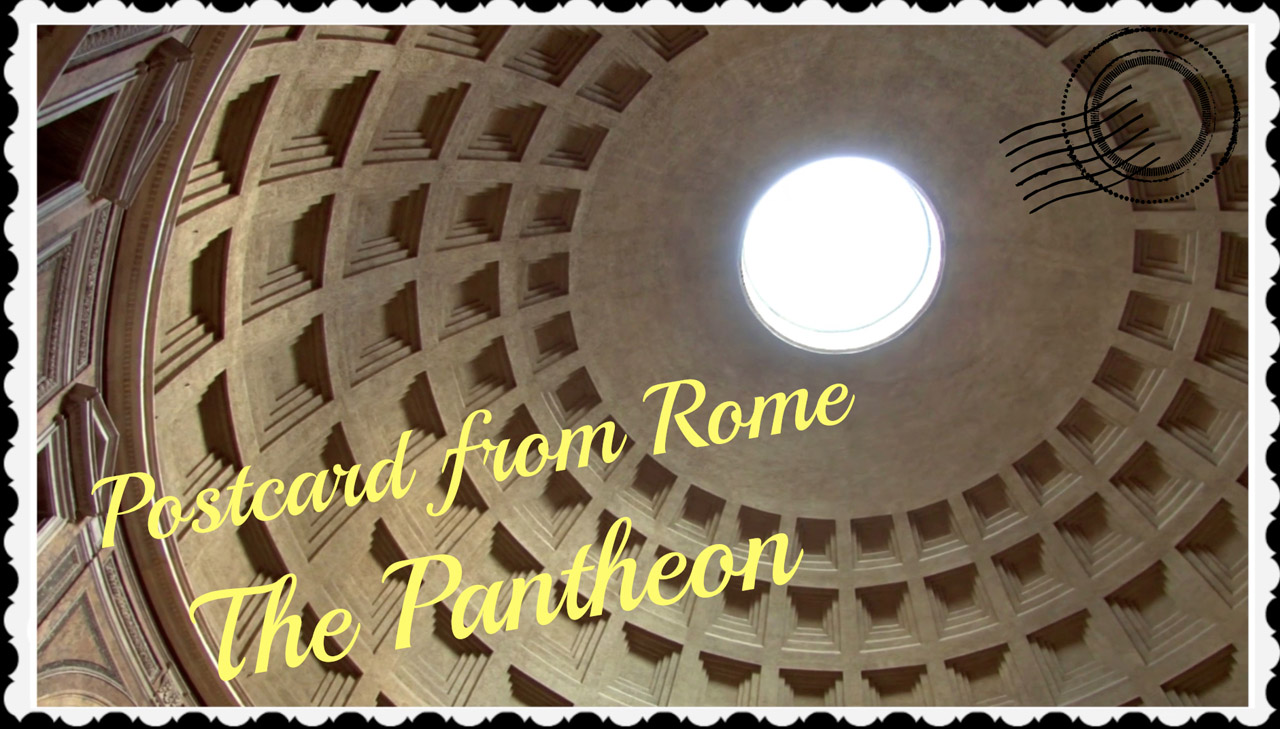
Commissioned by Emperor Hadrian around 126 AD, the Pantheon is renowned for its grandeur and structural ingenuity. The temple’s iconic feature is its massive dome, which spans 43.3 meters in diameter and was, until the 20th century, the largest dome of its kind. Constructed using unreinforced concrete, the dome’s weight is lightened by progressively thinner layers of concrete as it rises, culminating in the oculus—an opening at the apex that allows sunlight and rain to enter, symbolizing the connection between the temple and the heavens.
Surrounding the rotunda, the Pantheon’s portico features towering Corinthian columns imported from Egypt, showcasing the empire’s vast reach and architectural prowess. The portico’s pediment once displayed bronze relief sculptures depicting the mythological battles of Hercules and Theseus, adding to the temple’s grandeur and cultural significance.
.
Historical Evolution of the Pantheon:
Throughout its history, the Pantheon has undergone several transformations, reflecting shifts in Roman religious practices and societal norms. In the early 7th century, Emperor Phocas gifted the Pantheon to Pope Boniface IV, who consecrated it as a Christian church dedicated to St. Mary and the Martyrs. This conversion saved the Pantheon from neglect and destruction, ensuring its preservation as a sacred space within the Christian community.
The Pantheon’s dual identity—as a temple to Roman gods and later as a Christian church—highlights its enduring importance in Roman and Western history. Its architecture influenced Renaissance and Baroque masters, including Michelangelo and Bernini, who drew inspiration from its harmonious proportions and celestial design.
.
.

.
.
The Pantheon is a Mausoleum of Kings and Artists:
In addition to its religious and architectural significance, the Pantheon serves as a mausoleum for prominent figures in Italian history. Among its interments are Italian kings, including Vittorio Emanuele II and Umberto I, and the celebrated Renaissance artist Raphael. Their tombs within the Pantheon underscore its role as a repository of national pride and cultural heritage.
Today, the Pantheon welcomes visitors from around the world, drawn by its timeless beauty and historical importance. The interior’s serene atmosphere, illuminated by the oculus’s natural light, evokes a sense of awe and contemplation. Visitors can marvel at the precision of Roman engineering while reflecting on the temple’s enduring legacy as a symbol of spiritual devotion and architectural innovation.
Efforts to preserve the Pantheon continue, ensuring its structural integrity and accessibility for future generations. Restoration projects focus on maintaining the dome’s stability and conserving the ancient marble, bronze, and concrete that adorn its interior and exterior.
For some fascinating insider look into the Pantheon, we invite you to read:
10 Unique Facts about the Pantheon you probably didn’t know
.
.
The TREVI FOUNTAIN: Rome’s Baroque Jewel
.
The Trevi Fountain, a pinnacle of Baroque art and one of Rome’s most iconic landmarks, captivates visitors with its grandeur, mythology, and cultural significance.
Designed by Nicola Salvi and completed in 1762, the Trevi Fountain stands as a testament to the Baroque period’s exuberance and artistic prowess. The fountain’s facade, adorned with Corinthian columns, statues, and bas-reliefs, creates a dramatic backdrop for its central figures. At its center, the triumphant figure of Oceanus (depicted as Neptune, god of the sea) commands attention, astride a chariot drawn by sea horses and surrounded by tritons and mythical creatures.
.

.
.
Symbolism and Mythology of Trevi Fountain:
The Trevi Fountain is steeped in symbolism and mythology, reflecting Rome’s connection to water and the sea. Oceanus symbolizes the vastness and power of the ocean, while the sea horses represent the changing moods of the sea. The fountain’s design evokes a sense of movement and dynamism, with water cascading from multiple sources into a large basin below, creating a symphony of sight and sound that enchants visitors.
.
Cinematic and Cultural Legacy of Trevi Fountain:
Beyond its architectural brilliance, the Trevi Fountain has attained cultural immortality through its portrayal in literature, art, and cinema. The tradition of tossing a coin into the fountain, believed to ensure a return to Rome, has become a globally recognized ritual. Inspired by legends and perpetuated by films such as Federico Fellini’s “La Dolce Vita“, starring Anita Ekberg wading into its waters, this tradition attracts millions of visitors annually who seek to partake in its mystical allure.
Over the years, the Trevi Fountain has undergone several restorations to preserve its structural integrity and artistic beauty. The most recent extensive restoration, completed in 2015 by the Fendi fashion house, revitalized the fountain’s facade, sculptures, and hydraulic system, ensuring its continued splendor for future generations to admire.
.
The SPANISH STEPS / Piazza di Spagna – A Symbol of Rome’s Splendor
.
The Spanish Steps, linking the Piazza di Spagna below with the Trinità dei Monti church above, epitomize the charm and elegance of Rome’s Baroque period.
Designed by Francesco de Sanctis and constructed between 1723 and 1725, the Spanish Steps are a masterpiece of Baroque architecture. The monumental staircase consists of 138 steps that rise in a series of terraces, creating a graceful ascent from the bustling Piazza di Spagna to the serene Trinità dei Monti church. The steps were commissioned by Pope Benedict XIII to link the Bourbon Spanish Embassy in the piazza below with the church and French square above.
.

.
Fontana della Barcaccia:
At the foot of the Spanish Steps lies the Fontana della Barcaccia, or “Fountain of the Old Boat“, designed by Pietro Bernini (father of Gian Lorenzo Bernini). This Baroque fountain, completed in 1627, takes the shape of a sinking boat, its water overflowing with a gentle cascade. The fountain’s design cleverly incorporates its low water pressure, deriving from an ancient Roman aqueduct, to create a serene ambiance amidst the bustling square.
.
Keats-Shelley Memorial House
Nearby, the Keats-Shelley Memorial House commemorates the Romantic poets John Keats and Percy Bysshe Shelley, who found inspiration in Rome’s timeless beauty. The house, now a museum, preserves the legacy of these poets who contributed to the Romantic movement with their evocative poetry and prose. Visitors can explore the rooms where Keats spent his final months, overlooking the Spanish Steps, and discover the library that holds an extensive collection of Romantic literature and artifacts.
The Spanish Steps and Piazza di Spagna have long been a favored gathering place for locals and tourists alike. Whether climbing the steps to reach the Trinità dei Monti church or simply standing on the terraces to admire the views, visitors immerse themselves in the vibrant atmosphere of Roman life. The steps themselves serve as a meeting point, a place for artists and musicians to showcase their talents, and a backdrop for social gatherings and cultural events throughout the year.
.

.
.
Over the centuries, the Spanish Steps have undergone several restorations to maintain their architectural integrity and historical significance. Recent renovations in 2016, funded by luxury brand Bulgari, revitalized the steps and surrounding area, ensuring they continue to attract visitors while preserving their Baroque splendor.
.
.
THE VATICAN MUSEUMS
.
Located within the Vatican City, the smallest independent state in the world, the Vatican Museums are a treasure trove of art and history that draws millions of visitors annually. Founded by Pope Julius II in the early 16th century, the Vatican Museums began as a collection of sculptures displayed in the Cortile Ottagono (Octagonal Courtyard).
Over the centuries, successive popes expanded the collection, acquiring masterpieces from across Europe and beyond. Today, the Vatican Museums encompass multiple galleries and halls, showcasing art from various periods of history.
.

.
.
The Vatican Museums boast an unparalleled collection of artworks spanning millennia. Visitors are greeted by ancient sculptures such as the famous Laocoon and Apollo Belvedere, which have influenced artists and scholars for centuries. The museums’ corridors lead to a series of breathtaking galleries, each dedicated to specific artistic movements and periods.
One of the highlights of the Vatican Museums is its Renaissance art collection. Works by Leonardo da Vinci, Raphael, and Caravaggio adorn the walls, showcasing the brilliance of these masters during the cultural flowering of the Renaissance. Raphael’s “School of Athens” in the Raphael Rooms.
Visiting the Vatican Museums is a journey through art and history. The museums’ vastness and diversity ensure there is something for every visitor, from ancient history enthusiasts to admirers of Renaissance art. The galleries are meticulously curated, offering insights into the evolution of art and culture under the patronage of the papacy.
Among the most Must See galleries and rooms in the Vatican on a short time are Octagonal Courtyard, The Round Room, The Raphael Rooms, the Gallery of the Tapestries, the Gallery of the Maps as they are rich with the most awe inspiring works of art by the world’s greatest Masters.
.
The SISTINE CHAPEL – A Sanctuary of Renaissance Art
.
The Sistine Chapel, nestled within the Apostolic Palace in Vatican City, stands as a timeless testament to the intersection of art, religion, and papal history. Commissioned by Pope Sixtus IV della Rovere in the late 15th century, the Sistine Chapel was envisioned as a grand space for papal ceremonies and gatherings. Named after its patron, Pope Sixtus IV, the chapel’s construction and decoration aimed to glorify the papacy and reinforce its spiritual authority.
.
The “Conclave” – Sistine Chapel’s Role in Papal Ceremonies:
Beyond its artistic grandeur, the Sistine Chapel plays a pivotal role in the ecclesiastical life of the Catholic Church. It serves as the site for the papal conclave, the secretive gathering of cardinals to elect a new pope. The chapel’s secluded setting and sacred ambiance provide a solemn backdrop for this centuries-old tradition, emphasizing its role as the spiritual heart of Vatican governance.
.
Michelangelo’s Masterpieces in the Sistine Chapel
The Sistine Chapel is most renowned for its ceiling frescoes, executed by the genius of Michelangelo Buonarroti. Commissioned by Pope Julius II in 1508 and completed in 1512, Michelangelo’s ceiling frescoes depict nine scenes from the Book of Genesis, including the iconic “Creation of Adam” where God breathes life into Adam. These frescoes exemplify Michelangelo’s mastery of anatomy, perspective, and storytelling, transforming the chapel’s ceiling into a celestial narrative of divine creation.
.
.

.
.
Later, between 1536 and 1541, under the patronage of Pope Paul III, Michelangelo returned to the Sistine Chapel to paint the “Last Judgment” on the altar wall. This monumental fresco portrays the Second Coming of Christ and the final judgment of souls, with vivid depictions of heaven, hell, and purgatory.
Michelangelo’s bold composition and powerful figures underscore the theological themes of redemption and damnation, solidifying the Sistine Chapel as a sanctuary of spiritual reflection.
.
.

.
.
In addition to Michelangelo’s frescoes, the Sistine Chapel features side walls adorned with a series of frescoes depicting biblical narratives. Florentine painters such as Sandro Botticelli, Domenico Ghirlandaio, and Pietro Perugino contributed to these narrative cycles, each artist infusing their distinctive style and interpretation of sacred stories. These frescoes, divided into three horizontal sections, create a harmonious ensemble that complements Michelangelo’s ceiling and altar wall masterpieces.
.
Architectural and Decorative Details of the Sistine Chapel:
The architectural integrity of the Sistine Chapel is enhanced by its intricate decorative elements. Below the narrative frescoes on the side walls, realistic Damask-style draperies adorned with the papal coat of arms enrich the chapel’s visual tapestry. The juxtaposition of narrative frescoes and decorative motifs creates a dynamic visual experience, inviting contemplation and admiration of both artistic technique and religious symbolism.
The Sistine Chapel stands as a cultural and artistic pinnacle of the Renaissance, embodying the period’s ideals of humanism, creativity, and spiritual expression. Michelangelo’s frescoes transcend their religious context, inspiring admiration and study across disciplines of art history, theology, and philosophy.
.
.
SAINT PETER’S BASILICA – the Largest Church in Christendom
.
Saint Peter’s Basilica, nestled within Vatican City, is not only the largest church in Christendom but also a marvel of Renaissance and Baroque architecture. Saint Peter’s Basilica stands on the site believed to be the burial place of Saint Peter, one of the twelve apostles of Jesus Christ and considered the first pope by Catholics.
The basilica’s construction spanned over a century, beginning in 1506 under Pope Julius II and culminating with its completion in 1626 under Pope Urban VIII. Architects including Donato Bramante, Michelangelo, Carlo Maderno, and Gian Lorenzo Bernini contributed to its design and construction.
.
.
.
.
Renaissance and Baroque Splendor of St Peter’s Basilica:
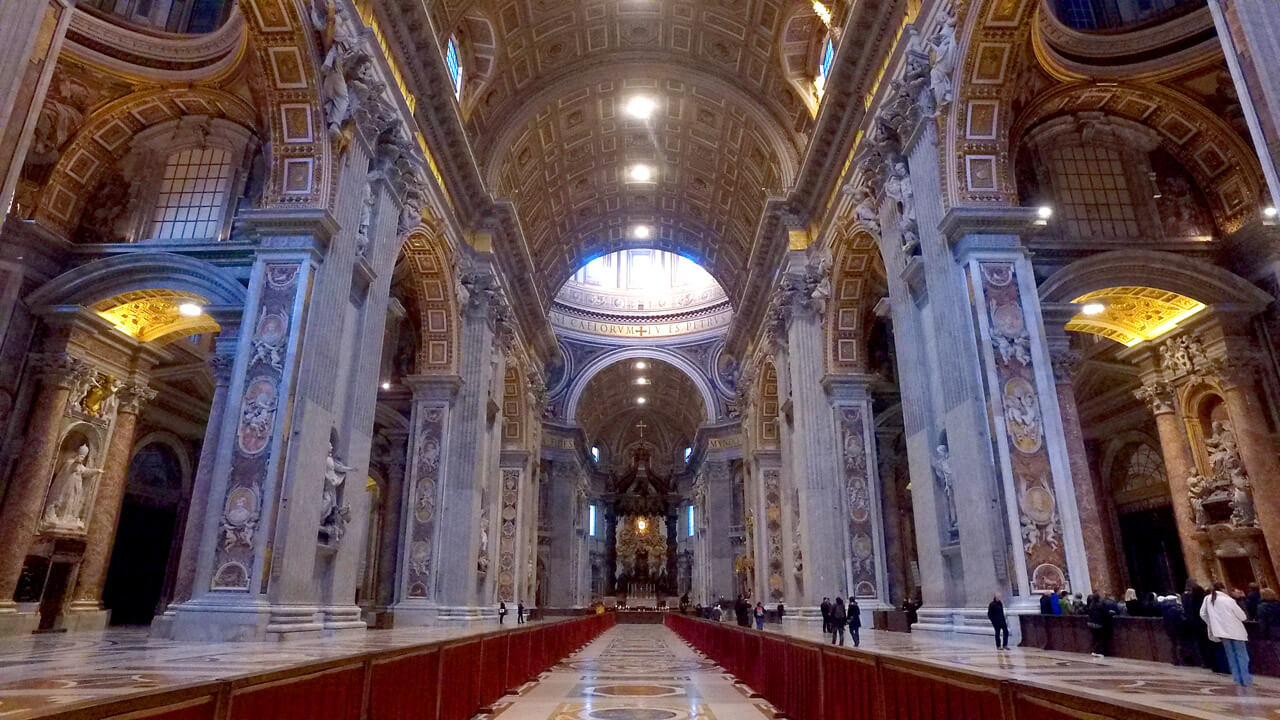
The basilica’s facade, designed by Carlo Maderno, features colossal Corinthian columns and intricate details that reflect the grandeur of Roman architecture. The interior, however, is where Saint Peter’s Basilica truly astonishes visitors. Michelangelo’s majestic dome, rising to a height of 136 meters, dominates the skyline of Rome and serves as a symbol of spiritual aspiration.
Saint Peter’s Basilica houses an unparalleled collection of art, including sculptures, mosaics, and paintings by renowned artists. Michelangelo’s “Pieta“, a stunning depiction of the Virgin Mary cradling the body of Jesus, greets visitors near the entrance.
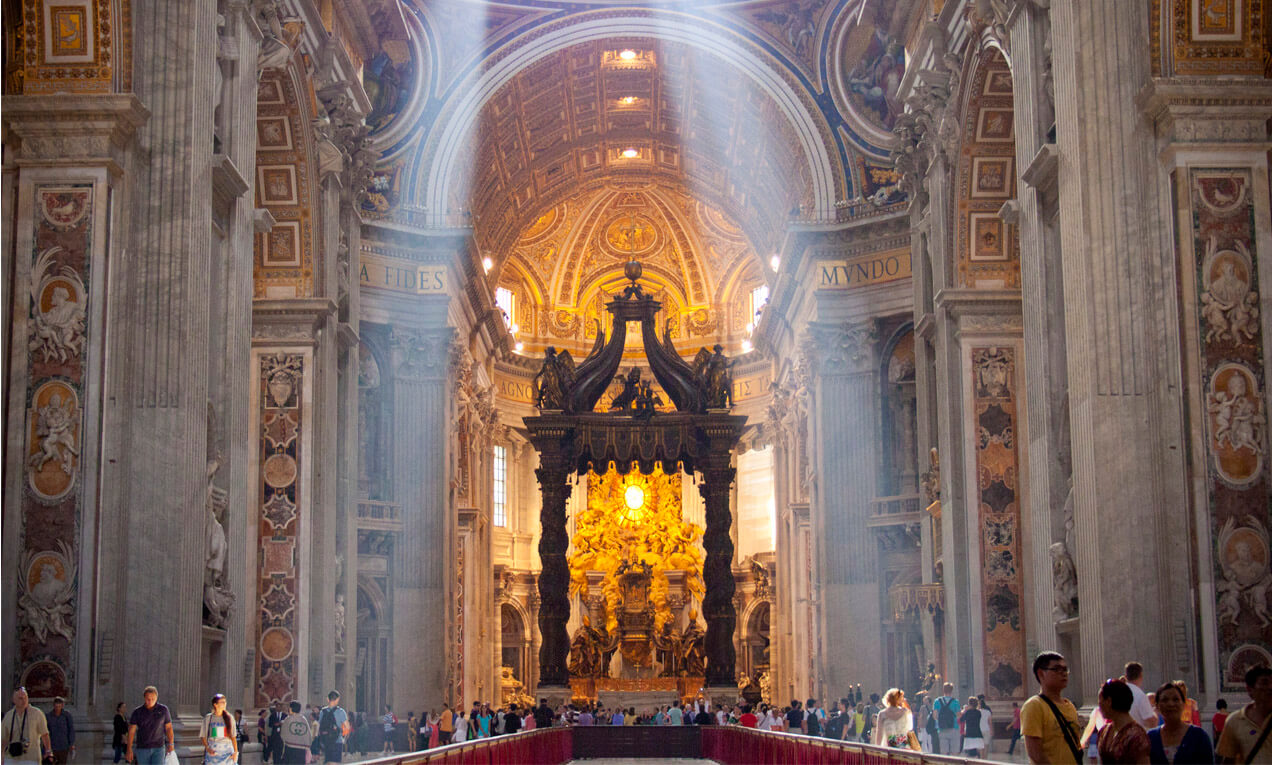
Gian Lorenzo Bernini’s masterpiece, the Baldacchino, stands beneath the dome, marking the high altar and symbolizing the unity of the Church under the guidance of the papacy.
.
.
.
Historical Significance of St Peter’s Basilica:
Throughout its history, Saint Peter’s Basilica has been a focal point of religious and cultural significance. It has witnessed papal coronations, solemn ceremonies, and historic events that shaped the course of Christianity and Western civilization. The basilica’s architecture and artwork reflect the artistic achievements of the Renaissance and Baroque periods, attracting pilgrims and art enthusiasts from around the world.
Visiting Saint Peter’s Basilica is a sensory journey through history and spirituality. The vast interior, adorned with marble, gold, and precious stones, evokes a sense of reverence and awe. Pilgrims and tourists alike marvel at the basilica’s architectural grandeur and artistic splendor, making it one of the most visited religious sites in the world.
The Vatican continues to uphold Saint Peter’s Basilica as a center of religious worship and cultural heritage. Preservation efforts ensure that the basilica’s artworks and architectural features remain intact for future generations to appreciate and admire. Restoration projects, such as those undertaken on the facade and dome, uphold the basilica’s structural integrity while enhancing its beauty.
.
To visit many of these sites in a single day, you can book private Rome tours by car, or a Private Tour from Rome Sea port. Your personal driver will take you to all the sites in comfort and style as you enjoy Rome in the comfort of your private deluxe vehicle driven by your personal English speaking Driver at your disposal to ensure your day in Rome will be your most memorable day in Italy!
.
More information is available on our website www.RomeCabs.com.
Thank you very much for choosing Stefano’s RomeCabs.
We look forward to showing you Rome!
The RomeCabs Team
http://www.RomeCabs.com
.
Find RomeCabs online also on:
RomeCabs FACEBOOK
RomeCabs PINTEREST
RomeCabs TWITTER
RomeCabs TUMBLR
RomeCabs INSTAGRAM
RomeCabs FLICKR Photo Gallery
RomeCabs Recommended on Cruise Critic
.
Check out our other Italy Travel Blogs by RomeCabs:
https://romecabsdotnet.wordpress.com/
https://rome-cabs.org/
https://rome-cabs.net/
https://romecabs.wordpress.com/
.
 .
.
.
.
.


 RomeCabs Transfers and Tours in Italy (Rome Cabs)