Discover Montepulciano: The Jewel of the Tuscan Hills of Italy
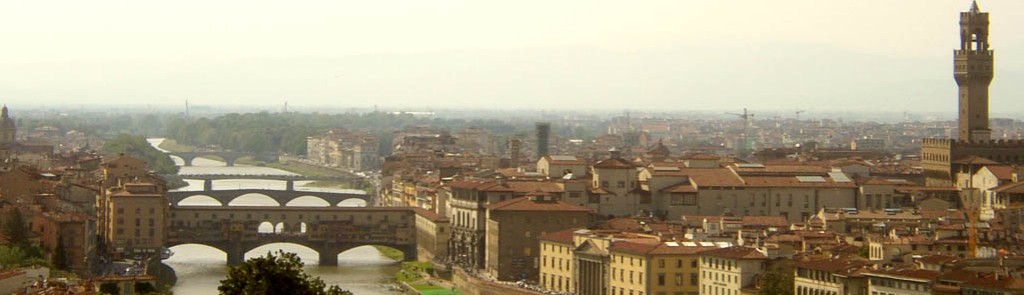
Buongiorno and welcome to RomeCabs Italy Travel Blog! A treasure trove of historic charm, architectural splendor, and world-renowned wines, Montepulciano is one of Tuscany’s most famous hilltop towns featured in many day trips from Rome to Tuscany. Perched high on a limestone ridge, Montepulciano offers breathtaking views of the surrounding countryside, with its lush vineyards, olive groves, and rolling hills. This picturesque town is a must-visit destination for anyone exploring southern Tuscany.
.
History of Montepulciano
.
Montepulciano’s history dates back to Etruscan times, and it became a significant Roman settlement in the 4th century BC. Its strategic location on a hilltop made it a valuable military and trade center throughout the medieval and Renaissance periods. The town’s architecture reflects its prosperous past, with numerous palaces, churches, and fortifications that bear witness to its rich cultural heritage.
The earliest known records of Montepulciano date back to the 8th century when it was under Lombard rule. By the 12th century, Montepulciano had developed into a free commune, asserting its independence and establishing its own municipal government. This period was marked by frequent conflicts with neighboring cities, such as Siena and Florence, each vying for control over the prosperous town.
.

.
.
.
Montepulciano during the Renaissance Era
.
During the Renaissance, Montepulciano flourished under the patronage of powerful local families and the influence of the Medici. This period saw the construction of many of the town’s most notable buildings, designed by renowned architects such as Michelozzo, Antonio da Sangallo the Elder, and Bartolomeo Ammannati. The magnificent Palazzo Comunale, reminiscent of Florence’s Palazzo Vecchio, and the stunning Cathedral of Santa Maria Assunta are testaments to the town’s architectural renaissance.
Montepulciano’s strategic importance continued into the late Renaissance, as it became a center for art, culture, and education. The establishment of the Montepulciano Academy in the 16th century attracted scholars and artists, further enhancing the town’s cultural significance. The production of Vino Nobile di Montepulciano, one of Italy’s oldest and most prestigious wines, also began during this time, contributing to the town’s economic prosperity.
In the centuries that followed, Montepulciano managed to preserve its historical and architectural heritage, avoiding significant damage during various conflicts and wars. Today, visitors can stroll through its well-preserved streets and squares, exploring the rich history that is palpable at every corner.
Montepulciano stands not only as a testament to Tuscany’s storied past but also as a vibrant community that continues to celebrate its cultural legacy through festivals, culinary traditions, and, of course, its famous wines. Whether you’re a history enthusiast, an architecture lover, or a wine connoisseur, Montepulciano offers a unique and enriching experience that captures the essence of Tuscany.
.

.
.
.
Architectural Highlights of Montepulciano
.
If visiting Montepulciano, don’t miss these amazing architectural beauties.
.
Palazzo Comunale
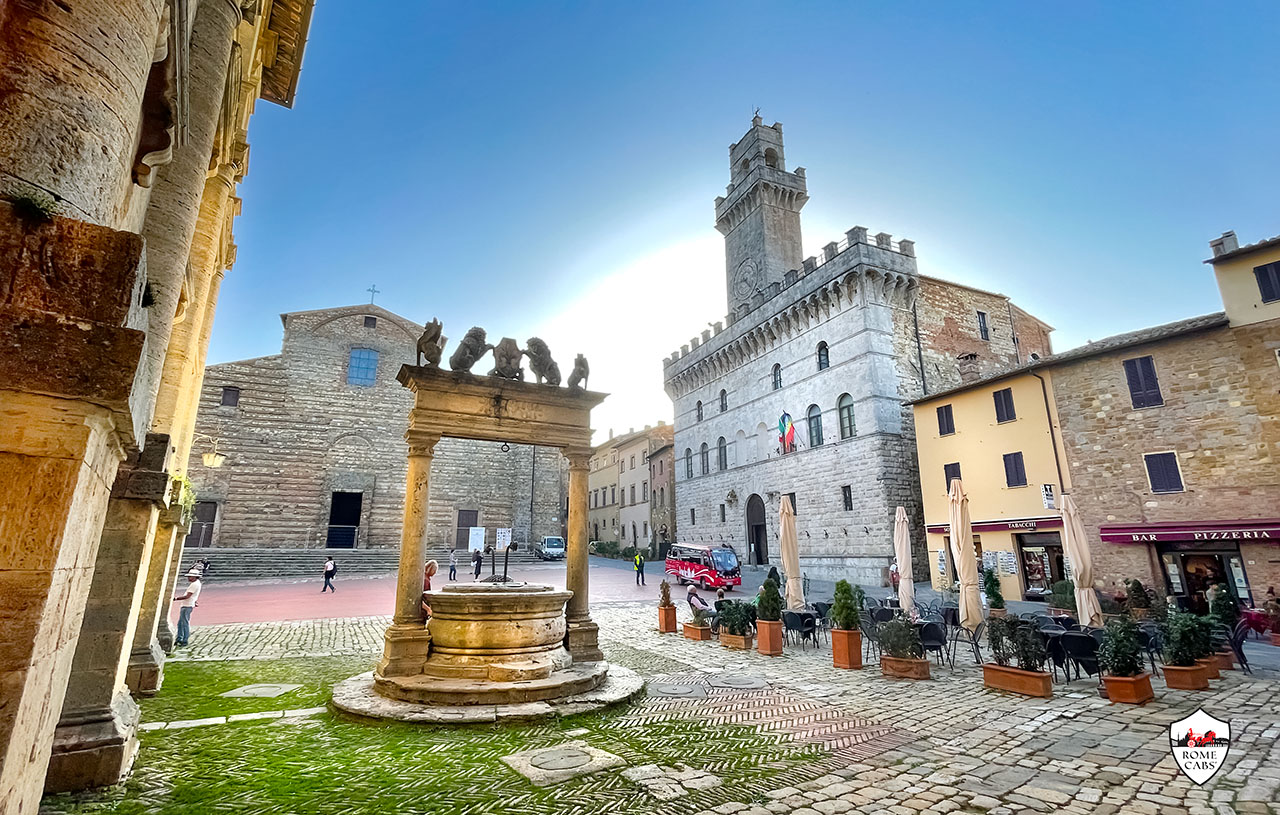
The Palazzo Comunale, or Town Hall, stands as one of Montepulciano’s most iconic architectural landmarks. Situated prominently in the town’s main square, Piazza Grande, this impressive edifice dates back to the 14th century. Originally constructed as the seat of municipal government, the building was later renovated during the Renaissance, reflecting the artistic and architectural influences of the period.
Its facade, adorned with elegant arches and a crenellated tower, closely resembles Florence’s Palazzo Vecchio, a testament to the architectural exchange between Montepulciano and Florence. The building’s design, characterized by its fortified appearance and imposing presence, was intended to convey both civic authority and defense.
Visitors are invited to climb the tower of the Palazzo Comunale, which offers a panoramic view of Montepulciano and the surrounding landscape. From this vantage point, one can enjoy breathtaking vistas of the Val d’Orcia, with its patchwork of vineyards and olive groves, and even catch sight of the distant hills of Umbria and Lazio. The tower provides a unique perspective on the town’s medieval layout and the beauty of the Tuscan countryside.
.

.
.
Montepulciano Cathedral (Duomo)
The Cathedral of Santa Maria Assunta, commonly known as the Montepulciano Cathedral, is another architectural marvel located on Piazza Grande. The cathedral was constructed between the 16th and 17th centuries, replacing an earlier parish church that had stood on the site. Its facade, although unfinished, adds to the building’s distinctive and evocative charm.
.
The Tower of Pulcinella
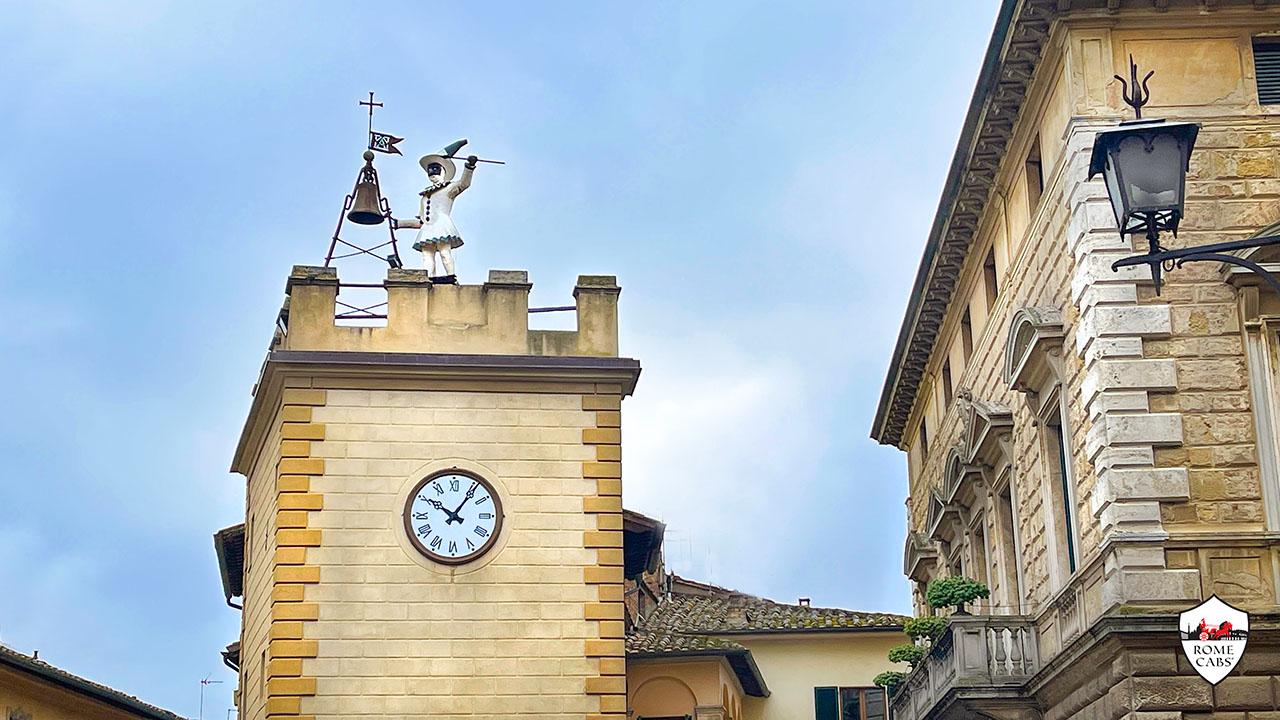
Adding a touch of whimsy to Montepulciano’s historic streets is the Tower of Pulcinella. Located near the Church of Sant’Agostino, this charming landmark features a clock with a mechanical figure of Pulcinella, a well-known character from Italian commedia dell’arte. Dressed in his traditional mask and costume, Pulcinella performs the delightful task of striking the bell every hour, providing a playful and historic element to the town’s daily life.
.
.
.
.
.
Fortezza di Montepulciano
Adding to Montepulciano’s rich architectural tapestry is the Fortezza di Montepulciano, or the Fortress of Montepulciano. Constructed in the 16th century, this imposing fortress was built as a defensive structure during a period of frequent conflicts between the town and rival powers. Designed by the military engineer Antonio da Sangallo the Younger, the fortress features a bastion-style design with angular fortifications and a strategic layout aimed at enhancing its defensive capabilities.
.
Church of San Biagio
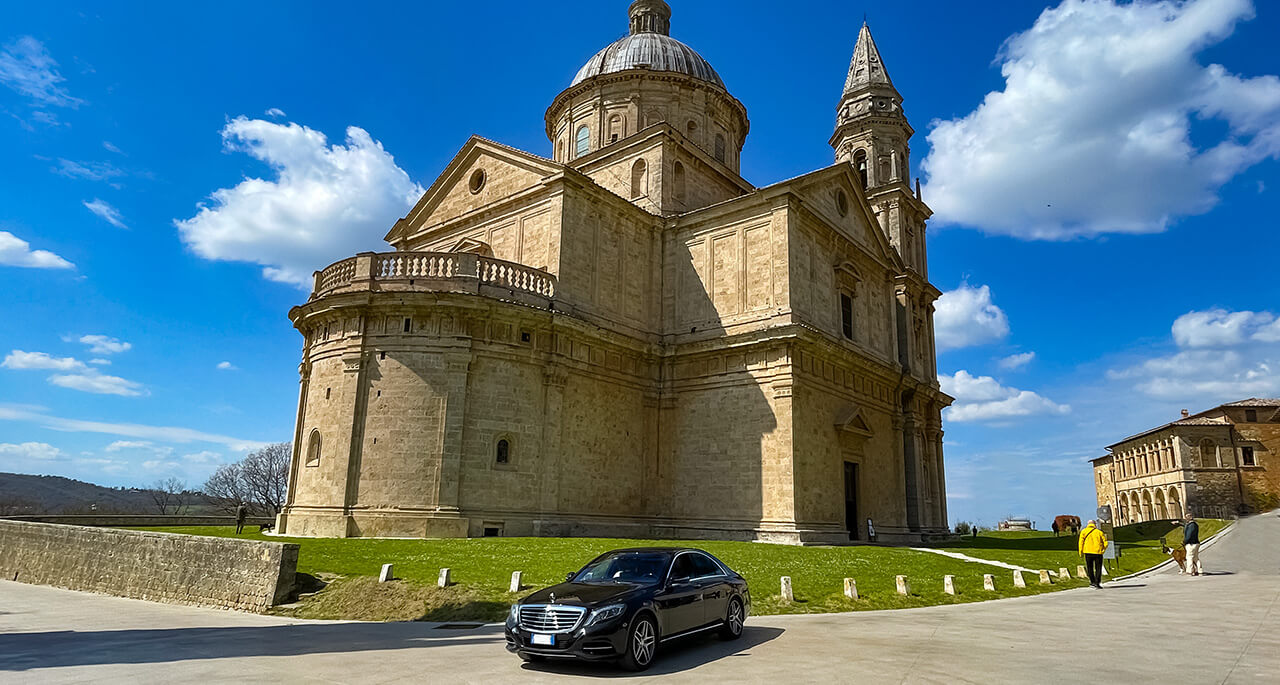
Just outside the town walls, the Church of San Biagio stands as a masterpiece of Renaissance architecture. Designed by Antonio da Sangallo the Elder and constructed between 1518 and 1545, this church is celebrated for its elegant use of travertine and its classic Greek cross plan, which is crowned by a central dome. The church’s harmonious proportions and serene design epitomize the ideals of Renaissance architecture, showcasing a perfect balance of form and function.
San Biagio’s setting, nestled among cypress trees and overlooking the rolling hills of the Val d’Orcia, enhances its tranquil and picturesque ambiance. The church’s location provides visitors with a stunning backdrop of the Tuscan landscape, offering a peaceful retreat and a chance to reflect on the architectural beauty of this Renaissance gem.
.
.
.
Wine Culture: Vino Nobile di Montepulciano
.
Vino Nobile di Montepulciano stands as one of Tuscany’s most distinguished and revered wines, embodying centuries of winemaking tradition and the unique terroir of the Montepulciano region. This celebrated red wine is renowned for its rich flavors, exceptional complexity, and aging potential, making it a prized choice for connoisseurs and casual drinkers alike.
The origins of Vino Nobile di Montepulciano trace back to the 16th century, when local winemakers began to refine their craft, guided by the principles of Italian Renaissance viticulture. The wine’s name, “Nobile“, meaning “noble” in Italian, reflects its esteemed status and historical connections to the local aristocracy who favored it. The designation of “Vino Nobile” was officially recognized in the 19th century, and the wine received Denominazione di Origine Controllata e Garantita (DOCG) status in 1980, further cementing its reputation as one of Italy’s premier wines.
.

.
.
Vino Nobile di Montepulciano is primarily crafted from the Sangiovese grape, locally known as Prugnolo Gentile. This varietal is central to the wine’s character, offering a robust structure, vibrant acidity, and a spectrum of flavors ranging from ripe cherries and plums to earthy undertones and subtle spices. The wine’s complexity is enhanced by the region’s unique terroir, characterized by well-drained soils, a temperate climate, and an altitude that provides optimal growing conditions for the grape.
.
Production and Aging of Vino Nobile di Montepulciano
The winemaking process for Vino Nobile di Montepulciano involves meticulous care and traditional techniques. After harvesting, the grapes undergo fermentation in temperature-controlled vats, followed by aging in oak barrels. The aging process is critical, as it imparts additional layers of complexity and refinement to the wine. Typically, Vino Nobile is aged for at least two years, though some exceptional examples may be aged longer to develop even more nuanced flavors.
.
.

.
.
.
The result is a wine with a deep ruby color, a bouquet of dark fruit, dried herbs, and a hint of tobacco, alongside a full-bodied palate with velvety tannins and a lingering finish. The aging potential of Vino Nobile di Montepulciano is notable, with well-cellared bottles often improving over a decade or more, evolving to reveal new dimensions of flavor and aroma.
.
Wine Tastings in Montepulciano
.
Wine enthusiasts visiting Montepulciano are in for a treat, as the town offers a plethora of opportunities to indulge in its rich vinous heritage. Numerous local shops and wineries provide immersive wine-tasting experiences where you can sample a diverse range of wines.
Among these, Vino Nobile di Montepulciano is the star, alongside its more youthful counterpart, Rosso di Montepulciano. Rosso di Montepulciano, often seen as a more accessible and less aged version of its prestigious relative, provides a lighter, fruitier alternative that is perfect for casual sipping.
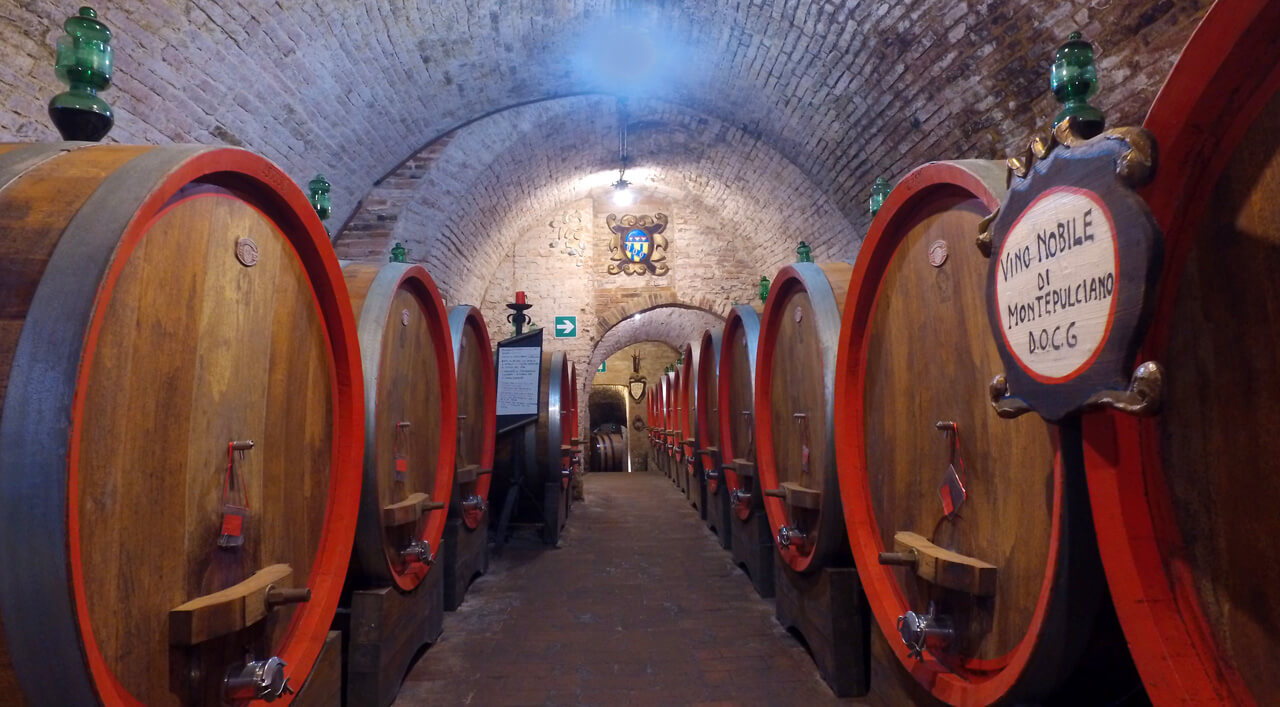
One of the most captivating aspects of wine tasting in Montepulciano is the chance to explore the town’s historic underground wine cellars. The Ercolani winery, for example, is renowned not only for its exceptional Vino Nobile but also for its impressive enoteca —an elegant wine shop in Montepulciano that showcases its best local offerings. Here, visitors can immerse themselves in the local wine culture while exploring the cellars’ cool, dimly lit passages, which have been used for aging wine for generations.
.
.
.
.
.
Annual Events and Festivals in Montepulciano
.
Montepulciano’s cultural vibrancy is brought to life through its numerous annual festivals and events, each offering a unique glimpse into the town’s rich traditions and communal spirit.
.
Bravio delle Botti:
Held in late August, the Bravio delle Botti is one of Montepulciano’s most exhilarating and time-honored events. This traditional barrel-rolling race transforms the town into a lively, competitive arena. Teams from different contrade (neighborhoods) compete in rolling large wooden barrels through Montepulciano’s narrow, winding streets, all while navigating the town’s challenging slopes. The event is marked by a festive atmosphere with spectators cheering on the competitors, colorful costumes, and a sense of community camaraderie. The Bravio delle Botti is not only a testament to Montepulciano’s rich historical traditions but also a celebration of local pride and athleticism.
.
Christmas Market in Piazza Grande:
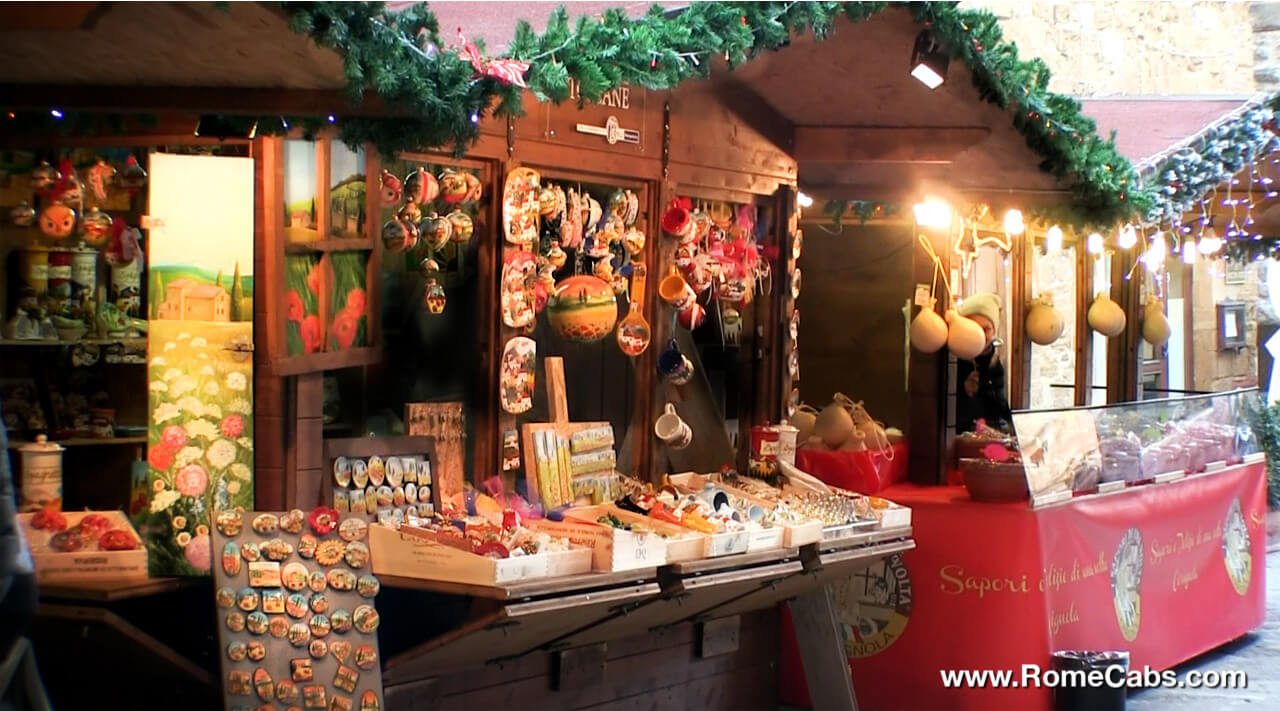
As the holiday season approaches, Montepulciano’s Piazza Grande transforms into a festive wonderland with its annual Christmas Market. This enchanting market features a variety of stalls selling artisanal crafts, local delicacies, and holiday decorations. The atmosphere is enhanced by the twinkling lights, festive music, and the scent of roasted chestnuts and mulled wine. Visitors can explore the market’s offerings while enjoying the picturesque setting of Piazza Grande, which is beautifully adorned for the season. The Christmas Market is a highlight of Montepulciano’s winter festivities, providing a warm and joyful experience during the colder months.
.
.
.
.
Exploring the Surrounding Area around Montepulciano
.
Montepulciano’s central location in Tuscany makes it an excellent base for exploring the enchanting countryside and neighboring towns. The region surrounding Montepulciano is rich in history, culture, and natural beauty, offering a wealth of experiences for travelers. From Montepulciano, you can discover many charming towns in Tuscany. Below are a few examples:
.
Pienza – A Renaissance Utopia
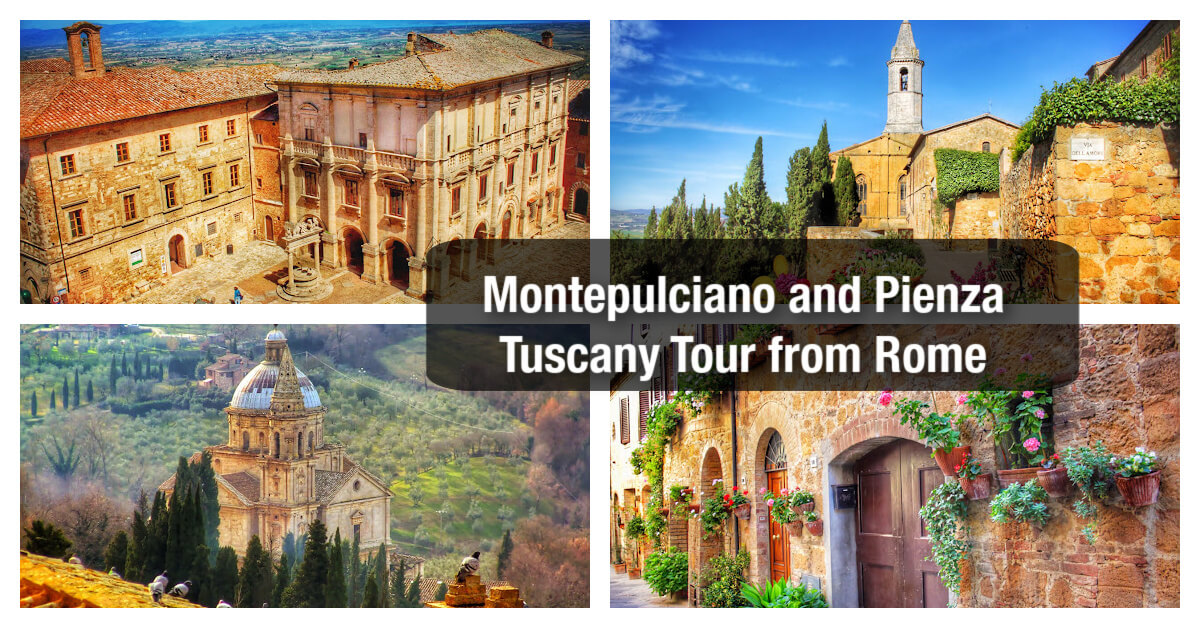
A short drive from Montepulciano, Pienza is often hailed as a Renaissance masterpiece. Designed by Pope Pius II, the town exemplifies the principles of Renaissance urban planning and architecture. Pienza’s harmonious layout and stunning vistas of the Val d’Orcia make it a must-visit destination.
The Pienza Cathedral, also known as the Cathedral of the Assumption, is a highlight of the town. Its façade and interior reflect the Renaissance ideals of balance and proportion, featuring works by renowned artists of the time. Inside, the cathedral houses important religious art, including an altar piece by Giovanni di Paolo.
Pienza is also famous for its pecorino cheese, a local specialty made from sheep’s milk. The cheese is available in various forms, from young and mild to aged and sharp, and can be sampled in local markets and eateries. Visitors can also explore the town’s quaint streets, lined with artisanal shops and charming cafés.
.
.
.
Cortona – Jewel of Tuscany
Situated to the northeast of Montepulciano, Cortona is a picturesque hilltop town that offers a blend of historical charm and modern vibrancy. Known for its well-preserved medieval streets and stunning views of the surrounding countryside, Cortona is a destination rich in cultural and historical significance.
The Museo dell’Accademia Etrusca is a must-visit for history enthusiasts. This museum houses an extensive collection of Etruscan artifacts, providing insight into the ancient civilization that once thrived in the region. Additionally, Cortona’s Diocesan Museum features an impressive array of Renaissance and medieval art, including works by artists like Luca Signorelli.
Cortona’s lively atmosphere is further enhanced by its annual events, such as the Cortona on the Move photography festival, which showcases contemporary photography from around the world. The town also hosts various food and wine festivals, offering visitors a chance to experience local culinary delights.
.

.
.
.
Montalcino – home of Brunello Wine
Known for its prestigious wine, Montalcino is another gem in Tuscany’s crown. Located to the southwest of Montepulciano, Montalcino is renowned for producing Brunello di Montalcino, one of Italy’s most celebrated red wines. The town is surrounded by vineyards and rolling hills, making it a picturesque and aromatic destination for wine lovers.
.
Bagno Vignoni – a Thermal Spa Village
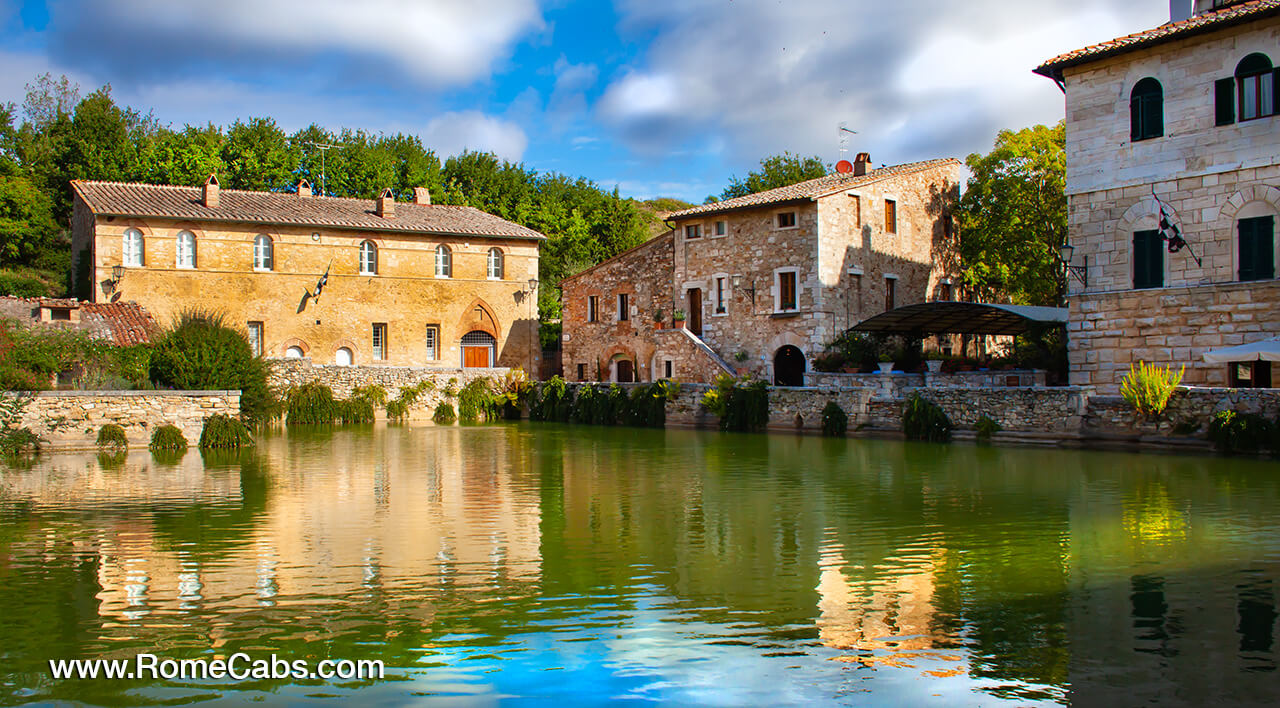
To the west of Montepulciano lies Bagno Vignoni, a unique village renowned for its thermal baths. The village’s central square is filled with thermal waters, and visitors can enjoy the warm, mineral-rich pools that have been used for centuries for relaxation and therapeutic purposes. The historic bathhouse, Le Terme di Bagno Vignoni, offers a range of wellness treatments and is an ideal spot for relaxation.
.
.
.
.
Practical Tips for Visiting Montepulciano
.
Montepulciano is most conveniently reached by car, especially if you are coming from Rome. The town is located approximately 120 kilometers (about 75 miles) from Rome, making it about a 1.5 to 2-hour drive, depending on traffic and road conditions. The route takes you through some of Tuscany’s most picturesque landscapes, including rolling hills, vineyards, and olive groves. Renting a car is highly recommended as it offers the best flexibility to explore Montepulciano and the surrounding Tuscan countryside at your own pace.
Parking: Montepulciano’s historic center is a pedestrian zone, so cars are not permitted within the town’s medieval walls. Fortunately, there are several parking areas conveniently located just outside the town center. These parking lots are clearly marked and offer easy access to the town via a short walk.
Wear Comfortable Footwear: Montepulciano is known for its steep, cobbled streets at an incline. Wearing comfortable walking shoes is essential to fully enjoy your exploration of the town’s historic sites and scenic viewpoints.
Savor Local Tuscan Cuisine: Don’t miss the opportunity to savor local Tuscan cuisine. Montepulciano offers a range of dining options, from cozy trattorias to fine dining establishments. Try local specialties such as pici pasta, wild boar ragu, and of course, Vino Nobile di Montepulciano.
.
.
.
.
.
Best Time of the Year to Visit Montepulciano
.
The optimal times to visit Montepulciano are during the spring (April to June) and fall (September to October). During these seasons, the weather is generally mild, and the surrounding countryside is at its most stunning, with vibrant flowers in the spring and rich autumnal colors. These periods also offer a more relaxed atmosphere, as the summer crowds are fewer.
Summer (July and August) in Montepulciano can be quite hot, with temperatures often reaching into the high 80s or low 90s Fahrenheit (30-35°C). Despite the heat, summer is a lively time to visit due to the numerous local festivals and events, such as the Bravio delle Botti, which injects the town with vibrant energy and offers a unique cultural experience.
Winter (the off-season from November to February) is the least popular time to visit due to cooler temperatures and the potential for rain. However, this season offers a quieter experience with fewer tourists, and the chance to enjoy the town’s seasonal charm and holiday decorations.
.
.
.
.
.
Tours from Rome to Montepulciano with RomeCabs
.
If you’re staying in Rome and want to explore Montepulciano, there are several tour options available. RomeCabs offers a variety of Tuscany Day Trips from Rome, including visits to Montepulciano. These tours often include transportation and additional stops at other Tuscan gems such as Pienza, Cortona, and Montalcino. Wine Tours from Rome to Tuscany with RomeCabs also include visits to Montepulciano. For an exciting experience, visit Tuscany during Vendemmia and celebrate Italian harvest culture between September to October.
Booking a private tour from Rome to Tuscany can be a convenient way to experience Montepulciano and other nearby destinations without the need to navigate logistics on your own.
.
.
.
.
.
Montepulciano is a captivating destination that offers visitors a perfect blend of history, culture, and wine. Whether you’re exploring its winding streets, visiting its historic buildings, or savoring its renowned Vino Nobile di Montepulciano, Montepulciano promises an unforgettable experience. Its rich heritage, stunning architecture, and vibrant community make it a highlight of any visit to Tuscany.
As you plan your travels in Tuscany, be sure to include Montepulciano in your itinerary. Its enchanting charm and welcoming atmosphere will leave you with lasting memories and a deeper appreciation for the beauty and culture of this remarkable region. Buon viaggio!
.
* Find RomeCabs online also on:
- RomeCabs Facebook: https://www.facebook.com/RomeCabsToursAndTransfers
- RomeCabs Pinterest: https://www.pinterest.it/romecabs
- RomeCabs Twitter: https://twitter.com/RomeCabs
- RomeCabs Instagram: https://www.instagram.com/romecabs/
- RomeCabs Flickr Photos: https://www.flickr.com/photos/romecabs/
- RomeCabs Recommended on Cruise Critic
.
.
.
.
.

.


 RomeCabs Transfers and Tours in Italy (Rome Cabs)