Beneath Piazza Navona: Domitian’s Stadium of Ancient Rome
.
If you stroll through the heart of Rome today, you might find yourself sipping a coffee in the picturesque Piazza Navona. This charming square, with its elegant fountains, outdoor cafes, and lively atmosphere, is a must-visit destination for travelers and history enthusiasts alike.
You’re not merely savoring the charm of a Baroque square; you’re treading upon the same ground where ancient athletes displayed their prowess and where gladiators fought for their lives. The echoes of history persist, whispered in the wind and etched into the very stones beneath your feet. Let’s delve into the fascinating history of Piazza Navona’s past as a grand Roman Stadium from which it also takes its name.
.
.
.
.
.
Domitian’s Stadium – An Ancient Roman Architectural Marvel
.
Piazza Navona’s story begins in the 1st century AD, during the reign of the Roman Emperor Domitian. In an era where gladiatorial contests often took center stage, Domitian had a different vision. He commissioned the construction of a stadium designed for athletic competitions, reminiscent of the ancient Greek Olympic games.
Domitian’s Stadium, as it was originally known, was a remarkable architectural achievement. Its shape, an elongated ellipse measuring 192 meters in length and 54 meters in width, closely mirrored the Greek stadium in Olympia. The stadium’s structure accommodated thousands of spectators who gathered to witness a variety of athletic events.
.
The Athletic Extravaganza at Domitian’s Stadium in Ancient Rome
While the Colosseum is more famously associated with gladiatorial combat, Domitian’s Stadium hosted a different kind of spectacle. At a time when the Roman elite was captivated by Greek culture, these contests were a way to celebrate and emulate the ancient Greek Olympic games. Competitors often hailed from Greece and its neighboring regions, and victorious athletes were rewarded with Roman citizenship.
Domitian’s Stadium provided a stark contrast to the bloodthirsty spectacles of the Colosseum, signaling a shift in the Roman public’s taste from violence to athleticism.
.

.
.
Javelin Throwing:
A spectator in this colossal stadium could witness the breathtaking precision of javelin throwing. Athletes, like modern-day archers with spears, demonstrated both accuracy and distance in their throws. The historical significance of this event extended beyond the stadium walls, as these skills were equally vital in the art of warfare, underscoring the Romans’ fusion of athletic prowess and practical military acumen.
Long Jump:
Another amazing spectacle was the long jump. Athletes would dash down a sandy runway, leaping skyward to clear impressive distances. What sets this event apart is the use of halteres—weights that athletes carried during their leaps, only to cast them aside mid-flight, propelling themselves even further. This ingenious strategy not only hinted at the strategy of modern sports but also lent a historical mystique to the stadium’s legacy.
Relay Races:
The stadium also played host to relay races, adding an element of teamwork and coordination to the competitions. Torchbearers would pass flaming torches, not batons, to their teammates, adding a brilliant visual dimension to the races. The lampadedromia was an exhilarating spectacle that combined swiftness with precision, all beneath the watchful gaze of the ancient audience.
Long-Distance Races:
The dolichos, a long-distance race, celebrated the athletes’ endurance. Known as oplitodromia, this contest tasked competitors with running substantial distances while bearing shields and helmets. This resembled the modern steeplechase but with an added twist. The use of shields and helmets not only showcased physical endurance but also emphasized the interplay between athleticism and martial prowess.
Wrestling Without Restraints:
Wrestling was a no-holds-barred competition, a raw and unfiltered form of combat. Athletes grappled and struggled, seeking to dominate their adversaries. What’s intriguing is that these competitions occasionally featured male versus female bouts, demonstrating the rich diversity of competitors. Both wrestling and boxing events could only be stopped by submission, blinding, or death, adding a level of intensity and brutality to these contests that stood in stark contrast to the lofty ideals of the Olympic games.
Ancient Roman Boxing:
Boxing was another physically demanding sport featured in the stadium. These ancient boxing matches used leather straps as gloves, known as himantes, and sometimes even included metal “padding“.
The sports held in Domitian’s Stadium were a testament to the athleticism, strength, and diversity of ancient Roman culture. While the games celebrated physical prowess, they also embraced the multifaceted nature of life in ancient Rome.
As you soak in the vibrant atmosphere of Piazza Navona, remember that you are in a place where these ancient games once enthralled and entertained the people of Rome, leaving behind a rich and storied legacy for all to explore. You can almost hear echoes of the roars of tens of thousands of spectators!
.
Changing Times and Purpose of Domitian’s Stadium
.
In the annals of history, Domitian’s Stadium saw a multitude of transformations and adaptations, reflecting the shifting sands of time and the varied fates of the Roman Empire. One might say it was a witness to the colorful tapestry of Roman life.
In 217 AD, a calamitous event would forever alter the course of the Colosseum’s history. A devastating fire, with its ravenous flames, dealt a severe blow to the iconic amphitheater. As a result, the Colosseum temporarily lost its place as the epicenter of gladiatorial combat and grand spectacles.
.
The Rise of Gladiatorial Contests in Domitian’s Stadium
In a bold move, the authorities turned to Domitian’s Stadium to fill the void. This colossal arena, with its elliptical design and unobstructed views, became the new stage for gladiatorial contests for a few years. The stadium’s vast structure provided an ideal backdrop for these brutal battles, offering a change of scenery from the more traditional arenas like the Roman circuses.
Some accounts, including the vivid descriptions found in the Historia Augusta, told of grand arcades took on an altogether different role – that of brothels. In a bizarre twist, the emperor Severus Alexander used the revenue generated from these establishments to fund the stadium’s restoration.
.
Domitian’s Stadium: A Place of Martyrdom
During the reign of Emperor Diocletian, it is believed that St. Agnes met her tragic end within or in close proximity to one of the stadium’s arcades. Her unwavering commitment to her beliefs, even in the face of adversity led to her martyrdom.
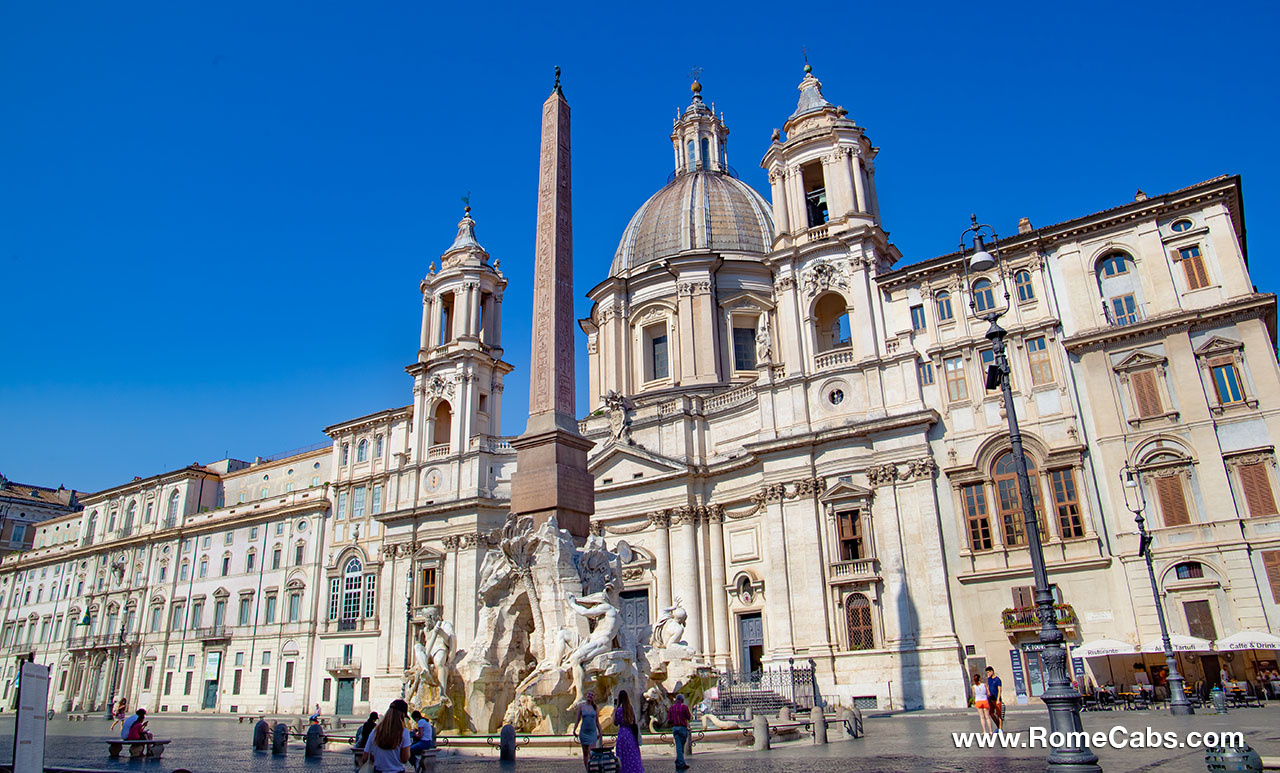
A millennium later, the architectural genius of Borromini brought to life the Church of St. Agnes in Agone. This Baroque masterpiece now graces the vibrant square, standing as an enduring tribute to St. Agnes’s memory.
.
.
.
Domitian’s Stadium from Fall of the Roman Empire into the Middle Ages
.
As the Roman Empire slowly entered the twilight of its existence, the stadium, like the empire itself, began to wane. The grand athletic events that once reverberated through its walls gradually became less frequent. The decline of Rome was marked by economic hardships, political instability, and a shifting focus away from the once grandiose sporting spectacles.
As the Roman Empire weathered economic and political storms in its later years, the magnificent arena transformed into a different kind of social hub. The arcades, once echoing with the cheers of athletes, now provided shelter for the impoverished, becoming a place where the poor found refuge. It’s a reflection of the changing times, as Rome grappled with its own evolving identity.
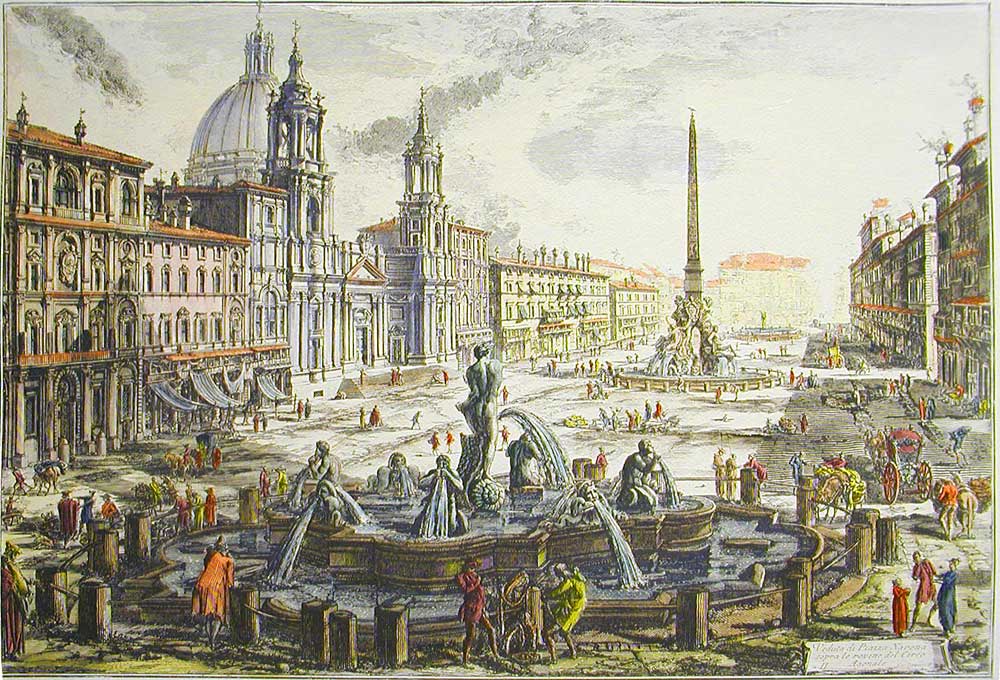
Even into the Renaissance era, substantial portions of the stadium managed to stand the test of time. However, instead of cheers and applause, these remnants faced a different fate. They were mined and plundered for valuable building materials, as the Renaissance architects sought to breathe new life into the ever-evolving city.
.
.
.
Piazza Navona Emerges
.
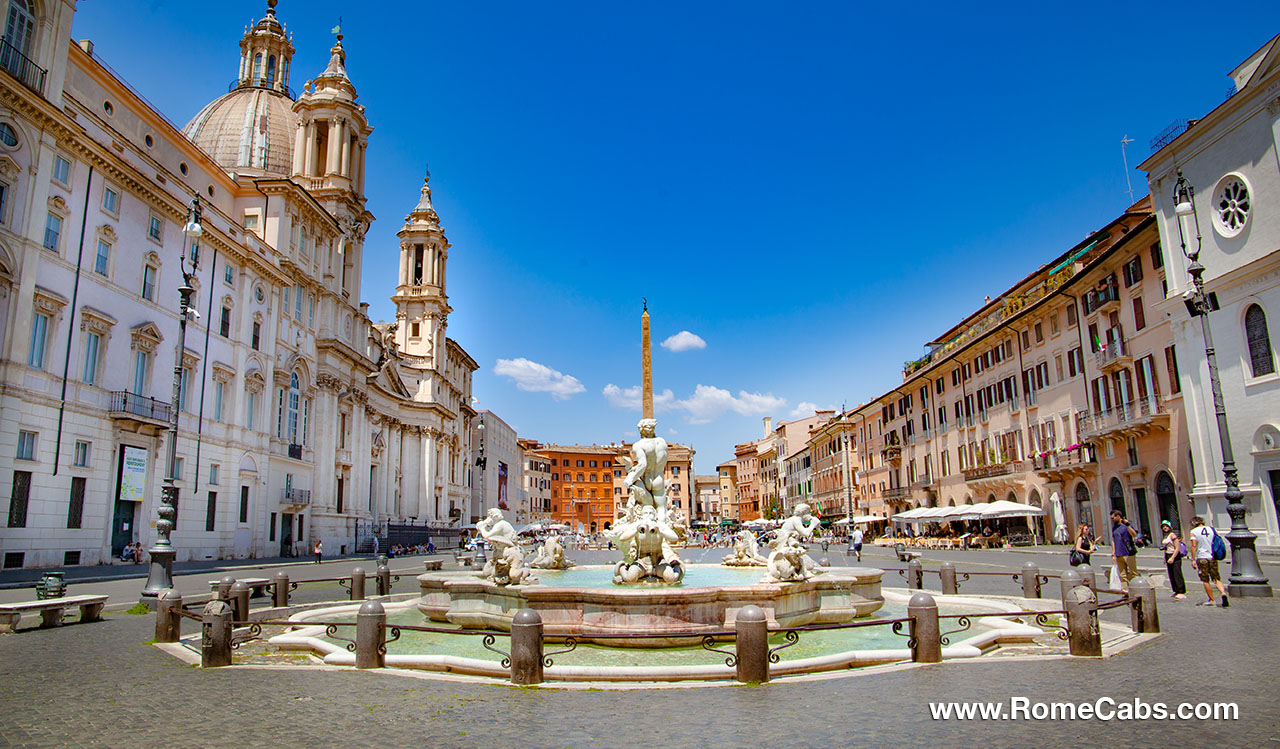
Fast forward to the Baroque period, and you’ll find a different scene entirely. The original stadium had long vanished, replaced by the stunning Piazza Navona. This transformation was part of a broader effort to convert ancient Rome into a more modern and aesthetically pleasing city.
Pope Innocent X, of the Pamphilj family, played a pivotal role in the square’s makeover. He envisioned Piazza Navona as Rome’s new epicenter, transforming the former racetrack into what he called “Rome’s drawing room.” The result was a grand piazza featuring remarkable Baroque architecture and iconic fountains that remain as captivating today as they were centuries ago.
.
.
Domitian Stadium Underground Visit
.
If you’re a history enthusiast and want to delve deeper into the stadium’s history, a visit to Domitian’s Stadium, accessible from Via di Tor Sanguigna on the northern side of Piazza Navona, offers a unique glimpse into the past. You can descend 12 meters beneath the square to explore the remains of the stadium and appreciate the remarkable preservation of this 2,000-year-old travertine and brick stadium.
Among the captivating remains, you can find a copy of Praxiteles’ Apollo Lykeios from the 4th century BC, made of Pentelic marble. It’s a fascinating journey into ancient history right beneath your feet.
Piazza Navona, with its vibrant present and rich historical past, stands as a testament to Rome’s enduring legacy, making one of the must see places in Rome. From the athletic competitions of ancient times to the Baroque beauty of today, this square is a living record of the city’s evolution. It’s a place where the past and present seamlessly coexist, offering a glimpse into Rome’s diverse and ever-evolving history.
.
Check out our other Italy Travel Blogs by RomeCabs:
https://rome-cabs.org/
https://rome-cabs.net/
https://romecabsdotnet.wordpress.com/
https://romecabs.wordpress.com/
.
Find RomeCabs online also on:
- RomeCabs FACEBOOK
- RomeCabs PINTEREST
- RomeCabs TWITTER
- RomeCabs INSTAGRAM
- RomeCabs FLICKR Photo Gallery
- Rome Cabs Recommended on Cruise Critic
.


 RomeCabs Transfers and Tours in Italy (Rome Cabs)