CIRCUS OF MAXENTIUS – by RomeCabs
Buon giorno and welcome to Stefano’s RomeCabs, Rome’s leading company for quality transfer and tours in Rome and beyond. Just about everyone who visited Rome is familiar with Circus Maximus (Circo Massimo) not far from the Colosseum at the foot of Palatine Hill. Not many people are familiar with another ancient race track: Circus of Maxentius (Circo di Massenzio).
.
Historical and Architectural Background of Circus Maxentius:
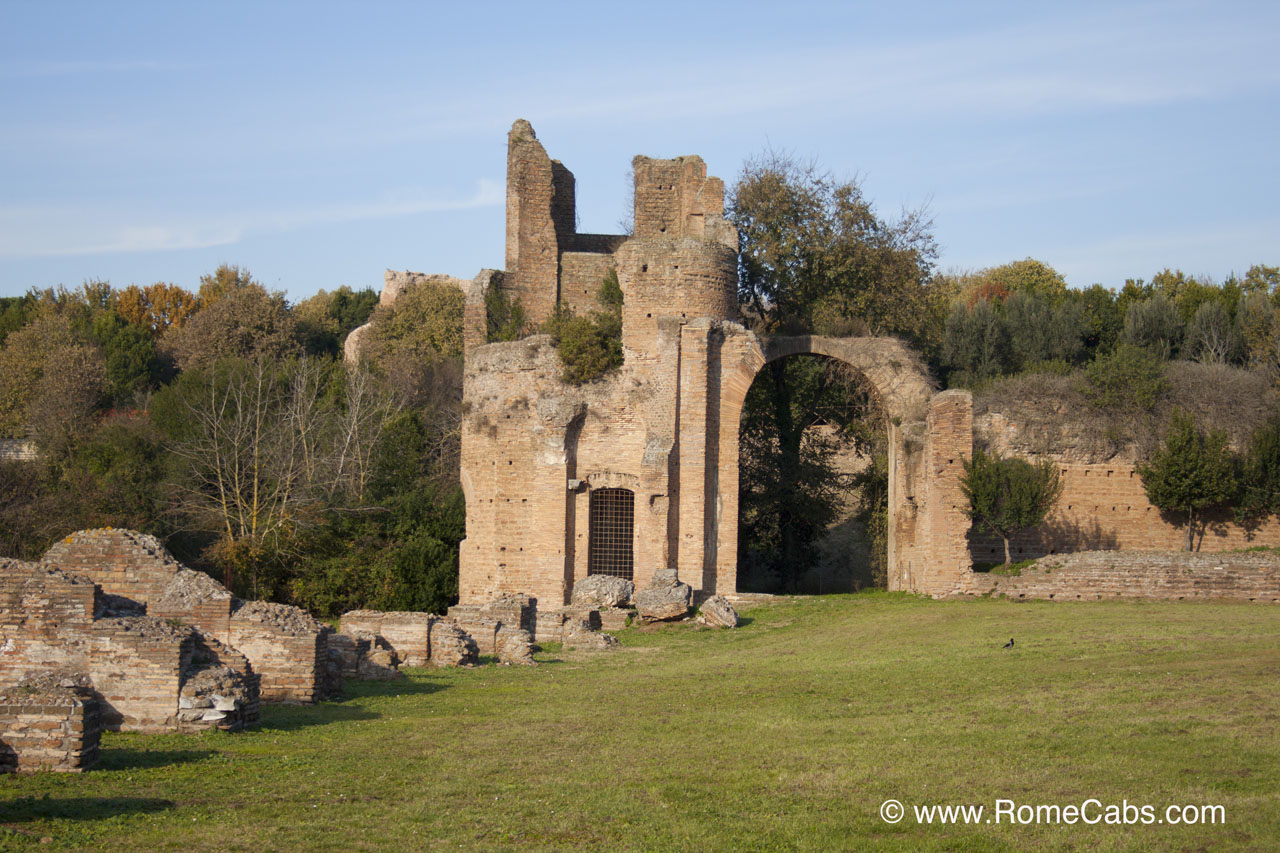
The Circus of Maxentius was commissioned by Emperor Maxentius (Marcus Aurelius Valerius Maxentius) during his reign from 306 to 312 AD. Maxentius was known for his ambitious building projects in Rome, aiming to enhance his imperial presence and commemorate his rule. One of his most significant constructions was the Circus of Maxentius, situated along the Via Appia outside the city walls of Rome.
Maxentius’ choice of location along the Via Appia was strategic. The Via Appia was one of the most important and ancient Roman roads, connecting Rome to the southern parts of Italy. Building a monumental complex like the Circus of Maxentius along this route would have not only benefited the city of Rome but also served as a display of imperial authority to travelers and visitors passing through.
.
.
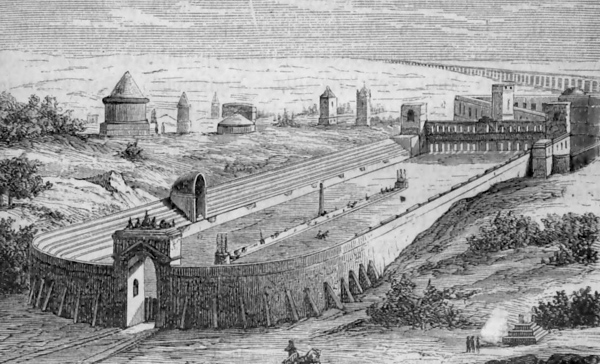
The site also includes a palace and a mausoleum known as the Tomb of Romulus where his son is believed to have been interred. This was the first imperial residence that combined a palaces with a stadium.
Maxentius likely constructed this circus as part of his effort to establish a grand imperial complex that showcased his power and authority. The circus was not only a venue for chariot races and public entertainment but also served as a symbol of imperial grandeur. The only games recorded in history were its inaugural games. Quite possibly, they could have been funerary games to honor Emperor Maxentius deceased son Valerius Romulus who died at a very young age in 309 AD.
.
.
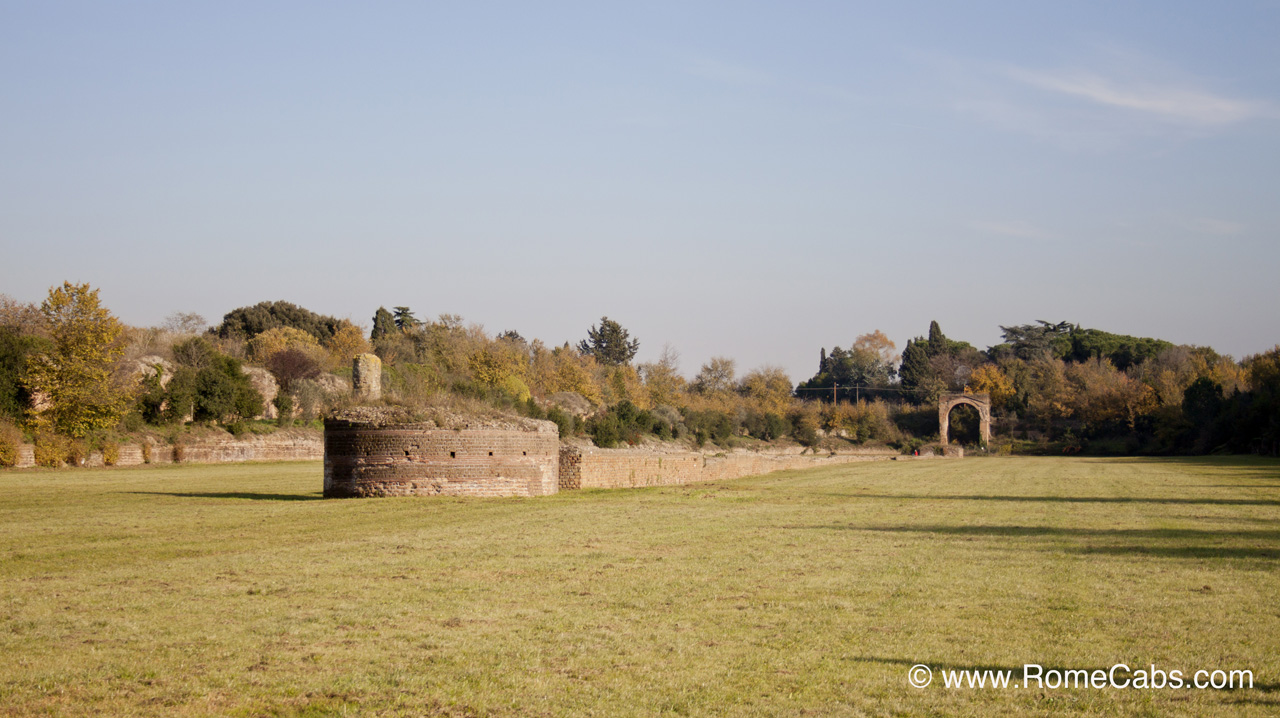
The circus itself was an architectural marvel of its time, albeit smaller than the Circus Maximus at 513 meters long and 91 meters wide, and accommodating only about 10,000 spectators. Its dimensions and layout reflect the typical design of Roman circuses, characterized by a long central spina (spine) adorned with statues and an obelisk—a symbol of power and exoticism, likely brought from Egypt as spoils of conquest. The surviving obelisk that once adorned the spina of the Circus of Maxentius is now prominently displayed in Piazza Navona, as part of Bernini’s famous Fountain of the Four Rivers.
Despite Maxentius’ short-lived rule, his architectural legacy, particularly the Circus of Maxentius, endures as a testament to Roman engineering and imperial ambition. The circus’s survival and excavation by archaeologists have contributed significantly to our understanding of ancient Roman entertainment venues and urban planning. Today, the site remains under the care of the Soprintendenza Archeologica di Roma and is open to the public, allowing visitors to experience firsthand the splendor of Maxentius’ imperial vision.
Who was Emperor Maxentius?
Emperor Maxentius, also known as Marcus Aurelius Valerius Maxentius, was a Roman emperor who ruled from 306 to 312 AD. He was the son of Emperor Maximian and gained control of Italy and North Africa after a period of civil war following the abdication of Diocletian in 305 AD. Maxentius is particularly remembered for his ambitious building projects in Rome, seeking to enhance his legacy and authority in a city where monumental architecture played a crucial role in asserting imperial power.
During his brief reign, Emperor Maxentius initiated many building projects including such as the Basilica of Maxentius inside the Roman Forum, and the imperial complex that includes the Circus of Maxentius.
The downfall of Maxentius came in 312 AD, during Battle at the Milvian Bridge where he was decisively defeated by his rival Emperor Constantine. This battle marked a turning point in Roman history, leading to Constantine’s ascent and subsequent adoption of Christianity as the state religion.
Following Maxentius’ defeat, the Circus of Maxentius and its associated imperial complex likely underwent changes in ownership and use. With Constantine’s embrace of Christianity, many pagan structures were repurposed or integrated into Christian traditions. The complex’s subsequent incorporation into the patrimony of the Church of Rome reflects this transition, with the site acquiring new significance within the evolving religious landscape of Rome.
.
VIDEO POSTCARD FROM PIAZZA NAVONA
.
After this major defeat, Emperor Constantine (also regarded as the father of Christianity as he legalized Christianity in Rome whereas before it was illegal) possibly donated the imperial complex of Maxentius to the Church of Rome.
Since the 6th century, this complex was part of the Patrimonium Appiae (estate owned by the Catholic Church along Via Appia)
Currently, Circus Maxentius is under the care of Soprintendenza Archeologica di Roma, and it is open to the public for visits, for off-the-beaten-path place sin Rome to visit.
.
10 MUST SEE PLACES IN ROME PHOTO GALLERY
.
FOR MORE INFORMATION ABOUT VISITING CIRCUS OF MAXENTIUS
http://en.villadimassenzio.it/
Via Appia Antica 153 – 00179 Roma
Opening hours Tuesday-Sunday 9.00-13.30 (the ticket office closes an half hour in advance)
Closed Monday, 1st January, 1st May and 25th December
,
FOR MORE PHOTOS OF CIRCUS OF MAXENTIUS ON OUR FLICKR PHOTO GALLERY:
.
.
OTHER USEFUL INFORMATION:
10 IMPORTANT THINGS TO REMEMBER WHEN BOOKING ROME AIRPORT AND CIVITAVECCHIA TRANSFERS
.
Thank you very much for choosing Stefano’s RomeCabs for your Transfers and Tours in Rome and beyond.
For more information please visit our website:

.

.


 RomeCabs Transfers and Tours in Italy (Rome Cabs)