The Oculus of the Pantheon: A Window to the Heavens
Buongiorno and welcome to RomeCabs Rome Travel blog. The Pantheon in Rome is one of the most awe-inspiring architectural feats in human history and in this blog, we will focus on the oculus of the Pantheon, a window into the heavens that has captivated visitors for almost two millennia.
Though many are familiar with the striking dome that crowns the Pantheon, the oculus remains its most symbolic and functional feature, offering more than just a way to let light and air into the structure. From its perfect proportions to its symbolic ties to Roman religion and culture, the oculus serves as a literal and metaphorical window to the heavens.
In this blog, we will explore the engineering, symbolism, and lasting legacy of the oculus of the Pantheon from time of the Ancient Rome to the present.
.
.
.
.
Pantheon: A Monumental Engineering Achievement
.
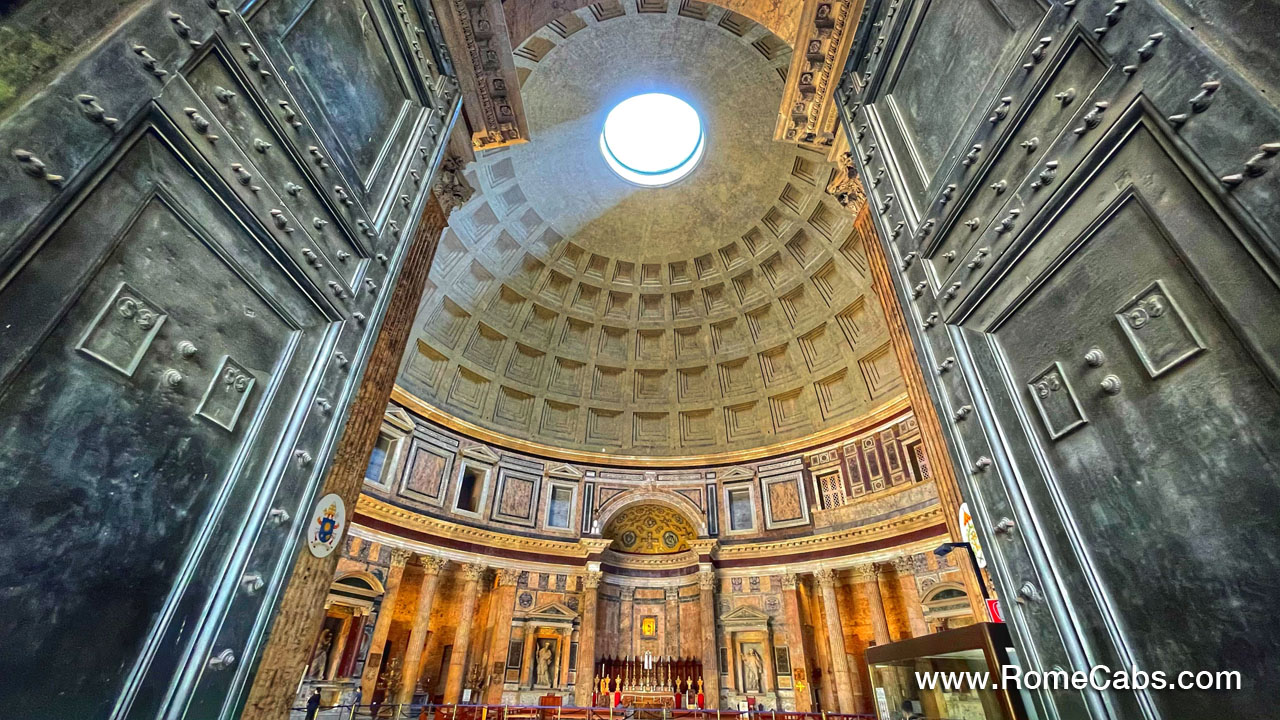
Upon stepping into the Pantheon, visitors are greeted by an enormous circular room covered by a dome, the height of which is exactly equal to the building’s diameter: 43.3 meters (142 feet). This symmetry and scale make the Pantheon feel perfectly balanced, as though one is standing within a massive sphere.
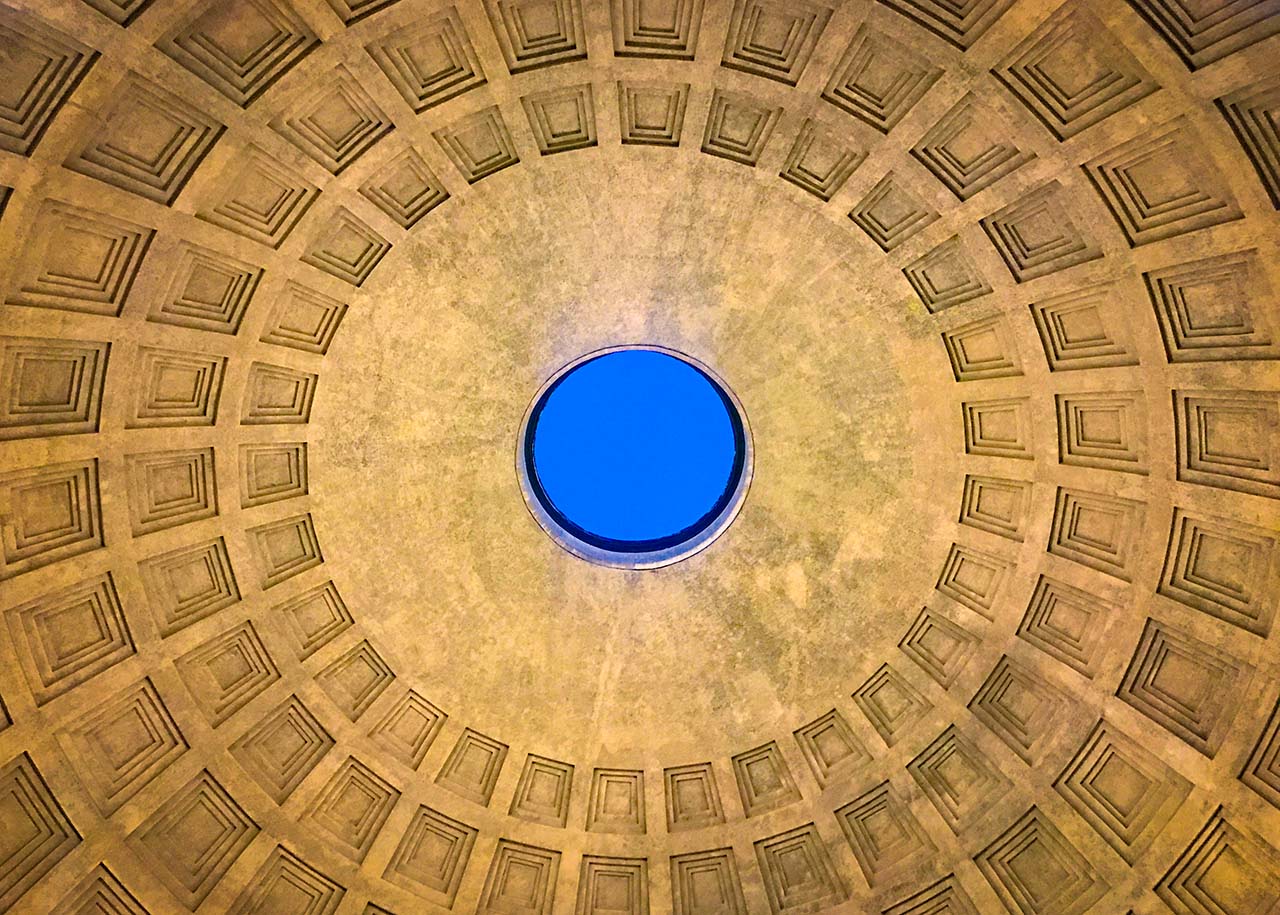
At the peak of this dome, the oculus—measuring about 9 meters (30 feet) in diameter—appears as the architectural crown jewel. The oculus is both a simple and dramatic feature: it is nothing more than an open hole, yet it is one of the most sophisticated elements of Roman design.
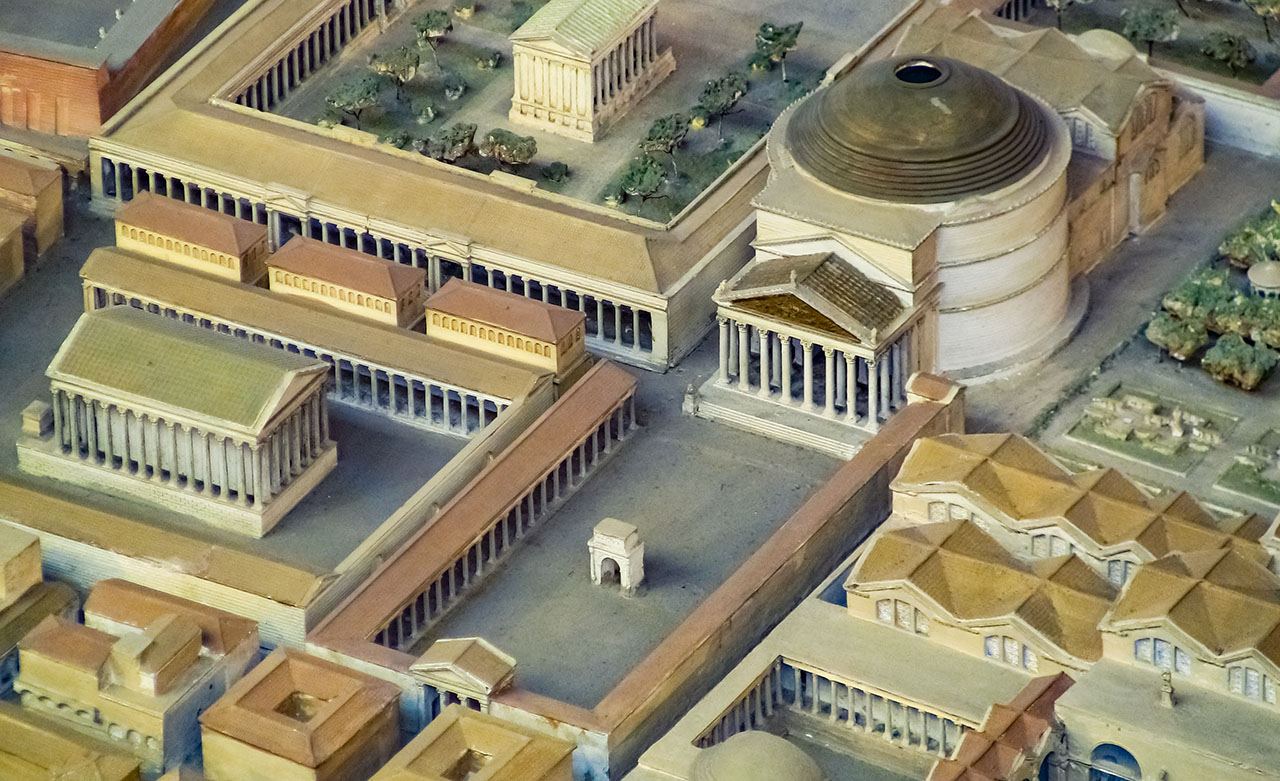
The Pantheon was originally constructed under Marcus Agrippa around 27 BC but was later rebuilt by Emperor Hadrian between 118 and 125 AD after a fire destroyed much of the original structure.
.
.
.
.
The Pantheon’s design and construction are often attributed to Hadrian, though it is possible that the architect Apollodorus of Damascus played a significant role as well. Regardless of its authorship, the Pantheon stands as the best-preserved structure of ancient Rome, largely due to the sophisticated engineering techniques employed in its construction.
One of the most remarkable aspects of the Pantheon is its dome, the largest unreinforced concrete dome in the world. This record remains unbroken, even in an era where reinforced concrete allows for far greater feats of engineering.
The dome’s construction involves a brilliant layering technique: the lower portions of the dome are made of heavier materials like travertine and tufa, while the upper parts are composed of lighter pumice and brick. This reduces the weight pressing down on the walls as the dome curves upwards, a necessary innovation that has allowed the Pantheon to survive for centuries without structural reinforcements.
.
.
.
.
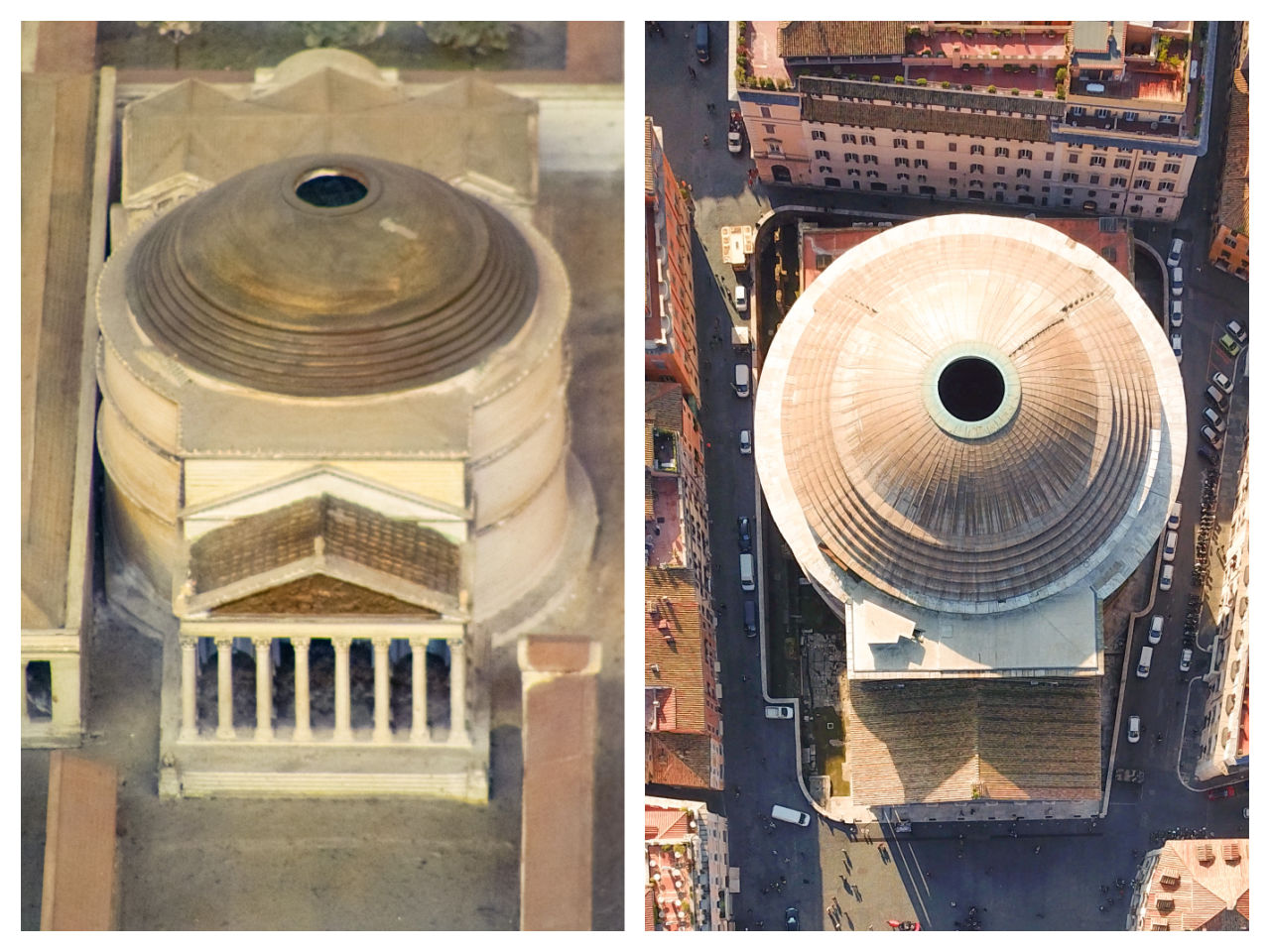
The oculus plays a key role in maintaining this balance. It reduces the weight at the dome’s apex, eliminating the need for additional support that could have compromised the building’s open, airy design. The ancient engineers knew that a solid dome this large would be too heavy to support itself, so the oculus was both an architectural necessity and a stroke of artistic genius.
.
.
The Purpose and Symbolism of the Oculus
.
Though the oculus is an impressive feat of engineering, its role goes beyond structural integrity. In Roman architecture, light and space were often imbued with symbolic meaning, and the Pantheon is no exception. The oculus serves multiple functions, from practical to spiritual, making it one of the most profound architectural features of its time.
.
.
.
.
The Pantheon Oculus as a Sundial of Light:
.
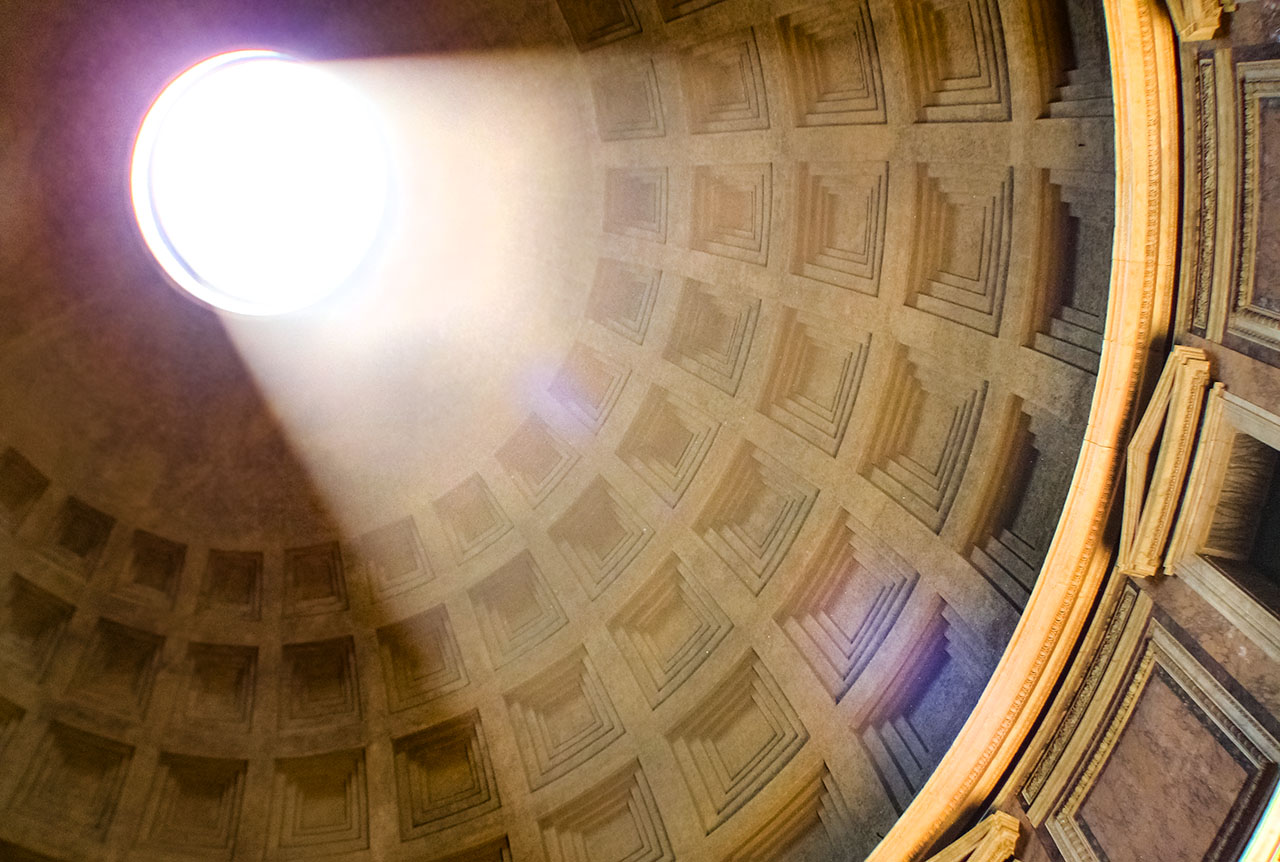
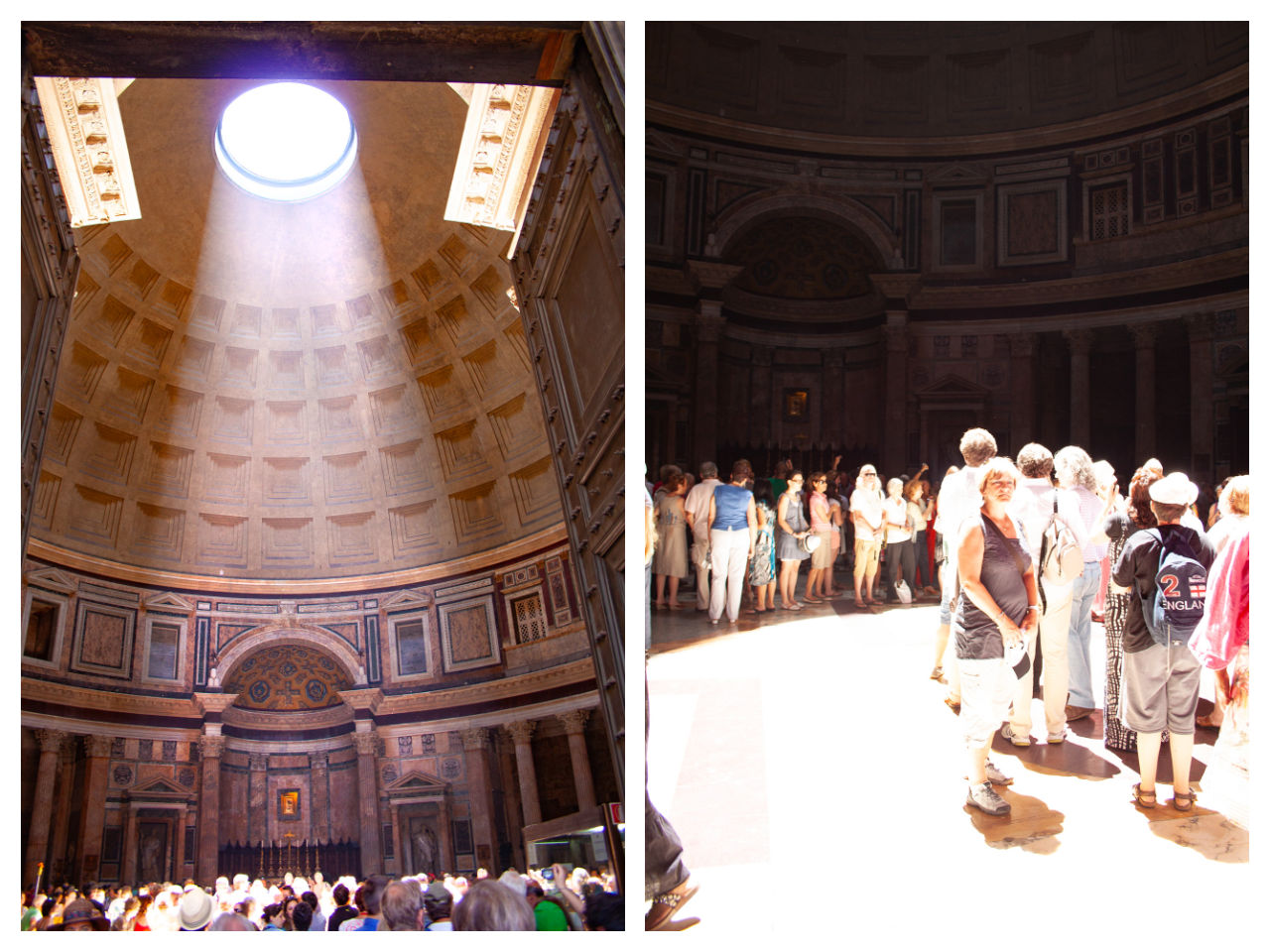
One of the most practical uses of the oculus is as a natural source of light. The only two ways that light enters the Pantheon are through the oculus and the large doorway. Throughout the day, as the sun moves across the sky, sunlight streams through the oculus and casts a moving circle of light that traces a path along the interior walls of the Pantheon.
In this way, the oculus acts like a sundial, measuring the passage of time not through shadows, as is typically the case, but through light itself. As the sunlight shifts, it illuminates different parts of the building, making the experience of standing within the Pantheon unique depending on the time of day.
This phenomenon is particularly dramatic during the Summer Solstice on June 21. On this day, around 1:08 PM, the sunlight entering through the oculus aligns perfectly with the entrance, flooding the interior with brilliant light. The beam of sunlight moves across the floor like a celestial spotlight, intensifying the sense of connection between the heavens and the earth.
At this moment, the Pantheon seems to become an instrument of cosmic alignment, a space where architecture and nature converge. The event is a reminder of the Pantheon’s symbolic role as a representation of the heavens and its ability to transform ordinary sunlight into something deeply spiritual and profound.
.
.
.
The Pantheon Oculus as a Symbol of the Heavens:
.
Many historians and scholars believe that the Pantheon was designed to represent the heavens or the cosmos. The name Pantheon is derived from Greek, meaning “all gods“, and the building was originally dedicated to the entire Roman pantheon of gods. Since the oculus serves as a direct connection to the sky, allowing natural light to flood the space, it created a sense of openness to the divine.
Standing beneath the oculus, it’s easy to imagine ancient Romans viewing the sunlight as a manifestation of the gods’ presence. The circular form of the dome, combined with the central oculus, gives the impression that the Pantheon is a model of the celestial sphere, with the oculus serving as a window through which the divine can look down upon Earth.
.
.
.
.
Cooling and Ventilation: In practical terms, the oculus also served as an early form of ventilation.
The open design allowed heat, smoke, and fumes from oil lamps or ceremonial fires to escape the building naturally, keeping the interior cool and comfortable. Even in ancient times, architects were acutely aware of the need to manage airflow in large, enclosed spaces. The oculus, in this way, was not only a spiritual design choice but a functional one as well.
Handling the Elements: One of the most surprising aspects of the Pantheon is that the oculus was deliberately left uncovered, even though it is open to the elements.
Rainfall can—and does—pour through the oculus onto the floor of the Pantheon. However, the Romans, ever practical, built a slight incline into the floor, about 30 centimeters (12 inches), to allow water to run off and drain.
Beneath the marble floors are drainage holes and channels that efficiently carry away rainwater, a testament to Roman engineering prowess.
.
.

.
.
Cultural and Religious Significance of the Oculus
.
The Pantheon’s oculus was not just an architectural feat; it played a crucial role in the religious and cultural life of ancient Rome. The building itself was dedicated to all the gods, and the oculus was a way of inviting divine light into the sacred space.
While the building’s religious function shifted over time, particularly after it was converted into a Christian church in the 7th century as the Basilica of St. Mary and the Martyrs (in Italian, Basilica di Santa Maria ad Martyres), the oculus has remained a powerful symbol of the connection between heaven and earth.
In Roman culture, light was often seen as a metaphor for the presence of the gods, and the oculus, in particular, could be interpreted as a cosmic eye, always open to the heavens. When Hadrian rebuilt the Pantheon, the Roman Empire was at the height of its power, and the Pantheon’s design reflects the emperor’s vision of a world that was orderly, harmonious, and blessed by the gods. The oculus, which literally opens up to the sky, reinforced this view by allowing light—associated with divine favor—to continuously enter the space.
Later, during the building’s use as a Christian church, the symbolism of the oculus shifted. Light continued to be associated with the divine, but instead of the Roman pantheon, the light was now seen as a manifestation of the Christian God. The sun’s rays streaming through the oculus were likened to the Holy Spirit descending upon the congregation, particularly during religious ceremonies.
.

.
.
The Pantheon’s Influence on Later Architecture
.
The Pantheon, and particularly its dome and oculus, has had a profound influence on Western architecture. Many of the great domed structures that followed drew inspiration from the Pantheon’s innovative design, including St. Peter’s Basilica, the Florence Cathedral, and even the U.S. Capitol. Architects throughout the Renaissance and beyond have studied and emulated the Pantheon, marveling at its perfect proportions and the ingenious use of light and space.
The oculus, in particular, became a key feature in many subsequent designs. Michelangelo, who designed the dome of St. Peter’s Basilica, is said to have drawn inspiration from the Pantheon’s oculus. The idea of a central, unbroken opening to the sky has been repeated in various forms in buildings around the world. In some cases, the oculus was used symbolically, as in the Pantheon, to connect a sacred space with the heavens. In others, it served more practical purposes, such as allowing light and air into a building.
.
.
.
.
Myths and Misconceptions about the Pantheon’s Oculus
.
Over the years, various myths and misconceptions about the Pantheon’s oculus have emerged. One popular myth is that the Oculus was designed to be completely waterproof, with rain magically avoiding the interior despite the open hole. This is not true—rain does enter the Pantheon, but the ingenious drainage system ensures that the water is quickly carried away, preventing any significant damage.
Another misconception is that the oculus was covered with glass or another material in ancient times, but there is no evidence to support this. The oculus has always been open to the elements, a deliberate choice by the architects which is evident in the underground drainage systems for the rain that falls through.
.
.
Why Has the Pantheon Endured While Others Crumbled?
.
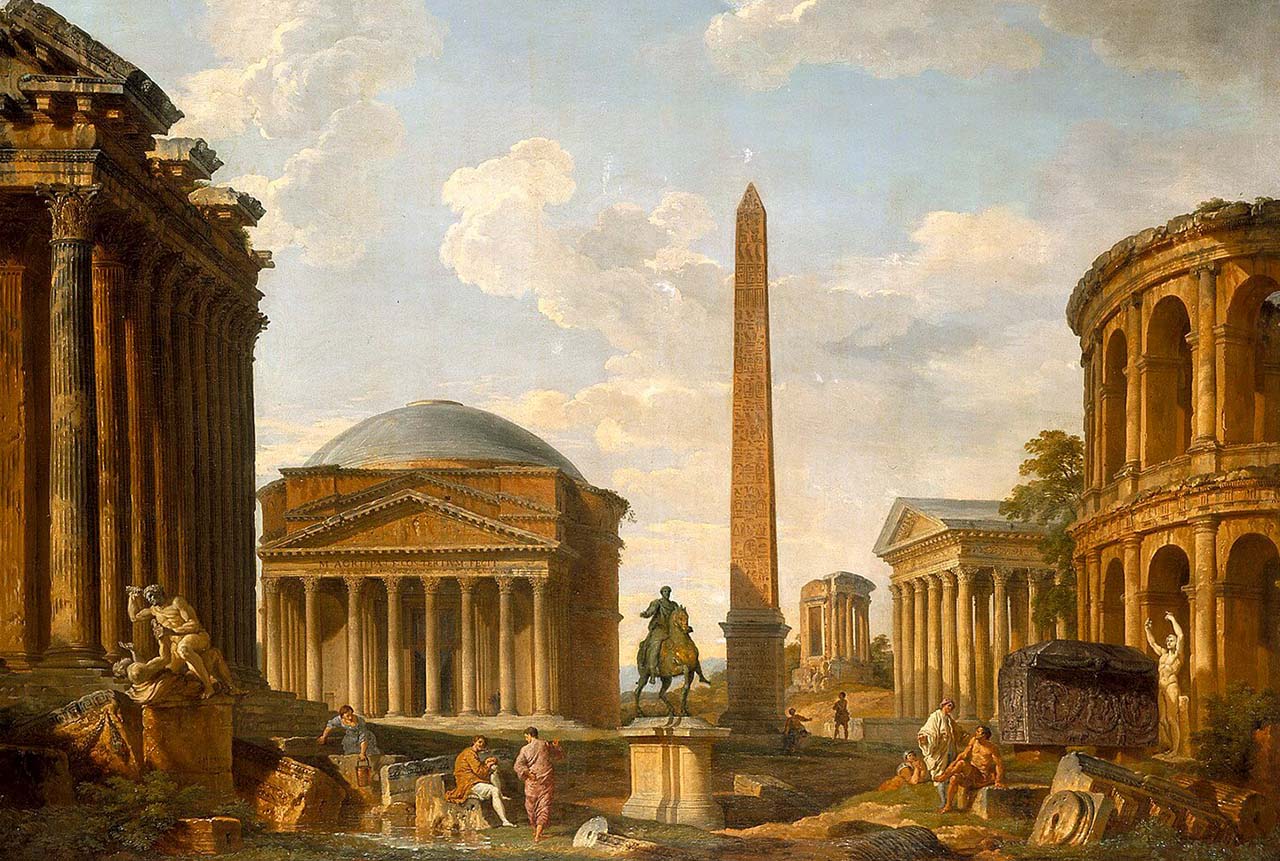
One of the most fascinating aspects of the Pantheon is its remarkable state of preservation. While other ancient Roman monuments, such as the Colosseum, have fallen into partial ruin, the Pantheon remains almost completely intact, continuing to impress visitors with its architectural perfection. So, what has allowed the Pantheon to survive nearly two millennia of wars, natural disasters, and urban transformation?
Several factors have contributed to the Pantheon’s longevity:
.
1. The Pantheon’s Religious Reuse and Protection
.
Perhaps the most crucial factor in the Pantheon’s preservation is its early conversion into a Christian church. In 609 AD, Pope Boniface IV consecrated the Pantheon as a church dedicated to St. Mary and the Martyrs. This transition from a pagan temple to a Christian church was vital, as it ensured that the building would be maintained and protected under the care of the Catholic Church.
Unlike the Colosseum, which was abandoned and later used as a quarry for building materials, the Pantheon’s religious function made it a valuable and sacred space. This protected it from the fate that befell many other Roman monuments, which were either neglected, repurposed, or dismantled for their materials during the Middle Ages and the Renaissance. The church’s active use of the Pantheon also ensured that it was regularly maintained, repaired, and adapted, keeping it structurally sound.
.
.
.
.
.
2. The Quality of Roman Engineering
.
The Pantheon’s design and construction are nothing short of a masterpiece of Roman engineering. While the Colosseum and other ancient buildings were subjected to structural failures and collapse over the centuries, the Pantheon’s unique architectural innovations have contributed to its durability.
The Pantheon’s dome, for example, is made from unreinforced concrete, which was carefully designed to reduce weight and distribute stress evenly. The Romans used progressively lighter materials toward the top of the dome, making it less likely to collapse under its own weight. This intelligent use of materials, combined with a strong foundation and the ingenious incorporation of the oculus, has allowed the Pantheon to remain structurally sound despite the passage of time.
Additionally, the Pantheon’s walls are much thicker than those of many other Roman structures, which makes it less susceptible to damage from earthquakes, a common occurrence in the region. The building’s foundation, made from heavy and stable materials, has also played a key role in its longevity, preventing it from settling unevenly or collapsing due to structural instability.
.
.

.
.
3. Pantheon’s Architectural Harmony and Adaptation
.
The Pantheon’s balanced design also contributed to its survival. The symmetrical relationship between its dome and cylindrical base helped distribute the weight evenly, which has kept the building standing without the need for external reinforcements. Many ancient structures, such as the Colosseum, had to support multiple stories, arches, and complex passageways, which made them more susceptible to collapses and structural weaknesses over time.
The Pantheon’s simplicity and clean lines made it easier to maintain over the centuries. Furthermore, its ongoing use and adaptability throughout history ensured that it remained relevant and functional. The Pantheon has been continuously adapted for different purposes, from its original role as a Roman temple to its later use as a Christian church and now as both a functioning religious site and a historical monument.
.
3. Protection from External Damage
.
Another reason the Pantheon has survived so well is its relatively sheltered location within the city. The Colosseum, on the other hand, was exposed to greater environmental and human-induced threats over the centuries.
Rome has experienced numerous sackings and invasions, including by the Visigoths in 410 AD and the Vandals in 455 AD, which led to significant damage to many monuments. However, the Pantheon, located within the more centralized and protected parts of the city, escaped much of the looting and destruction that affected other buildings.
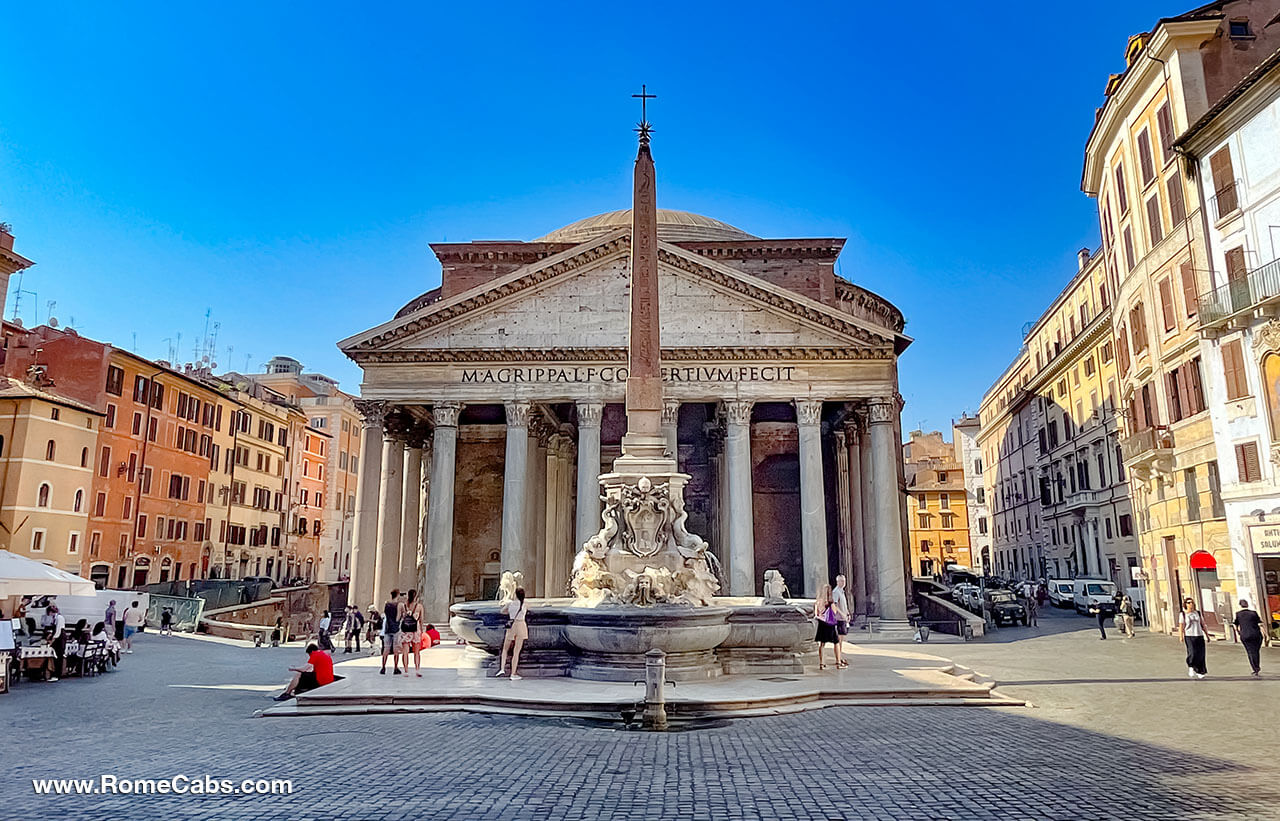
While the Colosseum was damaged by earthquakes, fires, and neglect, the Pantheon’s structural design, reinforced by its thick walls and solid foundation, helped it withstand similar natural events. Additionally, the Pantheon has never been subjected to large-scale dismantling or quarrying. The same cannot be said for the Colosseum, which was stripped of its marble and valuable materials during the Middle Ages and Renaissance to be used in the construction of other buildings, including St. Peter’s Basilica.
.
.
.
.
5. Pantheon Restorations and Preservation Efforts
.
While the Pantheon has survived in remarkable condition, it has not remained untouched by time. Over the centuries, several restorations and conservation efforts have helped to protect the building from decay. These interventions have ranged from minor repairs to more extensive preservation efforts.
During the Renaissance, Pope Urban VIII, a member of the powerful Barberini family, ordered the removal of bronze from the Pantheon’s portico in 1625. The bronze was melted down to create the grand baldachin, or canopy, over the altar of St. Peter’s Basilica, as well as to cast cannons for the Castel Sant’Angelo.
The phrase “Quod non fecerunt barbari, fecerunt Barberini”—”What the barbarians did not do, the Barberini did“—encapsulates a sharp critique of the destruction wrought upon Rome’s ancient monuments not by foreign invaders, but by the city’s own leaders during the Renaissance.
In the modern era, the Italian government and various cultural heritage organizations have taken steps to ensure the Pantheon remains intact for future generations. Regular maintenance of the roof, dome, and drainage system has helped to protect the building from environmental damage, while modern technologies like laser cleaning have been employed to remove centuries of grime and pollution without harming the original structure.
.

.
.
6. The Pantheon’s Continued Relevance
.
The Pantheon’s enduring status as a symbol of Roman greatness and a masterpiece of architectural innovation has ensured that it continues to be valued and cared for throughout the ages. Unlike the Colosseum, which lost its original function after the fall of the Roman Empire and was later used for less prestigious purposes like animal housing and stone quarrying, the Pantheon has always been seen as a site of cultural and religious significance.
This reverence for the building—both as a Christian church and as an architectural icon—has helped protect it from the neglect and misuse that affected other ancient structures. Today, the Pantheon is not only a tourist attraction but also a functioning place of worship.
Every year on Pentecost, a ceremony is held inside the Pantheon where rose petals are dropped through the oculus to symbolize the descent of the Holy Spirit. This blending of ancient architecture with ongoing cultural and religious practices ensures that the Pantheon remains a living, breathing part of Rome’s history.
.
.

.
.
.
Modern Pantheon for Visitors
.
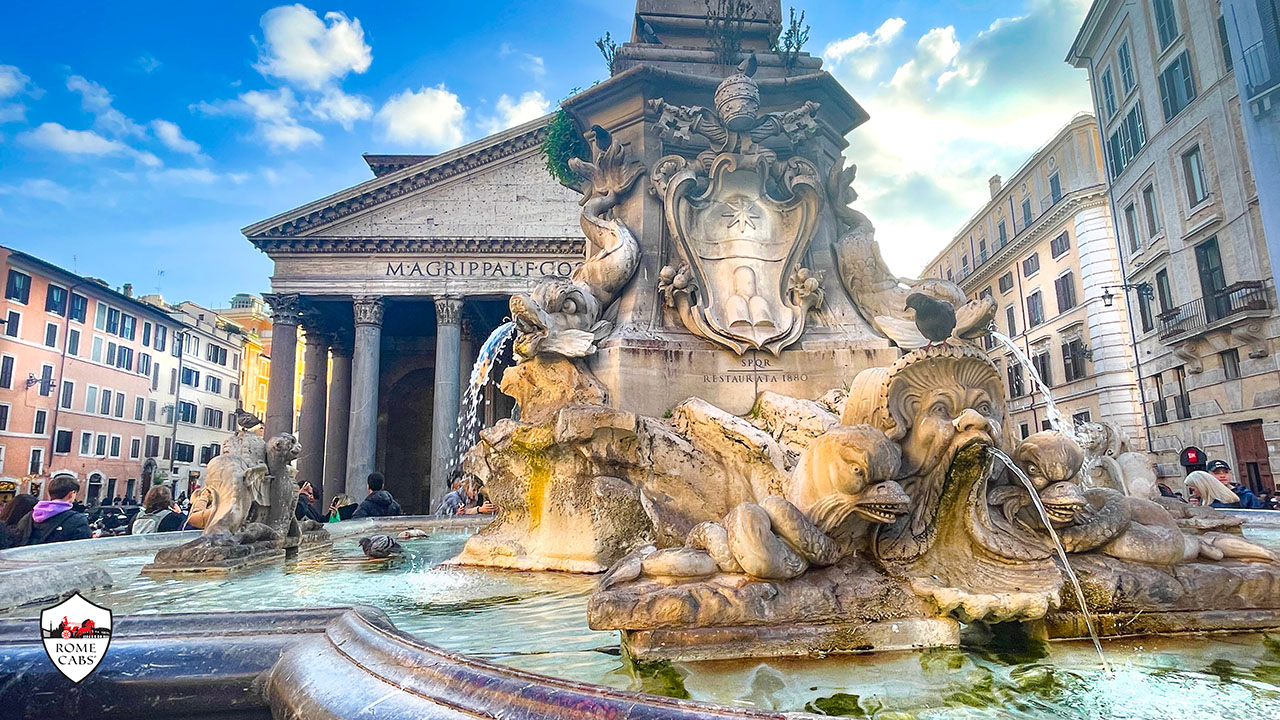
Today, the Pantheon is one of Rome’s most visited sites, attracting millions of tourists each year. The experience of standing beneath the oculus is as powerful today as it was two thousand years ago. Visitors often stand transfixed, watching the light move across the building’s interior or gazing upward at the sky framed by the oculus.
Despite its age, the Pantheon remains remarkably well-preserved. Conservation efforts over the years have ensured that the building—and the oculus—continue to withstand the test of time. Modern architects and engineers have marveled at the longevity of the Pantheon, particularly the fact that it has survived without significant structural reinforcements. The oculus, which could easily have been seen as a weakness, has instead proven to be a crucial element in the building’s design, contributing to its durability and resilience.
To visit the Pantheon, tickets are required. Currently, tickets are about 5 Euros Per Person and can be purchased online or on-site at the ticket counter. Expect long lines and wait times due to huge crowds.
.
.
.
The oculus of the Pantheon is much more than a hole in the ceiling—it is a symbol of human ingenuity, divine inspiration, and architectural mastery. For nearly two thousand years, it has allowed light and air to pour into the Pantheon, creating a space that feels both grounded and ethereal. Its design has influenced countless buildings and continues to inspire architects and visitors alike. In the end, the oculus serves as a reminder that even the most advanced technologies can learn from the past, where simplicity and elegance combine to create something timeless.
.
Check out our other Italy Travel Blogs by RomeCabs:
https://rome-cabs.org/
https://rome-cabs.net/
https://romecabsdotnet.wordpress.com/
https://romecabs.wordpress.com/
.
* Find RomeCabs online also on:
- RomeCabs FACEBOOK
- RomeCabs PINTEREST
- RomeCabs TWITTER
- RomeCabs INSTAGRAM
- RomeCabs FLICKR Photo Gallery
- RomeCabs Recommended on Cruise Critic
.
.
.
.
.
.
.

.
.


 RomeCabs Transfers and Tours in Italy (Rome Cabs)