5 Amazing Churches in Rome you can’t miss (Beyond St. Peter’s Basilica)
Buongiorno and welcome to RomeCabs Rome Travel blog! Rome, the Eternal City, is renowned for its profound history and unparalleled religious significance. While St. Peter’s Basilica stands as a monumental symbol of the Catholic Church, the city is adorned with numerous other churches that are equally compelling and steeped in history. While it may not be possible to visit too many churches during one trip to Rome (as there are more than 900 churches in Rome), we included the following 5 amazing churches in Rome you can’t miss on your next trip to Italy that showcase the city’s rich spiritual and architectural heritage.
.
Amazing Churches in Rome you can’t Miss
.
.
1. Basilica of Santa Maria Maggiore
.
The Basilica of Santa Maria Maggiore is one of Rome’s four major basilicas and stands as a testament to the grandeur and evolution of early Christian architecture. Dedicated to the Virgin Mary, this basilica is among the oldest in the city, with its origins dating back to the 5th century. It is a pivotal site for both its historical significance and its architectural splendor, making it an essential destination for those delving into Rome’s spiritual and artistic heritage.
The basilica was initially constructed under the patronage of Pope Sixtus III between 432 and 440 AD. It was built to commemorate the Council of Ephesus, which affirmed the title of Theotokos (Mother of God) for the Virgin Mary. The foundation of the church is steeped in legend, with a story that a miraculous snowfall on the Esquiline Hill in August (later celebrated as the Feast of the Assumption) guided the pope to the site where the church would be built.
Exterior: The basilica’s façade is a striking example of Romanesque architecture with elements of classical influence. The exterior is relatively austere, but the grandeur of the basilica becomes apparent as one steps inside.
Interior: Inside, Santa Maria Maggiore boasts a grand nave that is supported by majestic columns. The interior features a harmonious blend of architectural styles, including early Christian, Renaissance, and Baroque elements, reflecting the church’s evolution over the centuries. The use of marble and elaborate mosaics enhances the sense of opulence and sanctity.
.

.
.
Mosaics of Santa Maria Maggiore:
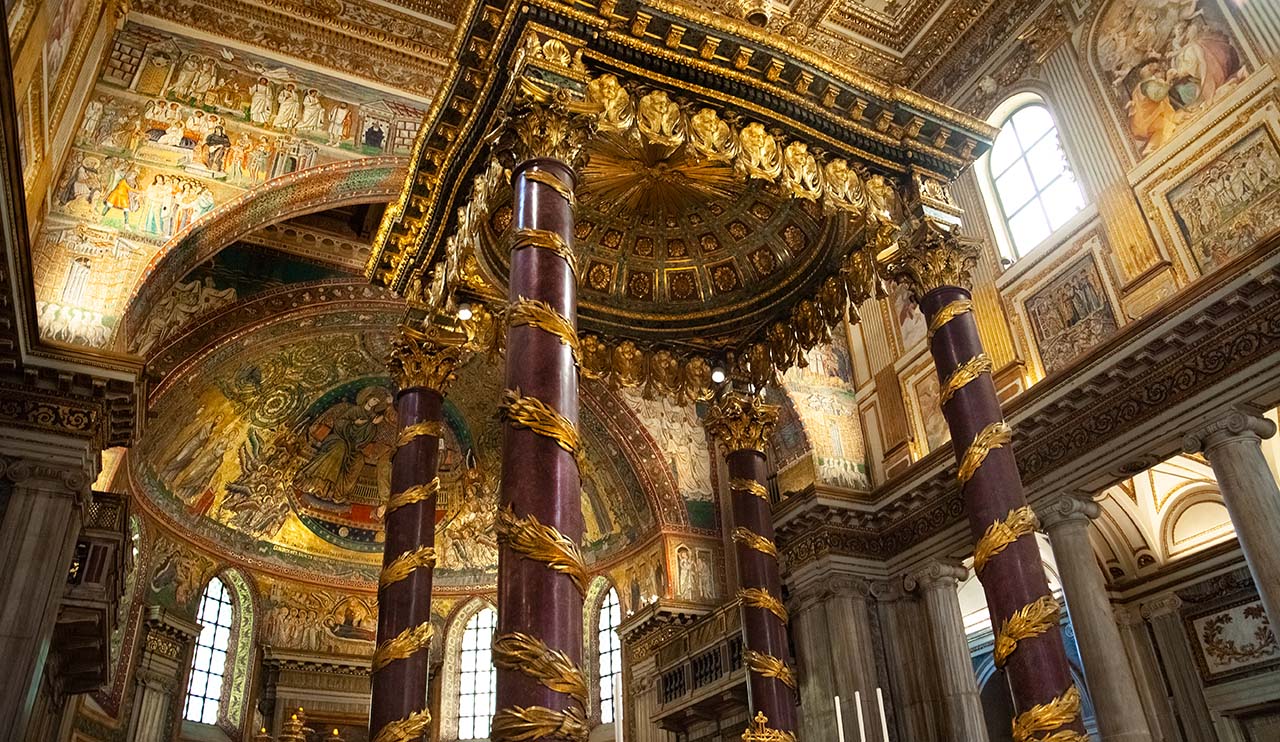
Santa Maria Maggiore is renowned for its 5th-century mosaics, which are among the most complete and well-preserved examples from the early Christian period. These mosaics offer a vivid portrayal of biblical stories and theological concepts, serving as both artistic masterpieces and religious texts.
The mosaics in the nave depict scenes from the Old Testament, including the stories of the Creation and the Flood. These works are notable for their rich colors, intricate patterns, and the ability to convey complex theological ideas through visual art.
Above the triumphal arch, the mosaics depict scenes from the life of Christ, including the Adoration of the Magi and the Last Supper. These images are not only artistically significant but also serve as a narrative of salvation history, providing a visual journey through the key events of Christian theology.
.
.
.
.
Borghese Chapel:
The Borghese Chapel, also known as the Pauline Chapel, is famed for housing the revered icon of the Salus Populi Romani (Protectress of the Roman People). This image of the Virgin Mary, attributed with miraculous powers, has been a focal point of devotion and pilgrimage for centuries.
The chapel itself is a masterpiece of Baroque art, characterized by its elaborate frescoes and gilded decorations. The ornate altarpiece, the richly decorated ceiling, and the intricate marble work create a visually stunning environment that enhances the veneration of the icon.
.
.

.
The Holy Crib:
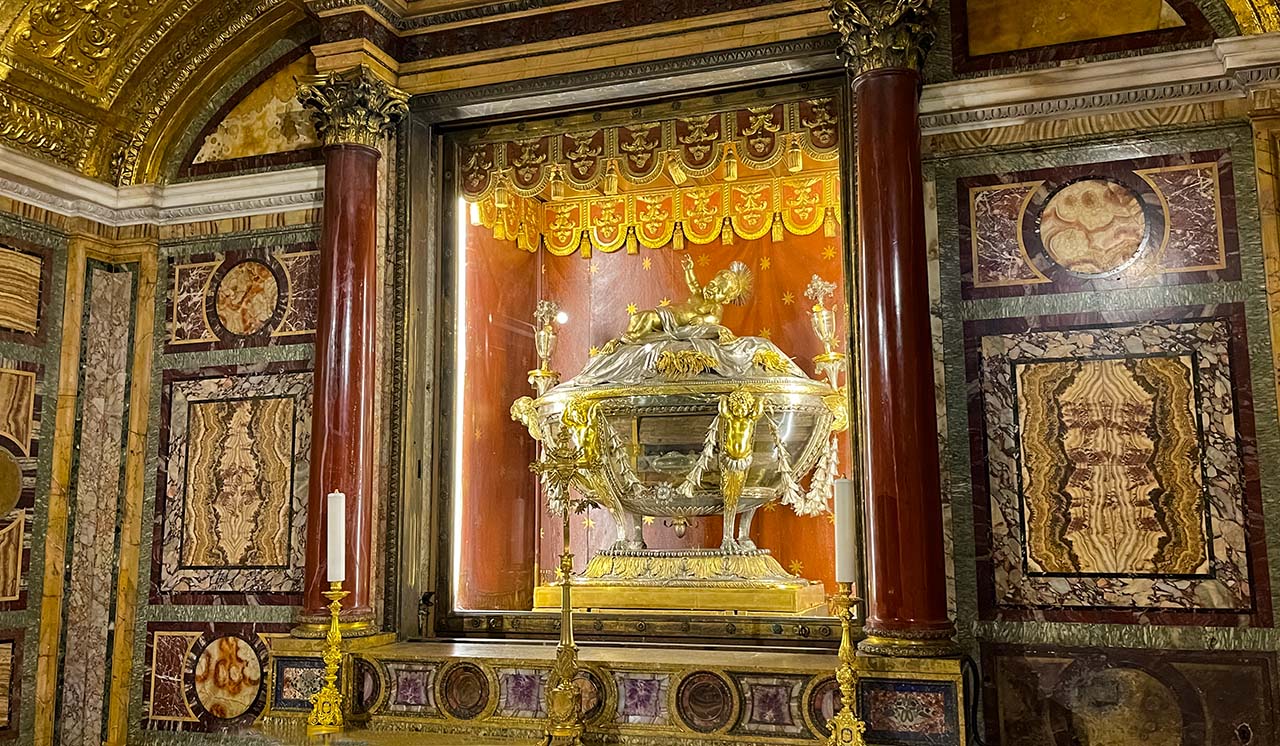
Beneath the high altar of Santa Maria Maggiore lies the Holy Crib, a reliquary said to contain pieces of the wooden crib from the Nativity of Jesus. This relic, encased in a gilded crystal reliquary, draws pilgrims and visitors who come to pay homage and reflect on the humble beginnings of Christ.
.
.
.
.
Gian Lorenzo Bernini’s Tomb in Santa Maria Maggiore
Gian Lorenzo Bernini, a towering figure of Baroque art and architecture, is interred in the Basilica of Santa Maria Maggiore. His tomb, located in the basilica, stands as a tribute to his immense contributions to art and architecture. Bernini, whose work includes masterpieces such as the Ecstasy of Saint Teresa and the redesign of St. Peter’s Square, is celebrated for his innovative and dynamic approach to sculpture and architectural design.
.
.
2. Santa Maria degli Angeli e dei Martiri
.
Located in Piazza della Repubblica, Santa Maria degli Angeli e dei Martiri is a striking church in Rome that embodies a fascinating blend of ancient and Renaissance artistry. Originally constructed within the ruins of the Baths of Diocletian, this church is a testament to Michelangelo’s architectural genius and Rome’s layered history.
.
History and Architecture of Santa Maria degli Angeli e dei Martiri :
Portions of Santa Maria degli Angeli e dei Martiri was designed by Michelangelo Buonarroti in the late 16th century. The church was built inside the remains of the Baths of Diocletian, one of the largest and most lavish public baths of ancient Rome. The decision to repurpose the ancient baths into a church was driven by Pope Pius IV, who sought to preserve the grandeur of the ruins while creating a new space for worship.
Michelangelo’s design ingeniously integrates the remnants of the ancient baths with Renaissance elements. The church features a grand façade that merges classical and Renaissance styles, with a striking simplicity that highlights the raw beauty of the ancient structures. The original architectural features of the baths, including the imposing arches and vaulted ceilings, are seamlessly incorporated into the church’s design, creating a dramatic and awe-inspiring interior.
.
.

.
.
.
Interior Highlights of Santa Maria degli Angeli e dei Martiri :
.
The Nave and Sanctuary: The church’s interior is dominated by a large, barrel-vaulted nave, a characteristic of Michelangelo’s architectural style. The sanctuary area is adorned with intricate details and delicate ornamentation that contrast beautifully with the rugged ancient walls. The combination of the old and new creates a unique spiritual atmosphere, blending the majesty of ancient Rome with Renaissance elegance.
Frescoes and Artworks: The interior of Santa Maria degli Angeli e dei Martiri is decorated with significant artworks. The church is home to frescoes by Daniele da Volterra, a pupil of Michelangelo. These frescoes add a vibrant and dynamic element to the church, enriching the visual experience for visitors. The art is carefully integrated into the architectural framework, creating a harmonious fusion of painting and structure.
The Meridian Line: One of the most intriguing features of the church is its meridian line, a large brass line set into the floor that was part of an astronomical instrument used to determine the solar year. This feature, designed by the Italian astronomer Giovanni Domenico Cassini, reflects the church’s role as a center of both spiritual and scientific inquiry.
.
.

.
.
.
3. San Pietro in Vincoli (St. Peter in Chains Basilica)
.
The Basilica di San Pietro in Vincoli, also known as St. Peter in Chains, is a distinguished church in Rome that offers a unique blend of artistic brilliance and spiritual significance. Located on the Esquiline Hill, this basilica is renowned for housing Michelangelo’s acclaimed statue of Moses and the sacred relics of the chains that bound Saint Peter. With its rich historical context, impressive architecture, and profound religious artifacts, the basilica stands as a notable destination for both art lovers and pilgrims.
The church was originally founded in the 5th century by Pope Leo I. It was constructed to house the relics of Saint Peter’s chains, which were believed to have been brought from Jerusalem. The basilica’s dedication to Saint Peter, the leader of the apostles, and its role in housing these significant relics underscore its importance in early Christian tradition.
.
.
.
.
Highlights of Basilica of St. Peter in Chains
.
Michelangelo’s Moses:
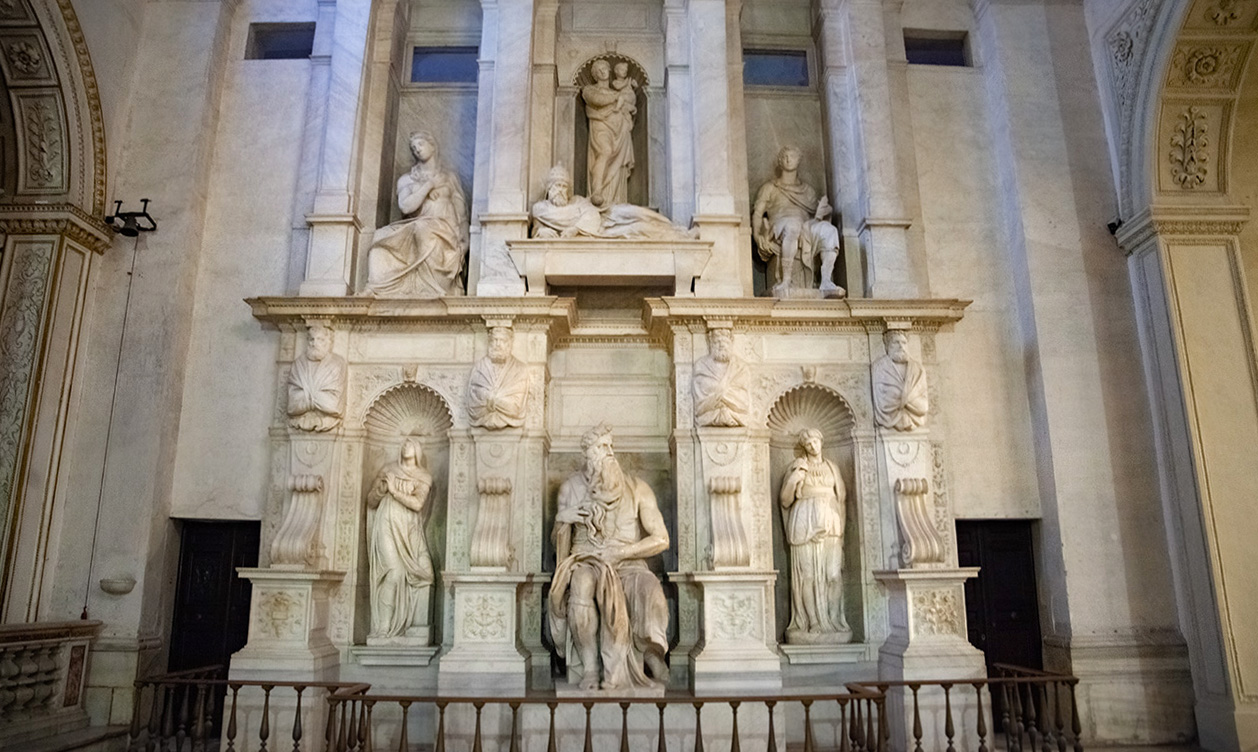
One of the most compelling reasons to visit St. Peter in Chains is to see Michelangelo’s statue of Moses. Commissioned by Pope Julius II for his tomb, the statue was completed in 1515. It is renowned for its exceptional realism and dramatic expression, capturing Moses with an intense gaze and dynamic presence. Michelangelo’s meticulous attention to detail is evident in the figure’s muscular form, intricate facial expression, and the symbolic horns on Moses’ head, a result of a translation error from Hebrew texts referring to rays of light.
The Moses statue stands out as a masterpiece of Renaissance sculpture, showcasing Michelangelo’s unparalleled skill in rendering human emotion and physicality. The statue’s commanding presence and intricate details make it a focal point of the basilica and a testament to Michelangelo’s genius.
.
.
.
.
Relics of St. Peter:
The basilica is renowned for housing the relics of the chains that bound Saint Peter during his imprisonment in Jerusalem. According to tradition, these relics were brought to Rome by Emperor Constantine in the 4th century and were believed to have been preserved in the basilica since then.
Legend holds that when the chains from Jerusalem were brought to Rome, they miraculously fused with the chains that bound Peter during his Roman imprisonment. This miraculous event symbolizes the unity and continuity of the Church and enhances the spiritual significance of the relics.
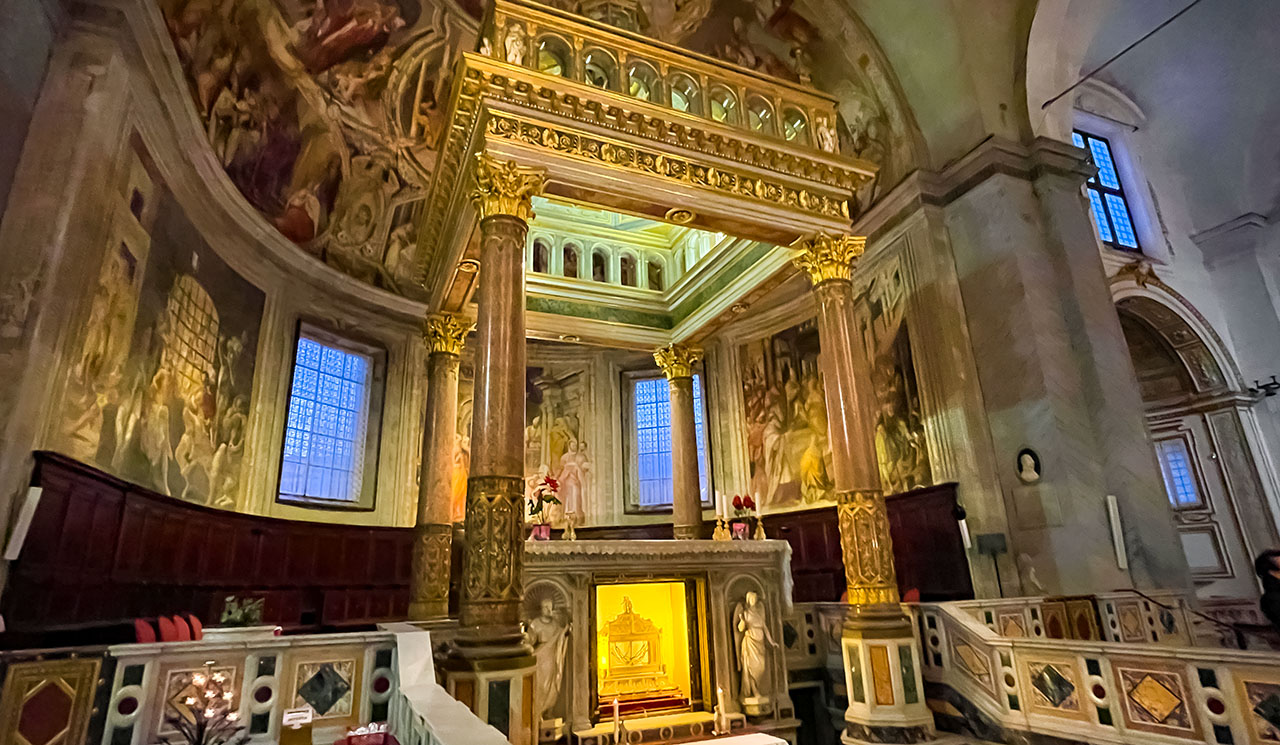
The chains are displayed in a beautifully adorned reliquary beneath the main altar of the basilica. Pilgrims and visitors come to venerate these relics, reflecting on the suffering and faith of Saint Peter, and seeking spiritual inspiration from his example.
.
.

.
.
Art and Architecture of Basilica of St. Peter in Chains:
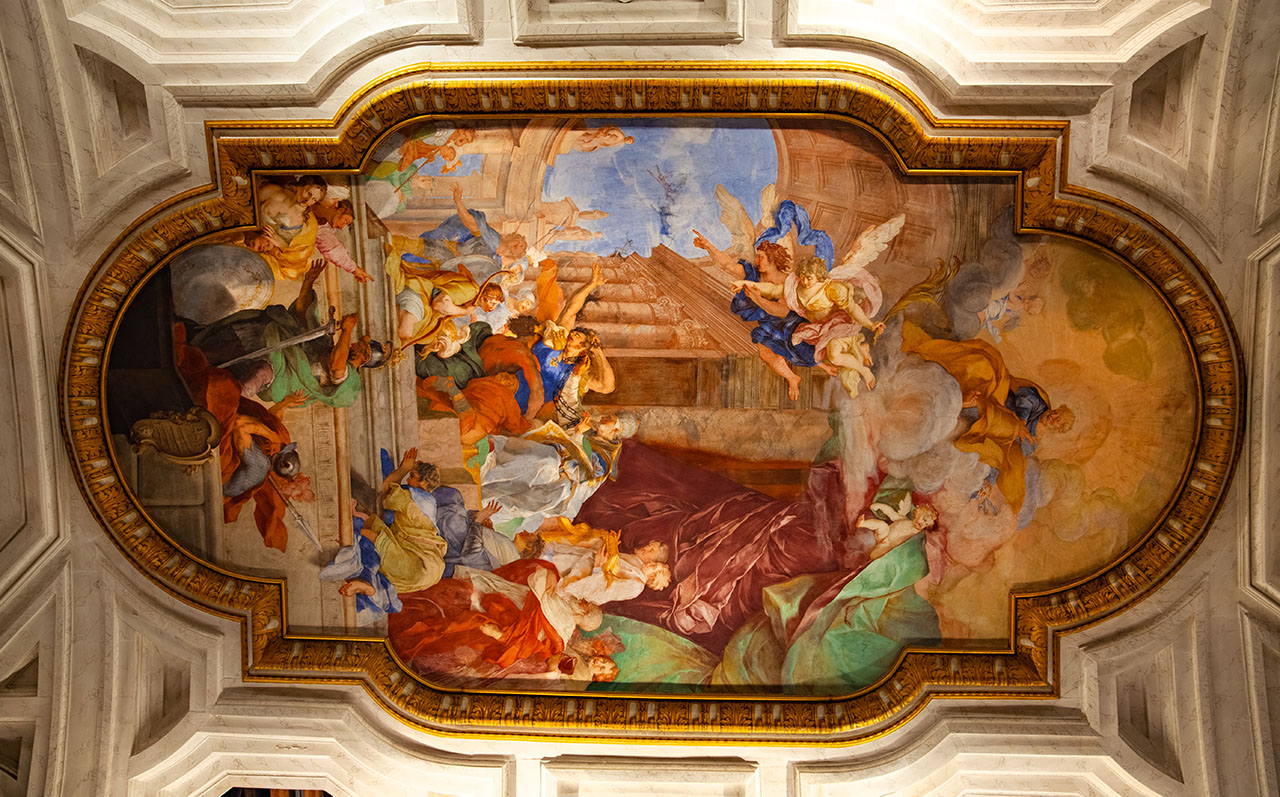
St. Peter in Chains features a rich array of Renaissance art and architectural elements. The basilica’s nave is adorned with elegant marble columns and features an array of frescoes and decorative elements that reflect its historical and artistic evolution.
The church houses several important frescoes, including works by artists like Masaccio and others who contributed to its visual splendor. The intricate decorations and vibrant colors add to the basilica’s spiritual and aesthetic ambiance.
The basilica’s interior is designed to evoke a sense of reverence and contemplation. The serene ambiance, coupled with the historical artifacts and artistic masterpieces, offers a profound and immersive experience for those who visit.
.
.
.
.
.
The Basilica di St. Peter in Chains is a remarkable destination in Rome, offering a compelling blend of Renaissance artistry and deep spiritual significance. Michelangelo’s Moses stands as a pinnacle of artistic achievement, while the relics of Saint Peter provide a profound connection to early Christian history. The basilica’s rich architectural and artistic heritage, combined with its serene and contemplative atmosphere, makes it a must-visit site for those exploring Rome’s religious and cultural landscape.
.
.
4. Santa Maria Sopra Minerva
.
Santa Maria Sopra Minerva is a rare and striking example of Gothic architecture in Rome, a city predominantly known for its Baroque and Renaissance masterpieces. Located in the historic center, just behind the Pantheon, this church stands out for its architectural uniqueness and its rich historical and artistic heritage. Built on the site of an ancient Roman temple dedicated to Minerva, the church seamlessly blends elements of its ancient past with the Gothic style introduced during the Middle Ages.
The church is built on the remains of a Roman temple dedicated to Minerva, the goddess of wisdom. The name “Sopra Minerva” means “over Minerva“, indicating the church’s location atop this ancient site. Construction of the church began in the late 13th century, around 1280, during the papacy of Nicholas IV, and it was completed in the early 14th century.
The choice of the Gothic style for Santa Maria Sopra Minerva is significant, as it contrasts with the more commonly seen Romanesque and Baroque styles in Rome. The church reflects the architectural innovations of the time, including the use of pointed arches, ribbed vaults, and flying buttresses, although some of these features are less pronounced than in the Gothic cathedrals of northern Europe.
.
.
.
.
.
Architectural Highlights of Santa Maria Sopra Minerva
.
Facade: The church’s façade is a rare example of Gothic architecture in Rome, featuring pointed arches and intricate sculptures. The façade is relatively simple compared to other Gothic churches but includes elements such as a rose window and decorative tracery that highlight its Gothic roots.
.
Bernini’s Elephant:
The Elephant and Obelisk: Located in the Piazza della Minerva, right in front of the church, Bernini’s Elephant is a famous and charming sculpture created by Gian Lorenzo Bernini in 1667. The sculpture consists of a marble elephant carrying an ancient Egyptian obelisk on its back. The obelisk, which stands about 3.6 meters (12 feet) tall, is an ancient Roman artifact that dates back to the reign of Emperor Diocletian.
The elephant is depicted in a playful, almost whimsical manner, with its trunk raised and a gentle, supportive stance. The choice of an elephant to carry the obelisk was a clever and humorous design by Bernini, who was commissioned to create this work by Pope Alexander VII. The sculpture serves as a symbol of the pope’s enduring strength and resilience. The obelisk itself, with its ancient Egyptian origins, represents Rome’s cultural and historical connections to antiquity.
.
.

.
.
Interior: The interior of Santa Maria Sopra Minerva is characterized by its spacious nave and soaring vaulted ceilings. The church’s Gothic arches and ribbed vaults create a dramatic effect, emphasizing vertical lines and a sense of height. The use of colorful stained glass windows adds to the interior’s luminous quality, filtering light into the sacred space.
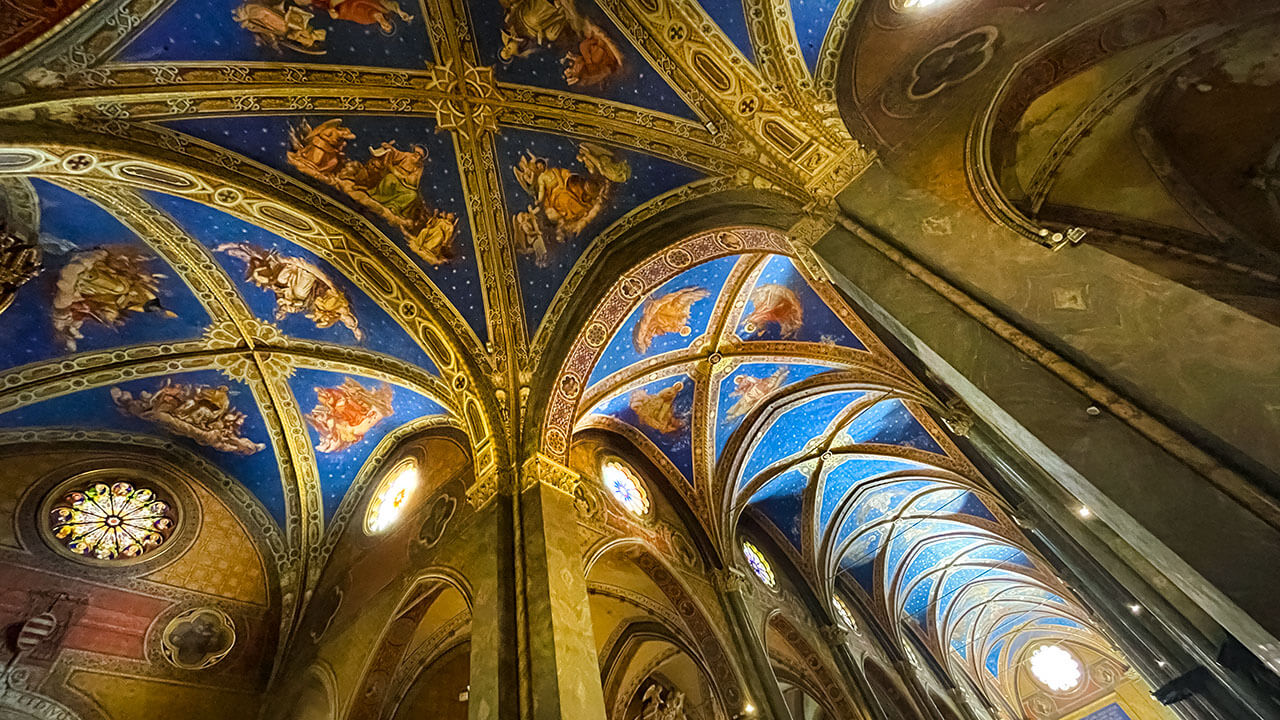
The blue ceiling of Santa Maria Sopra Minerva is a striking feature that enhances the church’s interior ambiance. The ceiling is adorned with rich blue tones and gilded star patterns, creating a celestial effect that complements the Gothic architecture. The use of blue and gold evokes a sense of heavenly tranquility and adds to the church’s spiritual atmosphere.
The blue ceiling is more than just a decorative element; it symbolizes the divine and eternal nature of the heavens. The celestial motif aligns with the Gothic emphasis on verticality and the aspiration to reach toward the divine. The vibrant colors and intricate patterns are designed to inspire awe and reverence, drawing the eyes upwards and reinforcing the church’s sacred character.
.
.
.
.
Notable Features and Artworks inside Santa Maria Sopra Minerva:
.
Michelangelo’s Christ the Redeemer:
One of the most significant features of the church is Michelangelo’s statue of Christ the Redeemer. Carved in 1521, this statue depicts Christ in a contemplative pose with a serene expression, showcasing Michelangelo’s masterful sculptural skills.
The statue was originally intended for a tomb but was placed in Santa Maria Sopra Minerva due to its association with the Dominican order. Michelangelo’s work here is a testament to his ability to capture profound spiritual themes with remarkable realism and emotional depth.
.
.

.
.
Tomb of Saint Catherine of Siena:
Santa Maria Sopra Minerva is also the final resting place of Saint Catherine of Siena, one of the Church’s most venerated saints. Her tomb, located in the church’s main altar area, is adorned with an ornate marble monument. Saint Catherine’s relics are housed here, and the tomb is a significant pilgrimage site.
Santa Maria Sopra Minerva stands out not only for its rare Gothic architecture in Rome but also for its distinctive artistic features. Bernini’s Elephant and the church’s blue ceiling contribute to its unique charm and historical significance. The Elephant and Obelisk in the piazza showcases Bernini’s inventive spirit and technical prowess, while the blue ceiling enhances the church’s celestial and spiritual ambiance. Together, these elements enrich the experience of visiting Santa Maria Sopra Minerva, offering a compelling blend of Gothic architecture, Baroque artistry, and historical depth.
.
.
5. San Paolo fuori le Mura (Basilica of St. Paul Outside the Walls)
.
The Basilica di San Paolo fuori le Mura, or St. Paul Outside the Walls, is one of Rome’s four major basilicas and holds a profound place in the city’s religious and architectural heritage. Situated outside the ancient city walls, this grand basilica is revered not only for its architectural splendor but also for its traditional association with the burial site of Saint Paul the Apostle. The basilica serves as a major pilgrimage destination and a testament to both early Christian and Renaissance artistry.
The original basilica was constructed by Emperor Constantine in the early 4th century, making it one of the oldest Christian churches in Rome. The present structure, however, was built following a devastating fire in 1823 that destroyed the original church. The current basilica was reconstructed under the direction of Pope Leo XII and completed in 1854. The new design carefully preserved the architectural grandeur and religious significance of the original.
As one of the four major basilicas of Rome, St. Paul Outside the Walls holds a unique place in Christian tradition. It is traditionally believed to be the burial site of Saint Paul, who was martyred in Rome around 64-67 AD. The basilica’s location outside the ancient city walls, where Saint Paul was thought to have been buried, adds to its sacred significance.
.
.
.
.
Architectural Highlights of St. Paul Outside the Walls
.
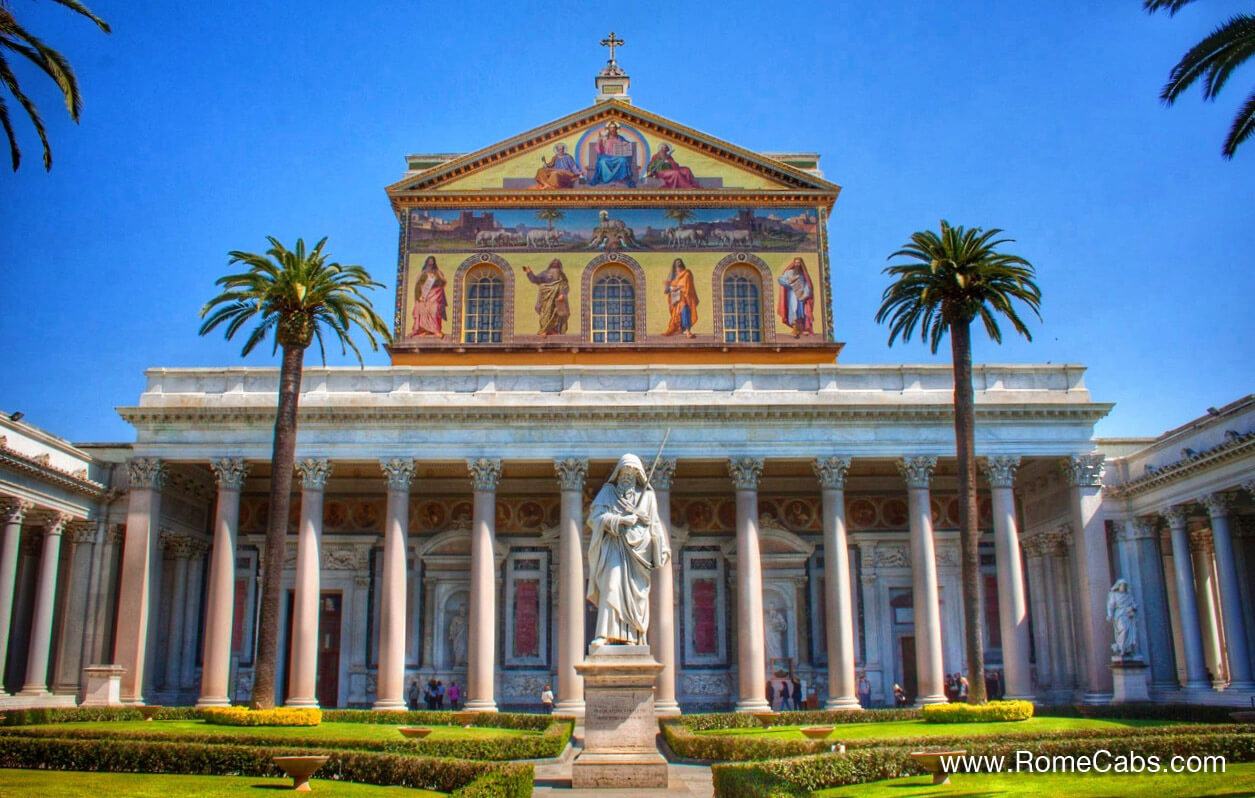
Facade: The basilica’s façade is a striking example of neoclassical architecture. The grand entrance is adorned with a series of Corinthian columns and features a portico with a bronze door that was added in the 19th century. The façade’s grandeur reflects the basilica’s status as a major pilgrimage site and its importance in the Catholic tradition.
Interior: The interior of St. Paul Outside the Walls is equally impressive, characterized by its vast nave and exquisite mosaics. The basilica is built in the traditional basilican plan with a long nave, side aisles, and a large apse. The use of marble, gold, and elaborate mosaic work creates a sense of opulence and reverence. The high ceilings and expansive space enhance the basilica’s solemn and awe-inspiring atmosphere.
.
.

.
.
Mosaics and Decorations inside St. Paul Outside the Walls
.
The basilica is renowned for its stunning mosaics, which are among the most beautiful and historically significant in Rome. The mosaics depict scenes from the life of Saint Paul and various episodes from the Bible, providing a visual narrative of Christian history and theology.
The apse is adorned with a magnificent mosaic of Christ in Majesty, surrounded by saints and angels. This mosaic dates back to the 5th century and was restored during the 19th-century reconstruction. It serves as a focal point of the basilica’s interior, highlighting the divine glory of Christ and the veneration of saints.
.
.

.
.
The mosaics along the nave illustrate the life of Saint Paul and his missionary journeys. These works are intricately designed and use vibrant colors to capture key moments in the saint’s life, making them both an artistic and theological treasure.
.
Tomb of Saint Paul:
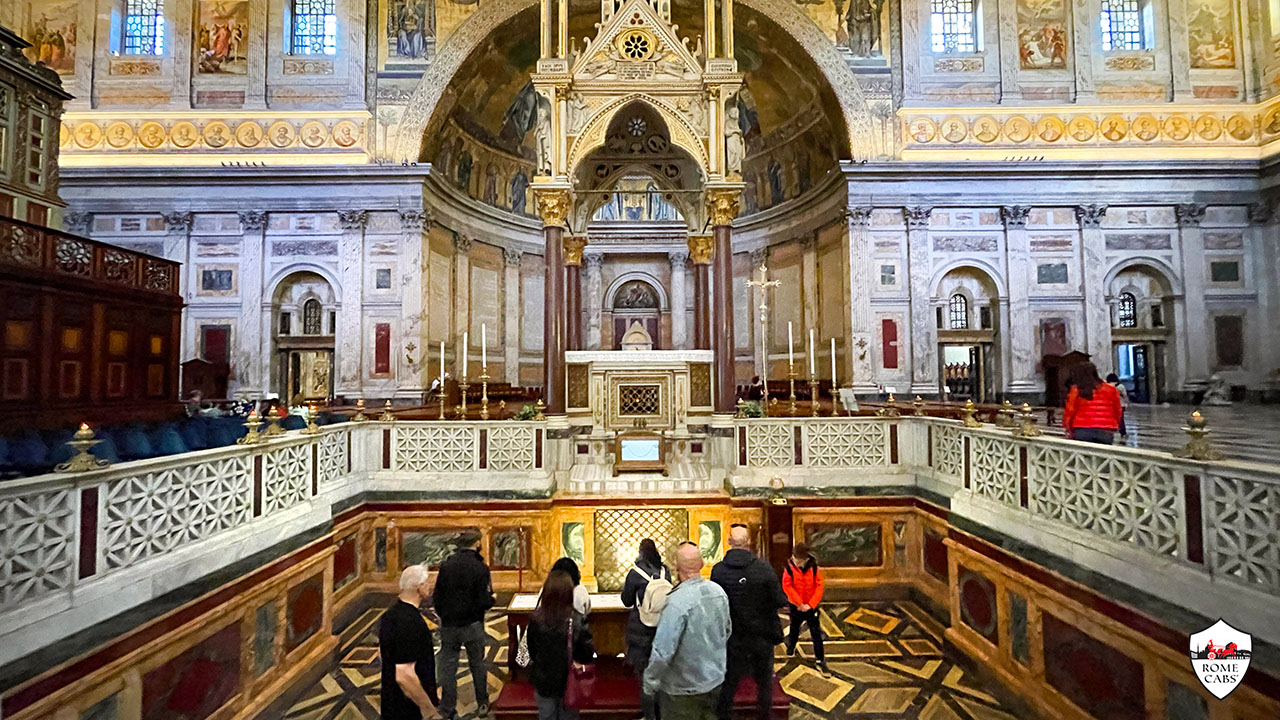
The central feature of the basilica is the tomb of Saint Paul, which is located beneath the high altar in the Confessio. This sacred area is marked by a beautifully decorated baldaquin, which shelters the tomb and emphasizes its importance as a place of veneration.
The tomb itself is a simple yet profound structure, where the remains of Saint Paul are believed to rest. It is enclosed in a marble shrine, and the area is often adorned with candles and flowers by pilgrims and visitors.
The tomb of Saint Paul is a major pilgrimage destination for the faithful. The basilica’s status as the final resting place of one of Christianity’s most significant figures makes it a place of deep spiritual significance. Pilgrims come to pay their respects, seek blessings, and reflect on the teachings and legacy of Saint Paul.
.
.
.
.
Cloister and Courtyard of St. Paul Outside the Walls:
The basilica is surrounded by a beautiful cloister with a serene courtyard. The cloister features elegant columns and arches, providing a peaceful space for reflection and contemplation. The courtyard is adorned with sculptures and inscriptions that enhance the historical and spiritual ambiance of the basilica.
The Basilica of St. Paul Outside the Walls is a majestic and spiritually significant landmark that embodies the grandeur of early Christian architecture and the deep reverence for Saint Paul. Its stunning mosaics, grandiose façade, and the revered tomb of Saint Paul make it a central site for both pilgrims and art enthusiasts. The basilica’s rich history, combined with its artistic and architectural splendor, ensures its place as a must-visit destination in Rome for those exploring the city’s religious and cultural heritage.
Basilica of Saint Paul Outside the walls is also featured on RomeCabs Panoramic Rome Tour
.
Rome’s churches are much more than places of worship; they are repositories of art, history, and spirituality that reflect the city’s rich cultural tapestry. From the grand mosaics of Santa Maria Maggiore to the rare Gothic charm of Santa Maria Sopra Minerva, and the profound relics and artistry found in San Paolo fuori le Mura and San Pietro in Vincoli, each basilica offers a unique glimpse into the artistic and religious heritage that has shaped the Eternal City.
Exploring these churches reveals not only the artistic genius of their creators but also the deep-seated faith and traditions that continue to inspire and attract pilgrims from around the world. Each basilica, with its unique history and artistic treasures, contributes to the rich mosaic of Rome’s spiritual and cultural identity. For anyone visiting Rome, these churches are essential destinations, offering a profound and immersive experience into the heart of the city’s heritage.
Although we only included 5 churches in Rome you can’t miss on your next trip to Italy, there are so many more that merit a visit, which we included some of them below.
Thank you for reading our travel blog 5 amazing churches in Rome you can’t miss (beyond St Peter’s Basilica) and choosing RomeCabs for your private tours in Rome and beyond.
.
.
.
.
.
* Find RomeCabs online also on:
- RomeCabs Facebook: https://www.facebook.com/RomeCabsToursAndTransfers
- RomeCabs Pinterest: https://www.pinterest.it/romecabs
- RomeCabs Twitter: https://twitter.com/RomeCabs
- RomeCabs Instagram: https://www.instagram.com/romecabs/
- RomeCabs Flickr Photos: https://www.flickr.com/photos/romecabs/
- RomeCabs Recommended on Cruise Critic
.
.

.
.


 RomeCabs Transfers and Tours in Italy (Rome Cabs)